



Cat Vomit Colour Chart: Vet Guide to Types of Vomit & Vomiting in Cats
Have you ever wondered what that puddle on your floor really means for your cat’s health? You’re not alone. Every cat owner faces this messy reality at some point. Understanding the types of cat vomit can help you know when to relax and when to rush to the vet. At Keysborough Veterinary Practice, we believe education comes first. The colour of cat vomit, texture, and frequency all tell a story about what’s happening inside your feline friend’s body. Some cases need immediate veterinary attention, while others just need monitoring at home.
Let’s decode what your cat’s vomit means and help you become confident in caring for your furry companion.
Understanding Vomiting in Cats: The Key Difference
Before diving into the cat vomit colour chart, you need to know something important. Not all episodes are the same. Cats experience two different processes that look similar but mean very different things.
- Vomiting involves active effort.
Your cat will hunch over, make retching sounds, and contract their abdominal muscles. The material that comes up has been in the stomach for a while. You’ll notice it’s partially digested and often mixed with stomach acids.
- Regurgitation happens passively.
There’s no effort, no warning sounds, just sudden expulsion. The food looks exactly as it went down because it never reached the stomach. This happens right after eating in most cases.
Recording a quick video on your phone helps tremendously. When you visit your veterinarian, this footage provides crucial diagnostic information. The difference between these two processes points to completely different health issues.
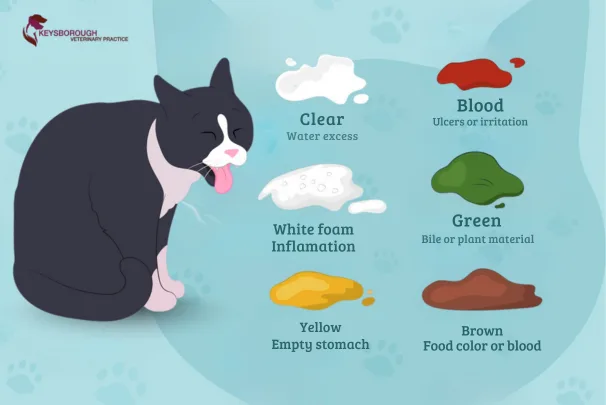
Cat Vomit Colour Chart: Decoding What Each Type Means
Checking the colour of your cat’s vomit gives you the first clue about what’s wrong. Here’s what each colour tells you about your cat’s health.
1. Clear or White Foam Vomit
This foamy vomit appears when your cat’s stomach is empty. The white foam in cat vomit comes from stomach acid and mucus mixing together. Your cat may vomit in the mornings before breakfast or between meals.
What causes it:
- An empty stomach for too long
- Excess stomach acid production
- Gastric irritation
- Esophageal issues
Action steps: Feed smaller meals more frequently throughout the day. If this becomes regular vomiting, schedule a check-up with your veterinarian.
2. Yellow Vomit or Yellow Liquid
Yellow liquid means bile is present. Bile comes from the liver and helps digest fats. When your cat is vomiting on an empty stomach, bile is usually the culprit. This happens most often in the early morning hours.
What causes it:
- Long gaps between meals
- Bilious vomiting syndrome
- Liver problems
- Gallbladder issues
Action steps: Try offering a small snack before bedtime. If your cat continues to vomit bile regularly, contact Keysborough Veterinary Practice for an evaluation.
3. Green Vomit
Throwing up green vomit usually means one of two things. Your cat ate grass or plant material. Alternatively, green colouring comes from bile mixed with stomach contents. Food from the small intestine can also create this colour.
What causes it:
- Grass consumption
- Intestinal contents are backing up
- Bile presence
- Digestive tract issues
Action steps: If your cat ate grass, monitor them closely. Green vomit without grass eating requires a vet visit to rule out serious problems.
4. Brown Cat Vomit
Brown colouring comes from partially digested food, particularly dry cat food. However, dark brown that looks like coffee grounds signals something more serious. This appearance means digested blood from the upper digestive tract.
What causes it:
- Digested cat food
- Internal bleeding
- Stomach ulcers
- Intestinal problems
Action steps: Brown vomit from food is less concerning. Coffee-ground texture demands immediate veterinary care.
5. Red or Bloody Vomit (Emergency)
Fresh blood in cat vomit appears bright red. This is always an emergency. Blood indicates active bleeding somewhere in the mouth, esophagus, or stomach. Your cat may vomit blood from various serious conditions.
What causes it:
- Sharp foreign objects
- Severe ulcers
- Trauma to the digestive tract
- Poisoning
- Severe infections
Action steps: Rush to the nearest veterinary emergency clinic immediately. Don’t wait. Time matters critically with bloody vomit.
6. Hairball Vomit
Most cat owners recognise hairball vomit easily. You’ll see a cylindrical mass of compacted fur mixed with liquid. The liquid around the hairball can be clear, white, or yellow. Long-haired cats vomit hairballs more frequently than short-haired breeds.
What causes it:
- Normal grooming behaviour
- Excessive grooming from stress
- Skin conditions causing over-grooming
- Lack of hairball prevention
Action steps: Occasional hairballs are normal. If your cat produces more than one per month, talk to your veterinarian about solutions.
7. Undigested Food Vomit
When your cat is throwing up undigested food, the kibble looks exactly as it did in the bowl. This cat vomit indicates the food never made it to the stomach properly. Your cat ate too fast in many cases. Other times, this signals obstruction or esophageal problems.
What causes it:
- Eating too quickly
- Food sensitivities
- Esophageal disorders
- Partial blockages
Action steps: Try a slow-feeder bowl. If vomiting undigested food continues despite slower eating, schedule an examination.
8. Worms in Vomit (Requires Vet Visit)
Finding worms in your cat’s vomit is disturbing but common. Roundworms appear as thin, spaghetti-like strands. Heavy parasite loads cause cats to vomit up these unwanted guests.
What causes it:
- Untreated intestinal parasites
- Environmental exposure
- Hunting infected prey
Action steps: Contact Keysborough Veterinary Practice immediately for deworming treatment. All pets in your home need treatment to prevent reinfection.
Acute Vomiting vs. Chronic Vomiting: Understanding the Difference
The timing and pattern of vomiting episodes matter tremendously. Veterinarians classify vomiting into two main categories.
1. Acute Vomiting
Acute vomiting comes on suddenly. Your cat vomits multiple times within hours. This pattern often indicates poisoning, infections, or dietary indiscretion. Acute episodes carry a high risk for dangerous dehydration.
Signs include:
- Multiple vomit episodes in one day
- Sudden onset with no prior history
- Often accompanied by lethargy
- Loss of appetite
This requires prompt veterinary intervention.
2. Chronic Vomiting
Chronic vomiting develops over weeks. Your cat has been vomiting once every few days for more than three weeks. This pattern suggests an underlying disease rather than an acute illness. Common causes include inflammatory bowel disease, kidney problems, or hyperthyroidism.
Signs include:
- Persistent pattern over weeks or months
- Weight loss
- Decreased appetite
- Changes in behaviour or energy
Schedule a comprehensive examination for chronic cases.
Common Causes of Vomiting in Cats
Understanding the common causes of cat vomiting helps you prevent future episodes. Some causes are simple fixes, while others need medical management.
1. Dietary Issues
Food-related problems top the list of reasons why cats vomit. Quick changes in diet upset sensitive stomachs. Food allergies trigger repeated episodes. Some cats simply eat too fast and immediately vomit after eating.
Prevention tips:
- Transition foods gradually over 7-10 days
- Use slow-feeder bowls for fast eaters
- Choose high-quality, appropriate cat food
- Avoid table scraps and human foods
2. Medical Conditions
Numerous health problems cause vomiting. Kidney disease, liver disease, and hyperthyroidism frequently lead to chronic episodes. Inflammatory bowel disease irritates the digestive tract. Pancreatitis causes severe nausea and vomiting.
These conditions need proper diagnosis and ongoing veterinary management.
3. Foreign Objects and Obstructions
Cats are curious creatures. They swallow strings, toys, hair ties, and other dangerous items. These objects can cause partial or complete blockages. String is particularly dangerous because it can sawn through intestines.
Signs your cat may have an obstruction:
- Vomiting undigested food repeatedly
- Abdominal pain
- Lethargy
- Loss of appetite
4. Toxins and Poisoning
Many household items are toxic to cats. Lilies cause deadly kidney failure. Human medications like ibuprofen are extremely dangerous. Cleaning products, antifreeze, and certain foods (chocolate, onions, garlic) all cause vomiting along with other serious symptoms.
If you suspect poisoning, this is an absolute emergency.
When to Call the Vet.
Knowing when your cat is actually vomiting an emergency versus a minor issue can save their life. Some situations demand immediate action.
1. Immediate Emergency Signs
Rush to veterinary care if you notice your cat is showing any of these symptoms:
- Blood in your cat’s vomit – Fresh blood or coffee-ground appearance
- Repeated vomiting – Multiple episodes within a few hours
- Inability to keep water down – Leads to dangerous dehydration
- Pain signs – Crying, hunched posture, reluctance to move
- Lethargy or collapse – Extreme weakness or unconsciousness
- Difficulty breathing – Rapid breathing or pale gums
- Known toxin ingestion – Any amount of toxic substance
- Bloated abdomen – Swollen or painful belly
At Keysborough Veterinary Practice, we’re equipped to handle these emergencies promptly.
2. Schedule a Veterinary Appointment For
These situations aren’t immediately life-threatening but still need professional evaluation:
- Vomiting continuing for more than 24 hours
- Vomiting more than once a month
- Loss of appetite lasting over 12 hours
- Diarrhea accompanying the vomit
- Unexplained weight loss
- Behavioral changes
- Frequent hairball production
3. Safe to Monitor at Home
Your cat has vomited once but acts completely normal afterwards. They’re eating, drinking, playing, and showing their usual personality. No other symptoms appear. This single episode likely doesn’t need veterinary intervention. Just keep watching your cat closely.
What to Do When Your Cat is Vomiting
Taking the right steps after your cat has vomited helps their recovery and gives your veterinarian useful information.
Immediate actions:
- Remove food temporarily – Give their stomach 4-6 hours to settle
- Offer small water amounts – One to two teaspoons every 30 minutes or ice cubes to lick
- Observe closely – Watch for additional symptoms or worsening
- Document everything – Take photos, note frequency, record the time
Reintroducing food:
Start with tiny portions of bland food after the fasting period. Boiled chicken or plain white rice works well. Gradually return to their regular diet over 24-48 hours. This gentle approach prevents triggering more vomiting.
What to avoid:
- Never give human medications (many are fatal to cats)
- Don’t withhold water for extended periods
- Don’t force food or water
- Don’t assume occasional vomiting is always normal
Preventing Future Vomiting Episodes
Prevention saves both you and your cat from repeated vomit cleanup sessions. These strategies reduce vomiting frequency significantly.
1. Diet Management
Feed smaller, more frequent meals throughout the day. This prevents bile buildup from empty stomachs. Use puzzle feeders or slow-feeder bowls for cats who gulp their food. Always transition between foods gradually over a full week.
2. Hairball Prevention
Regular brushing removes loose fur before your cat swallows it. This simple step dramatically reduces hairball frequency. Consider hairball-control formulas in your cat food. Adequate hydration also helps hair pass through the digestive system smoothly.
3. Environmental Safety
Remove toxic plants from your home entirely. Lilies, poinsettias, and many others poison cats. Secure all medications and cleaning chemicals in locked cabinets. Cat-proof your space by eliminating access to strings, rubber bands, and small toys.
4. Regular Veterinary Care
Annual check-ups catch problems before they become serious. Your veterinarian can detect early signs of kidney disease, hyperthyroidism, or other conditions that cause vomiting. Stay current on parasite prevention. Monitor your cat’s weight and eating habits closely.
Final Thoughts
You know your cat better than anyone. When something feels wrong, trust that instinct. The cat vomit indicates many different conditions, from harmless to life-threatening. Understanding what different types of cat vomit mean empowers you to make informed decisions about your cat’s health.
Remember that while occasional vomiting happens, it’s never truly “normal.” Your cat’s body is telling you something. Paying attention to patterns, colours, and accompanying symptoms helps you catch problems early. Early intervention leads to better outcomes and often simpler, less expensive treatment.
If you notice your cat vomiting more than usual or you’re concerned about any aspect of their health, contact Keysborough Veterinary Practice today. Our experienced team is here to help your feline companion feel better quickly. Your cat’s health and comfort are our top priorities.
Don’t hesitate to reach out. When it comes to your cat’s well-being, it’s always better to be safe and get professional advice. We’re here to support you every step of the way.
Frequently Asked Questions
How often is too often for a cat to vomit?
More than once a month warrants a veterinary consultation. While many cat owners think vomiting is normal, frequent episodes always indicate an underlying problem that needs addressing.
Is it normal for cats to throw up hairballs regularly?
Occasional hairballs happen, but frequent production (more than once monthly) suggests excessive grooming or digestive issues. Consult your veterinarian about prevention strategies.
Should I take my cat to the emergency vet for vomiting?
Yes, if your cat vomits blood, has multiple episodes within hours, shows lethargy, or you know they ingested something toxic. These situations need immediate emergency care.
Can I give my cat anything for vomiting at home?
No over-the-counter medications are safe for cats without veterinary guidance. Many human medications are toxic to cats. Always call Keysborough Veterinary Practice before giving any medication.
What does it mean if my cat is vomiting clear liquid?
Vomiting clear liquid typically indicates an empty stomach with excess stomach acid. Try feeding smaller, more frequent meals. If it continues, schedule a veterinary examination.
What’s the difference between a cat throwing up versus coughing up a hairball?
Hairballs are cylindrical with visible, compacted fur. The cat vomit that accompanies hairballs is usually minimal liquid. Regular vomit contains more liquid, food, or bile with various colours.
Why is my cat vomiting but acting normal?
Some cats vomit occasionally without other symptoms. This might be from eating too fast, minor dietary indiscretion, or hairballs. However, if the vomit contains blood, appears frequently, or your cat eventually shows other signs, don’t delay getting help.
