

So your vet has told you that your pet needs a dental procedure. Maybe it is a scale and polish, maybe there are a few teeth that need to come out. Either way, you are probably sitting there wondering what actually happens on the day, and whether your furry mate is going to be okay.
That feeling is completely normal. Most pet owners in Keysborough and across Melbourne feel anxious in the lead-up to their pet’s dental procedure. The good news is that once you know what to expect, the whole thing feels a lot less daunting.
According to the Australian Veterinary Association (AVA), four out of every five dogs and cats over the age of three have some degree of dental disease. That means dental procedures are one of the most common things vets do, day in, day out. The team at Keysvet in Keysborough performs these regularly, with careful anaesthetic monitoring and a genuine focus on your pet’s comfort and safety.
This guide walks you through everything: from the night before drop-off to what to do when you bring your pet home that evening.
The Night Before: How to Pre-Surgery Prepare Your Pet
Getting a few things right the night before will make your pet’s surgery smoother for everyone.
Fasting is essential. Your pet requires fasting from midnight the night before the procedure. No food after midnight, though water is generally fine until a few hours before drop-off. Your vet will give you specific instructions, so always follow what they tell you over any general advice.
Keep things calm. Skip the big game of fetch or any exciting roughhousing. Help your pet relax with some quiet time and a comfortable sleep.
Prepare your information. When you first arrive at the clinic, the team will ask for relevant information about your pet’s health, including:
The time of their last meal
Any medications they are currently on
Any recent health changes or concerns
Having this ready means admission goes smoothly and quickly.
Drop-Off: What Happens When You Leave Your Pet
Saying goodbye at the clinic door is the hardest part for most owners. Here is what is happening on the other side of that door.
When your pet has been admitted, you will complete an admission form, which includes contact phone numbers so the team can reach you during the day.
Pre-Anaesthesia: Getting Your Pet Ready
A veterinary nurse will settle your pet in, and the veterinary team will:
- Perform a health check, reviewing your pet’s history and confirming fasting
- Carry out pre-anaesthetic blood tests if these have not already been done, to check your pet’s blood, organ function and overall health before any anaesthetic agent is administered
- Place an IV catheter so that fluids and medications can be given safely
- Administer a sedative (pre-medication) to help your pet relax before the procedure begins
Pre-anaesthetic blood tests are an important step in every pet’s dental procedure. Modern anaesthetic agents used by veterinarians are safe, anaesthetised animals are closely monitored, and complications are rare.
Once everything is in order, the anaesthesia begins, and your pet is transferred to the dental suite.
You will typically hear from the vet or nurse after the procedure is complete, so expect a call in the afternoon rather than at midday. Resist the urge to ring every hour, as the team is focused on giving your pet their best care.
The Dental Procedure: What Veterinary Dentistry Actually Involves
Once your pet is under general anaesthesia, the vet can examine the mouth thoroughly and treat any dental issues properly. This is why anaesthesia is non-negotiable for proper pet dentistry: it is not possible to perform a professionally thorough and complete dental examination in the fully conscious animal.
Here is a typical sequence for a dental procedure day:
A Note on Dental X-Rays
X-rays are not just an add-on. They allow the vet to see what is happening beneath the gum line, where most dental disease actually lives. Problems with tooth roots, bone loss and abscesses are invisible without them. This is why our X-rays and ultrasounds service is a key part of every dental procedure at Keysi Vet.
What About Extractions?
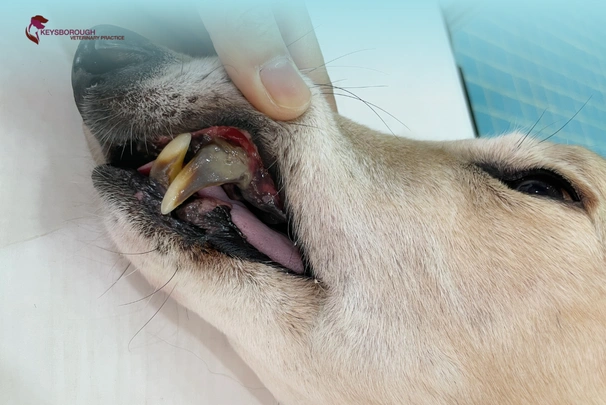
If your pet requires an extraction as part of their oral surgery, the vet will explain why. Teeth that are fractured, infected or affected by advanced dental disease can cause ongoing pain and even systemic illness if left in place. Most pets recover within a few days, though healing below the gum line continues for one to two weeks.
The number of teeth removed depends entirely on what the examination and X-rays reveal. Sometimes it is one tooth. Sometimes it is several. The vet will always aim to preserve healthy teeth and only recommend removal where it is truly in your pet’s best interest.
Recovery at the Clinic and the Pick-Up Call
After the procedure, your pet will recover in a warm, monitored space at the clinic. Most pets undergoing a dental procedure will be up and about and ready to walk out the door in the afternoon on the same day, with most discharged after 4:30 pm to allow ample time to recover from the anaesthesia.
All patients will receive pain relief before and after the procedure.
When the vet or nurse calls you, listen carefully. They will go through:
- What was found during the examination
- Whether any extractions were performed
- Which medications are going home with your pet
- Any specific instructions to follow at home
- Whether a follow-up appointment is needed
Do not be afraid to ask questions during this call. The veterinary team is there to make sure you feel confident taking your pet home.
When you arrive for pick-up, your pet may be groggy, a little unsteady on their feet and quieter than usual. This is completely normal after anaesthesia and nothing to worry about.
Every Pet Matters: The First 24 Hours at Home
Feeding Your Pet After Surgery
Offer soft food on the night of the procedure
If no extractions were performed, you can return to their normal diet the following day
If extractions were done, stick with soft food for several days as directed
Make sure your pet does not eat means your pet does not eat hard kibble, bones or chews until cleared by your vet
Pain Relief at Home
Your pet will receive pain relief medication to take home. Pets who have undergone a tooth extraction will likely have been administered an anti-inflammatory injection for pain relief, and additional medication for ongoing pain relief may also be provided.
Give medications exactly as prescribed. Do not skip doses, and do not give human pain medications, as many are toxic to cats and dogs.
What is Normal in the First 24 Hours
After any surgical procedure under anaesthesia, you can expect:
Sleepiness and disorientation for the rest of the day
Reduced appetite, especially if extractions were performed
Mild gum bleeding, particularly in the first few hours after extraction
When to Call the Vet
Contact the clinic right away if you notice any of the following signs throughout recovery:
Excessive or ongoing bleeding from the mouth
Non-stop vomiting
Extreme lethargy persisting past 24 hours
Refusal to eat after 24 hours
Swelling around the mouth or face that does not improve
Recovery After Extractions: What Is Different
If your pet’s dental procedure included extractions, recovery looks slightly different.
Give your pet soft food for one to two weeks if multiple teeth were removed. Most pets will readily continue to eat hard nuggets of food even when their mouth is still sore, and this could cause damage to any sutures placed in the gums.
During the healing period:
No bones, hard chews or toys that could stress the extraction site
No tooth brushing around the surgical area until cleared
Keep exercise gentle, particularly for the first few days
Attend any follow-up appointment scheduled at discharge, typically around 10 to 12 days post-procedure
The great news? Most pets are back to eating, playing and being themselves within 24 to 48 hours of the procedure. The difference in their demeanour once a painful tooth is gone often surprises owners.
Why Dental Care in Keysborough Matters
Dental disease does not stay in the mouth. Left untreated, bacteria from infected gums can enter the bloodstream and affect the heart, kidneys and liver. PetSure claims data analysed by Bow Wow Meow found that the average cost of treating dental disease in dogs in 2024 was $816, with some bills climbing to $13,158.
Early intervention means shorter procedures, less discomfort and a faster recovery. That is true whether you are bringing your dog or cat to a vet in Keysborough, or anywhere else across Melbourne.
Australia’s pet dental health market is expected to grow at a compound annual growth rate of 8.1% from 2024 to 2030, reflecting just how seriously Australian pet owners are taking their pets’ oral health.
Book Your Pet’s Dental Procedure at Keysi Vet, Keysborough
If your pet has a dental procedure scheduled, or if you just want to know more before committing to a date, our team is happy to walk you through everything. Keysvet offers full anaesthetic monitoring, pre-anaesthetic blood screening, digital dental X-rays and a caring team that treats every pet like their own.
We see and treat pets from Keysborough and right across Melbourne’s south-east.
Contact us today on (03) 9798 7274 or book online. We are here to answer any questions, before and after the procedure.
Frequently Asked Questions
- Does my pet need to fast before a dental procedure?
Yes. Food must be withheld from midnight the night before. Water is usually fine until a few hours before drop-off, but follow your vet’s specific instructions. - Will my pet be in pain after the procedure?
Your pet will receive pain relief at the clinic and go home with medication. Some mild discomfort is normal for a day or two, particularly after extractions, but this is well managed. - How long does a pet dental procedure take?
It varies depending on what is found once the vet can properly examine the mouth under anaesthesia. A routine scale and polish may take an hour, while procedures involving multiple extractions take longer. - What if my pet needs teeth removed?
Extraction is recommended when a tooth is too damaged or diseased to be saved. Most pets adapt very well and are eating comfortably again within one to two days. - When should I book a dental check for my pet?
At least once a year is recommended, or sooner if you notice bad breath, difficulty eating, drooling or visible tartar build-up. Book your pet in for a dental check at Keysvet today.