




Most dog owners have been there. You walk into the lounge and find a puddle on the carpet. Or your dog heaves a few times after eating too fast. It’s one of the most common reasons pet owners ring the vet, and for good reason.
Vomiting is a common symptom in dogs, but it can mean very different things depending on the circumstances. The tricky part? Working out when it’s nothing to worry about and when you need to act quickly. This guide gives you a clear, practical framework to help you make that call.
According to PetSure’s 2025 Pet Health Monitor, drawing on data from over 700,000 insured pets, gastrointestinal issues are the second most common reason dogs visit the vet in Australia. If your dog is vomiting repeatedly,blood tests and imaging can help identify the cause.. So you’re far from alone in dealing with this.
One Vomit vs. Repeated Vomiting in Dogs: What’s the Difference?
Not every episode of vomiting is a cause for concern. Here’s a simple baseline:
- One vomit, the dog is acting normally: often nothing to worry about. If your dog is alert, drinking water and back to their usual self shortly after, it’s reasonable to monitor them at home.
- Vomiting three or more times in 24 hours: this warrants a vet call. Repeated vomiting can quickly lead to dehydration and may signal an underlying cause that needs attention.
- Vomiting alongside other symptoms (lethargy, pain, bloody stool, bloating): don’t wait. Contact your vet or head to urgent care.
The frequency and duration of the vomiting matter enormously when assessing how serious things are.
Common (Non-Emergency) Causes of Vomiting in Dogs
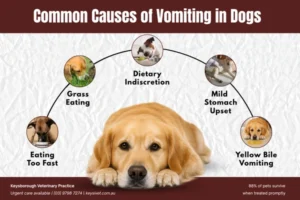
It’s actually pretty uncommon for dogs to go their whole lives without the occasional upset stomach. Some of the most frequent, lower-risk causes include:
- Eating too fast: gulping food causes dogs to vomit undigested food or partially digested stomach contents shortly after a meal
- Grass eating: Dogs will vomit after eating grass, and while it looks dramatic, it’s usually harmless
- Dietary indiscretion: raiding the bin, snaffling something off the footpath, or getting into the compost. Dogs are opportunistic, and their gastrointestinal systems don’t always thank them for it
- Mild stomach upset: a sudden change in diet or a rich treat can cause vomiting, which can be resolved without veterinary attention
- Yellow bile vomiting: dogs vomiting yellow bile first thing in the morning often have an empty stomach. Offering a small bedtime snack can help
Signs it’s probably minor:
- The dog is alert and playful after vomiting
- Happened once or twice
- No blood, no bloating, no other symptoms
- Ate something unusual recently
When Vomiting in Dogs Signals Something More Serious
There are times when vomiting is a sign of something more serious, and waiting it out at home can make things worse. Head to the vet right away if you notice any of the following:
- Vomiting blood: whether bright red or dark like coffee grounds, this requires immediate veterinary attention. It can indicate internal bleeding, stomach ulcers, or an intestinal blockage
- Brown vomit: This can sometimes indicate a more serious problem, especially if it has a foul smell
- Bloated, hard abdomen: especially in deep-chested breeds like Great Danes or German Shepherds. This could be GDV (gastric dilatation-volvulus), which is a life-threatening medical emergency
- Vomiting + lethargy or pain: a dog that’s not just sick but clearly in distress needs to be seen
- Known or suspected toxin ingestion: rat bait, mushrooms, certain plants, human medications. Dogs in Keysborough have access to wetlands, parks and suburban gardens where toxic plants and rat bait can be encountered. If you think your dog didn’t have access to anything unusual but they’re still unwell, it’s still worth checking. See our articles on Forbidden Snacks and Rat Bait Poisoning for more detail
- Foreign object suspected: if your dog may have swallowed something, X-rays to check for foreign body ingestion can give you a quick answer
- Vomiting persists beyond 24 hours: even if the dog seems okay otherwise, persistent vomiting needs a vet assessment
- Puppies and senior dogs: these groups deteriorate faster and have less reserve. Lower your threshold for getting them seen
Vomiting and Diarrhoea: Double Trouble
When vomiting and diarrhea hit at the same time, the risk goes up considerably. Fluids are being lost from both ends, which can lead to dehydration very quickly, particularly in puppies and older dogs.
According to PetSure’s 2024 claims data, gastroenteritis, which commonly presents as vomiting and diarrhoea, was the second most claimed condition in dogs, with average treatment costs of $737 and some cases running significantly higher.
Watch for these signs of dehydration:
- Gums that feel tacky or dry instead of slippery and moist
- Skin that doesn’t spring back quickly when gently pinched
- Lethargy and loss of interest in drinking
If you’re seeing both vomiting and diarrhoea together, don’t adopt a wait-and-see approach: contact your vet.
What NOT to Do at Home
When your dog is vomiting, there are a few common mistakes that can actually make things worse:
- Don’t give human medications: ibuprofen and paracetamol are toxic to dogs and cats and can cause serious organ damage. Never administer human pain relief without veterinary advice
- Don’t withhold water for more than a short period: a dog that’s vomiting needs hydration. Offer small amounts of water regularly rather than restricting access entirely
- Don’t induce vomiting without vet guidance: in some cases of toxin ingestion, this can cause further harm. Always call the vet first
- Don’t withhold food for more than 12 hours: a brief rest from eating can help settle the stomach, but prolonged fasting isn’t recommended without professional advice
When you’re unsure, the safest option is always to call your vet and ask.
What to Tell Your Vet
When you call or bring your dog in, the more detail you can give, the better. Here’s what’s useful for the vet to know:
- How many times has your dog vomited, and over what time frame
- What the vomit looks like: colour, consistency, whether it contains partially digested food, undigested food, bile, or blood
- Your dog’s last meal and whether they ate anything unusual
- Whether they had access to anything in the garden, on a walk, or around the house: think household spills or accidents, plants, rubbish, or food scraps
- Any other symptoms: diarrhoea, lethargy, bloating, changes in behaviour
- Your dog’s age, breed, and any known health conditions
If you can, take a photo of the dog’s vomit: it genuinely helps with triage.
Urgent Care at Keysi Vet: Keysborough
If your dog is vomiting and you’re not sure what to do, the team at Keysborough Veterinary Practice is here to help. We offer urgent care for dogs in Keysborough and the surrounding Melbourne suburbs, and we’re open until 8 pm on most days, because we know pets don’t always time things conveniently.
Not sure if it’s an emergency? Give us a call first. Our team can talk you through what you’re seeing and advise whether your dog needs to come in right away or can be monitored at home.
For cases that need further investigation, we can also arrange blood tests to investigate chronic vomiting or X-rays to check for foreign body ingestion: all under one roof.
If you have a cat who’s been vomiting too, take a look at our guide to types of cat vomit: it covers similar ground for our feline friends. Call us or book online today!
Frequently Asked Questions
1. My dog vomited once but seems fine: do I need to see a vet?
Not necessarily. A single vomit in an otherwise healthy, alert dog is usually not cause for concern. Monitor them closely for the next few hours and contact your vet if it happens again or they seem unwell.
2. When should I take my dog to the vet for vomiting?
Go to the vet right away if your dog is vomiting blood, vomiting more than 3 times in 24 hours, showing signs of pain or lethargy, has a bloated belly, or you suspect they’ve eaten something toxic or swallowed a foreign object.
3. Is vomiting and diarrhoea in dogs an emergency?
It can be. Combined symptoms lead to dehydration quickly, especially in puppies and senior dogs. If both are present at the same time, contact your vet rather than waiting it out.
4. What can I give my dog at home if they’re vomiting?
Keep water available in small amounts and consider withholding food briefly to let the stomach settle. Once they seem to be improving, a bland diet of boiled chicken and rice is a gentle option. Never give human medications: ibuprofen and paracetamol are toxic to dogs.
5. Could my dog have eaten something toxic in Keysborough?
Yes, it’s possible. The parks, wetlands, and gardens around Keysborough can contain rat bait, toxic plants, and mushrooms. If you think your dog may have ingested something, don’t wait: call your vet immediately and check our articles on Forbidden Snacks and Rat Bait Poisoning.
