



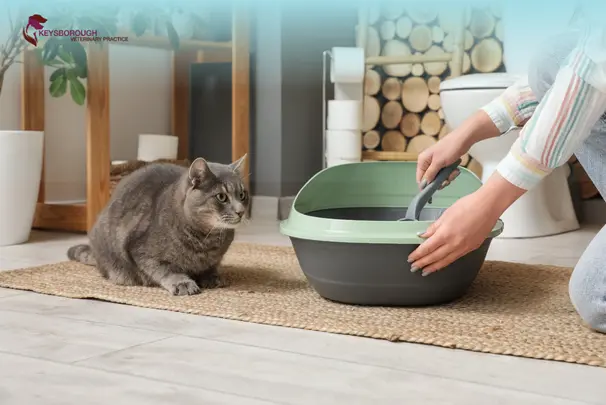
If your cat is making repeated trips to the litter box but producing little or no urine, this is not a moment to wait and see. A urinary blockage in cats is a life-threatening emergency, and every hour counts. Understanding urinary blockages, what causes them, and what warning signs to look for could genuinely save your cat’s life.
At Keysvet in Keysborough, our team sees these cases regularly, particularly in male cats. Melbourne cat owners need to know that this condition can turn fatal within 24 to 48 hours if left untreated. This guide covers everything you need to know.
Understanding Urinary Blockages in Cats: What Is Actually Happening?
A urinary blockage happens when something blocks the urethra, the tube that carries urine from the bladder to the outside of the body. When the urethra is partially or completely blocked, urine cannot pass. The bladder keeps filling, toxins build up in the bloodstream, and the kidneys begin to fail. Without emergency veterinary care, this process can become fatal within two to three days, according to International Cat Care.
This is why understanding urinary blockages is so important for every cat owner in Keysborough and across Melbourne.
What causes a urinary blockage?
1. Urethral Plug – A buildup of mucus, proteins, and crystals forms a soft blockage in the urethra
2. Bladder Stones – Stones develop in the bladder and can become lodged in the urethra
3. Crystal Formation – Struvite or calcium oxalate crystals accumulate in the urine
4. Inflammation or Spasm – Swelling and muscle spasms restrict normal urine flow
5. Stricture – Scar tissue narrows the urethra, often after a previous blockage
Blockages in cats most commonly result from feline idiopathic cystitis (FIC), a condition linked to stress, though bladder stones and crystal formation are also very common triggers.
Why Male Cats Are at Higher Risk Due to Their Narrower Urethra
Urethral obstruction occurs almost exclusively in male cats and can be life-threatening. The reason comes down to anatomy. A male cat’s urethra is significantly longer and narrower than a female’s, which means even a small plug or crystal can cause a complete blockage where a female cat might pass the same material without issue.
That said, female cats can develop urinary issues too, including inflammation of the urinary tract, bladder stones, and infections. They are just far less likely to become fully blocked.
If you have a male cat, particularly one that is neutered, young to middle-aged, and kept primarily indoors, he is at higher risk. These are the cats Keysvet sees most often presenting as a blocked cat emergency.
Early Signs Most Keysborough Cat Owners Miss
This is where things get tricky. The early signs of a urinary blockage in cats can look like nothing more than an upset tummy or constipation. Many owners in Melbourne and Keysborough waste precious hours assuming their cat is just having a slow day.
Early warning signs include:
Frequent trips to the litter box with only small amounts of urine produced, or none at all
Straining in the litter box, which is easy to mistake for constipation
Crying or vocalising while trying to urinate
Excessive licking around the genital area
Restlessness, hiding, or loss of appetite
Blood-tinged urine visible in or around the litter box
These early signs include behaviours that can seem mild or even normal at a glance, but they are not. If you notice any of these symptoms, call your veterinarian immediately. Do not wait to see if symptoms resolve on their own.
Emergency Signs: Call Keysvet Right Now
If a cat’s urinary blockage goes untreated past the early stage, the signs become impossible to ignore, but by this point the situation is critical.
Emergency signs of a blocked cat:
Complete inability to produce any urine
Vomiting and rapid deterioration
Extreme lethargy or inability to stand
Distended, hard, and painful abdomen
Collapse
Without treatment, urethral obstruction can cause kidney failure and can be fatal within two to three days. A distended bladder is also at risk of bladder rupture, which carries life-threatening consequences of its own.
This is a medical emergency that requires immediate veterinary attention. Do not attempt to give your cat any medications without veterinary guidance. Call Keysvet on (03) 9798 7274 and head straight in.
How Vets Diagnose a Cat Urinary Blockage
When you bring a blocked cat into Keysvet, the team moves quickly. The diagnosis process for a urinary blockage typically involves several steps, many of which can be completed right here in Keysborough without needing to travel across Melbourne.
Diagnostic process:
Our urgent care, general pathology, and X-ray and ultrasound services mean we can run a full diagnostic workup on-site. The sooner we know what kind of obstruction we are dealing with, whether it is a urethral plug, a stone, or inflammation-related spasm, the faster and more targeted treatment can be.
In various studies over the past three decades, a cause in around 55 to 65% of cases could not be established, and these cats were classified as having feline idiopathic cystitis. This is why comprehensive diagnostics matter, not just confirming the block exists, but understanding the underlying cause to prevent future episodes.
Treatment: What Happens at the Vet
Once a complete urinary blockage is confirmed, treatment begins immediately. There is no home remedy that will unblock a cat. This requires professional veterinary care, full stop.
Treatment steps typically include:
1. Sedation or anaesthesia so the cat can be handled safely without causing further distress or injury
2. Urinary catheter placement to relieve the obstruction and drain the bladder
3. IV fluids to flush toxins, rehydrate the body, and support the kidneys
4. Hospitalisation for ongoing monitoring, often 24 to 48 hours depending on severity
5. Medication including pain relief, anti-inflammatories, and drugs to reduce urethral spasm
6. Follow-up diagnostics to identify causes such as bladder stones or crystal formation
Recurrence rates after an episode of urethral obstruction are in the range of 30 to 40%. This means treatment is only the first step. Understanding the underlying cause is just as important for your cat’s long-term urinary health.
For cats with frequent blockages that do not respond to medical management, a surgical option called perineal urethrostomy may be discussed. This creates a wider urethral opening and significantly reduces the risk of future blockage.
How to Prevent Urinary Blockages at Home
Once your cat has recovered, preventing future blockages becomes the main focus. The good news is that there is a lot Keysborough cat owners can do at home to support their cat’s urinary health.
Practical steps to prevent urinary blockages:
1. Switch to wet food:
Wet cat food increases overall fluid intake and helps dilute the urine, which reduces crystal formation and the risk of urinary issues
2. Add a cat water fountain:
Running water encourages cats to drink more and helps keep urine from becoming too concentrated. A cat water fountain can make a real difference for cats who ignore still water
3. Multiple water sources:
Place cat water bowls in several spots around your home, away from food and litter boxes
4. Litter box management:
Provide one litter box per cat plus one extra. Keep them clean, as cats who avoid a dirty litter box tend to hold their urine, which increases the risk of urinary problems
5. Stress reduction:
Feline stress is a major trigger for idiopathic cystitis, which can escalate into a blockage. Environmental enrichment, consistent routines, and safe spaces around your home all help
6. Weight management:
Obesity is closely linked to urinary tract issues. According to PetSure’s 2025 Pet Health Monitor, over half of cats aged six to seven are now overweight or obese, and obesity in felines is closely linked to urinary tract issues.
7. Prescription diets:
If your veterinarian recommends a urinary diet to prevent crystal formation, keep your cat on it long-term
Monitoring at home:
Check the litter box daily for normal urination patterns
Look for small amounts of urine, blood-tinged urine, or no output at all
Book follow-up wellness checks at Keysvet to monitor urinary health over time
According to PetSure claims data, urinary tract disorders were the second most common health condition experienced by cats in Australia in 2024. This is not a rare problem. It is one of the most common reasons Melbourne cats need urgent veterinary care, and many of those visits could be less severe with earlier detection and home prevention strategies in place.
Do Not Wait: Seek Emergency Veterinary Care Now
A urinary blockage is a true emergency, and a blockage is a life-threatening emergency that requires immediate veterinary attention. If your cat, especially your male cat, is straining at the litter box, crying, or not producing urine, do not wait.
Call Keysvet immediately on (03) 9798 7274. We are here for Keysborough cat owners, and for the broader Melbourne community, because when it comes to a blocked cat, every minute matters.
Frequently Asked Questions
1. How do I know if my cat has a urinary blockage or is just constipated?
Both involve straining, but if your cat is straining in the litter box and producing no urine at all, treat it as a urinary emergency. A constipated cat will usually pass something. A blocked cat will not. When in doubt, call your vet.
2. Can female cats get urinary blockages?
Female cats can develop urinary issues and inflammation of the urinary tract, but complete blockage is far less common due to their shorter, wider urethra. Any female cat showing signs of distress or straining still needs prompt veterinary attention.
3. How quickly does a urinary blockage become dangerous?
A complete urinary blockage becomes life-threatening very quickly. Without treatment, serious complications including kidney damage and cardiac effects can occur within 24 to 48 hours.
4. Will my cat be okay after a blockage?
With prompt veterinary care, most cats recover well. However, recurrence is common, so dietary changes, hydration, and follow-up checks are essential to reduce the risk of urinary blockages happening again.
5. Can I give my cat over-the-counter medication for a suspected blockage?
No. Never give your cat any medications without veterinary guidance. Some human medications are toxic to cats, and delaying professional treatment by trying home remedies can cost your cat its life.
