



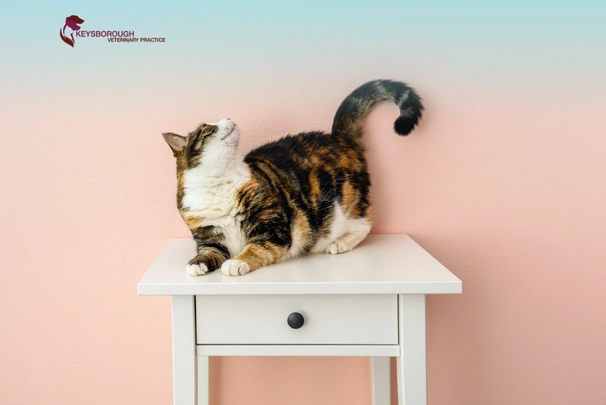
You set your coffee mug on the kitchen bench, look away for two seconds, and hear a crash. You turn around to find your cat staring at you from the scene of the crime, completely unbothered. Sound familiar?
If you have ever wondered why cats knock things off tables, you are not alone. It is one of the most talked-about feline behaviours among cat owners in Australia and around the world. And while it can feel like a deliberate act of chaos, there is actually a lot of interesting science behind it.
Australia has one of the highest pet ownership rates in the world, with approximately 69% of households owning pets, and cats are in a significant share of those homes. There are 5.3 million pet cats in Australia, spread across around 3.3 million households. That is a lot of knocked-over coffee mugs.
So, what is really going on? Let us break it down.
The Reasons Behind This Quirky Feline Habit: Why Cats Knock Things Off Tables
There is no single reason. Cats knock things for a mix of instinct, curiosity, and learned behaviour. Here are the main ones.
Hunting Instincts: Cats Are Hardwired to Test Their Prey
Cats are hardwired to be playful hunters. In the wild, they paw objects to test for movement or life. Knocking objects off a surface could mimic this instinct, your cat is simply “hunting” your pen the way they would a slow-moving lizard.
Even well-fed domestic cats retain hunting instincts that shape how they interact with objects around them. Cats have a blind spot at very close range, which means they rely more on their whiskers and paws to assess objects directly in front of them.
When your cat uses their paw to bat something off the counter, they are running a behavioural check: is this thing alive? Does it move? Is it prey? It is instinct, not mischief.
Key takeaway: hunting instincts do not disappear just because a cat lives indoors and eats from a bowl. The drive to test objects with their paws remains fully intact.
Attention-Seeking: Your Reaction Is the Reward
Pet parents may unintentionally reinforce this behaviour by responding when their cat knocks something over.
A lot of cats knock things over because they have learned it is a quick and easy way to get their human’s attention. Even negative attention counts. So when you gasp, rush over, or scold them, your kitty has already filed that away as a successful strategy.
This is a classic case of attention-seeking behaviour. If your cat knocks something and you react, even with frustration, they are likely to do it again. Cats are smart learners, and they know exactly which buttons to push.
Boredom and Lack of Stimulation
Boredom is a significant contributor to why cats knock things over indoors. Indoor cats without sufficient mental stimulation often invent activities.
Bored cats will entertain themselves however they can. That might mean knocking your keys off the table, pushing your phone off the bench, or systematically clearing your entire bookshelf. For a cat that is not getting enough stimulation, household objects become improvised cat toys.
Behavioural research on indoor cats has shown that a stimulating environment helps them satisfy their natural instincts, keeps their minds sharp, and prevents behavioural issues caused by boredom and frustration.
Curiosity and Sensory Exploration
Cats use their paws like hands. Batting at objects is their way of testing what something is, how it feels, and how it reacts. Cause and effect curiosity is real for cats: if nudging a cup leads to a clatter, or your attention, that is information worth storing.
Cats are naturally curious creatures, and their paws are one of their primary tools for gathering information about the world. A cat pushing a glass off the counter is, in their mind, running a completely reasonable experiment.
Playfulness
Sometimes your cat just wants a play session and there are no toys in sight. Cats prefer short bursts of interactive play. When toys are static or unavailable, household objects become substitutes.
A kitty batting things onto the floor might knock things simply because it is fun. The sound of something hitting the ground, the way an object spins or slides, all of that is genuinely entertaining to a cat.
What the Science Says About Cat Paws and Knocking Things
The fact that cats knock things is not random. It is rooted in how their bodies and brains are built.
Cats enjoy pushing or nudging objects to test their environment and mimic the prey they hunt in the wild. Their sharp senses and understanding of physics help them predict how objects will fall, making it a fun and stimulating activity.
A study from Animal Cognition found that cats understand object permanence and physical properties. Knocking objects helps them test both.
A cat’s paw is far more than a blunt instrument. It is packed with nerve endings that send detailed sensory feedback about texture, temperature, and movement. When your cat reaches out and taps an object, they are gathering data, much the way we might pick something up and turn it over in our hands.
This is also why you will often see a cat bat at something onto the floor, then watch it land with intense focus. They are not done with the experiment yet.
Is It Normal? When to Worry and When to Relax
For most cats, knocking things is completely normal behaviour. Here is a quick way to tell the difference.
| Situation | What it likely means |
|---|---|
| Occasional knocking, especially when you are nearby | Attention-seeking or playfulness, normal |
| Knocking things when left alone for a while | Boredom or under-stimulation |
| Knocking things + hiding, over-grooming, or aggression | Possible stress or anxiety, worth a vet chat |
| Sudden increase in knocking that is out of character | Possible medical issue, book a check-up |
| Knocking during the morning or evening | Normal peak activity times, cats are most active then |
If your cat keeps knocking things off tables but is otherwise eating, drinking, grooming, and behaving normally, it is very likely just a habit or a quirk. But if the knocking comes alongside other changes in behaviour, such as hiding, excessive grooming, or aggression, that could be a signal of stress or anxiety worth discussing with your vet.
How to Stop Your Cat From Knocking Things: Practical Tips
If your cat knocking things around is driving you up the wall, here are some strategies that actually work.
Give Them More Interactive Play
The most effective fix for cats knocking things for attention or boredom is more dedicated playtime. Aim for at least two play sessions a day using interactive toys like wand toys or laser pointers.
Tip: a play session before you leave for work can make a real difference to how your indoor cats behave while you are away.
Use Puzzle Feeders and Food Enrichment
Puzzle feeders are one of the best tools for keeping cats from knocking things out of boredom. They tap into those hunting instincts in a productive way, giving your cat a job to do and a reward to earn.
Research published in peer-reviewed literature supports the use of food puzzles for cats as a way to support both physical and emotional wellbeing.
Do Not React Dramatically
This one is hard but important. If knocking something over gets a reaction from you, that moment of interaction becomes reinforcement. Even negative attention counts. Try to stay calm when it happens. No dramatic gasps, no rushing over. You can calmly remove the object and walk away.
Create a Stimulating Environment
Give your cats more to do. Cat trees near windows, rotating cat toys, perches, and hiding spots all reduce the urge to invent entertainment by knocking things off surfaces.
Here is a quick checklist for a more enriched home environment:
- Window perches so they can watch the world outside
- Cat trees with different levels for climbing
- Rotating cat toys so things stay fresh and interesting
- Puzzle feeders or foraging-style feeding
- Scratching posts in multiple rooms
- Safe outdoor access if possible, such as a catio or enclosed run
Secure Your Valuables
In the meantime, keep breakables off open surfaces. Move things into cupboards, use museum putty to anchor objects you want to display, and consider enclosed shelving for anything fragile.
When Knocking Things Could Signal Something More
Most of the time, cats knocking things is harmless. But if your cat keeps knocking things off tables alongside any of the following, it is worth a conversation with your vet:
- Hiding more than usual
- Changes in appetite or drinking
- Over-grooming or hair loss
- Increased aggression or irritability
- Toileting outside the litter box
- Restlessness or vocalising more
These signs together can point to stress, anxiety, or an underlying medical condition. A vet can help you rule out physical causes and, if needed, refer you to a feline behaviour specialist.
At Keysborough Veterinary Practice, we see this kind of thing regularly. Melbourne cat owners often come in wondering whether their cat’s behaviour is normal or something to address, and the answer is usually somewhere in between: normal instinct that just needs a bit of redirection.
Quick Reference: Reasons Cats Knock Things and What Helps
| Reason | Signs | What to Do |
|---|---|---|
| Hunting instincts | Focused, deliberate batting | Provide more interactive toys |
| Attention-seeking | Happens when you are nearby and distracted | Ignore the behaviour, increase play sessions |
| Boredom | Happens frequently, especially alone | Puzzle feeders, cat trees, rotating toys |
| Curiosity | Seems exploratory and investigative | Normal, redirect with stimulate-friendly toys |
| Stress or anxiety | Combined with other behaviour changes | Visit your vet in Melbourne |
Talk to the Team at Keysborough Veterinary Practice
If you are not sure whether your cat’s behaviour is normal or something worth looking into, come in for a chat. Our Melbourne-based team at Keysborough Veterinary Practice has lots of experience with feline behaviour and can help you work out the best approach for your individual cat.
Whether it is a routine health check or a chat about your cat’s quirky habits, we are here to help. Visit our website or get in touch to book an appointment.
Frequently Asked Questions
Is my cat trying to annoy me on purpose?
Not exactly. Cats do not think in terms of annoyance, but they do learn quickly that knocking things gets your attention. It is more about cause and effect than spite.
Should I punish my cat for knocking things?
No. Punishment is not effective for cats and can increase stress. Ignoring the behaviour and redirecting with more enrichment works much better.
Why does my cat stare at me while doing it?
They are reading your reaction. Your cat has figured out that you respond to this, and they are watching to confirm it works. Try your best not to react.
What age do cats knock things most?
Kittens and younger cats tend to do it more, as it is tied to play and exploration. It can continue into adulthood, especially if it has been reinforced by attention.
When should I take my cat to the vet for this behaviour?
If the knocking increases suddenly or comes with other behaviour changes like hiding, over-grooming, or appetite changes, book a visit. At Keysborough Veterinary Practice in Melbourne, we are happy to help you figure out what is going on.
