



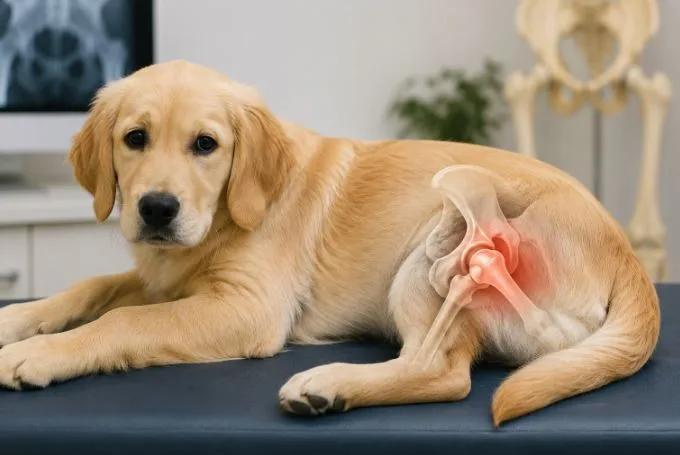
Hip dysplasia is one of the most common orthopaedic conditions vets see in dogs. It affects large-breed dogs the most, though any dog may develop it. The condition often starts small. Over time, it can turn into painful arthritis.
Many dog owners in Keysborough notice their pet slowing down and assume it is just old age. Sometimes it is hip dysplasia instead. This guide covers the early signs, how our vet team diagnoses it using X-ray imaging, and the treatment paths available, including our orthopedic surgery services.
What Is Hip Dysplasia?
Hip dysplasia in dogs occurs when the hip joint fails to form correctly—the joint works like a ball and socket. The femur head is the ball. The pelvis has a socket, called the acetabulum.
In a healthy hip joint, the ball sits snugly in the socket. With hip dysplasia, the fit is loose. This looseness is called hip laxity. Over time, hip laxity wears down cartilage and leads to osteoarthritis.
Genetics play a large role. Some breeds carry a much higher risk than others:
- German Shepherds are around three times more likely to develop hip dysplasia than the average dog, likely due to breed disposition.
- Golden Retrievers are more than twice as likely as other dogs to develop hip dysplasia, leading to joint pain and mobility issues.
- Labradors, Rottweilers and other large breed dogs also carry a higher risk.
Environment matters too. Rapid puppy growth, excess weight and too much high-impact exercise in young dogs can all make hip dysplasia worse. This is one reason vets talk to puppy owners early about weight management and controlled exercise.
Signs and Symptoms to Watch For
Signs of hip dysplasia vary. They depend on the dog’s age and how far the condition has progressed. Some dogs show early signs as puppies. Others develop symptoms later in life, as arthritis sets in.
Difficulty Rising From Lying Down
Many dogs with hip dysplasia hesitate before standing. Getting up from the floor may look stiff or slow, especially first thing in the morning.
Bunny Hopping” Gait When Running
A classic early sign is a bunny hop gait. The dog uses both back legs together, like a rabbit, rather than moving them one at a time.
Reluctance to Jump, Climb Stairs, or Play
Dogs with hip pain often avoid the couch, the car boot or the stairs. A previously playful dog may show signs of hip pain and start turning down games it used to love.
Reduced Activity or Muscle Loss in Hind Legs
Over time, dogs may lose muscle mass around the hips and thighs. This can make the hind legs look thinner than the front.
Visible Discomfort After Exercise
Some dogs seem fine during a walk but grow stiff or sore afterwards. This delayed soreness is a common early sign in adult dogs.
Symptoms can appear in puppies as a developmental issue. In older dogs, symptoms usually relate to arthritis that has built up over the years.
How Hip Dysplasia Is Diagnosed?
Diagnosis of hip dysplasia starts with a physical exam. Our vet will check your dog’s range of motion and test for hip laxity by gently moving the joint.
The Role of X-ray Imaging
X-ray imaging is the main tool used to confirm a diagnosis of hip dysplasia. It shows how well the ball sits in the socket and reveals any bone spurs or arthritis already present.
X-ray imaging also helps our vet decide on the right treatment path. Mild joint changes may suit conservative treatment. More severe joint changes may need surgical options instead. Your vet will discuss the results with you and explain what they mean for your dog’s mobility going forward.
Non-Surgical Management Options
Not every dog with hip dysplasia needs surgery. Many dogs manage well with medical management, especially when the condition is caught early or when symptoms are mild.
Options your vet may recommend include:
- Weight management – extra weight puts more strain on the hip joint, so keeping your dog lean helps reduce pain.
- Joint supplements – products supporting cartilage health are often used alongside other treatments.
- Anti-inflammatory drugs – these help reduce pain and swelling from osteoarthritis.
- Physiotherapy – gentle, structured exercise can help maintain muscle mass around the hip.
Conservative treatment is often a good fit for senior dogs or dogs with mild joint laxity. It is also common for dogs who are not good candidates for surgery for other health reasons.
When Orthopedic Surgery Services Are Recommended?
When medical management is not enough, our orthopedic surgery services offer several options. The right choice depends on your dog’s age, size and how severe the hip dysplasia has become.
Total Hip Replacement
Total hip replacement is usually recommended for adult and larger dogs with severe arthritis. The damaged joint is replaced with an artificial one, restoring smoother movement.
Femoral Head Ostectomy (FHO)
An FHO removes the femoral head, the “ball” part of the joint. Scar tissue then forms a new, pain-free connection. This works well for smaller dogs and some larger dogs, too.
Juvenile Pubic Symphysiodesis (JPS)
JPS is a preventive procedure for very young puppies, usually performed around 14 to 16 weeks of age. It helps improve how the hip socket forms as the puppy grows, reducing the severity of hip dysplasia later in life.
Our vet will explain which surgical options suit your dog after reviewing the X-ray imaging and physical exam results together.
Age Group and Likely Treatment Path
| Age Group | Likely Treatment Path |
| Puppy (under 6 months) | JPS, if diagnosed early |
| Young adult dog | FHO, or conservative management |
| Larger adult dogs | Total hip replacement |
| Senior dogs | Medical management, pain relief |
Recovery and Long-Term Outlook
Recovery after hip surgery takes time. Most dogs need restricted activity for several weeks, followed by a gradual return to normal exercise. Your vet will guide you through each stage.
Follow-up X-ray imaging is an important part of recovery. It lets your vet check that healing is on track and that the joint is settling into place well.
Many dogs with hip dysplasia go on to live full, active lives. Early diagnosis, the right treatment plan and ongoing weight management all support a good long-term outlook.
Book a Consultation in Keysborough
If your dog is showing signs of hip discomfort, do not wait. Early diagnosis makes a real difference to long-term comfort and mobility. Our Keysborough vet team offers X-ray imaging and expert advice on our orthopedic surgery services, tailored to your dog’s age, breed and severity.
Get in touch with Keysborough Veterinary Practice today to book a consultation and give your dog the best path forward.
FAQs
At what age does hip dysplasia usually appear
Signs can appear in puppies as young as a few months old, or later in adult and senior dogs as arthritis develops.
Can hip dysplasia be prevented
Genetics cannot be changed, but weight management and controlled exercise as a puppy can help reduce severity.
Is surgery always necessary for hip dysplasia
No. Many dogs manage well with medical management, especially with mild cases or in senior dogs.
How is hip dysplasia diagnosed
Through a physical exam and X-ray imaging, which confirms the diagnosis and shows how severe the joint changes are.
Can small dog breeds get hip dysplasia
Yes, though it is far more common in large-breed dogs like German Shepherds and Golden Retrievers.
