



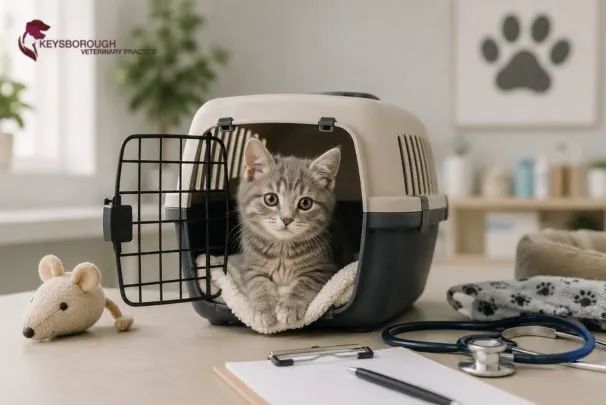
Bringing home a new kitten is exciting. It’s also a big responsibility.
The first trip to the vet is one of the most important steps in week one of kitten ownership. This new kitten checklist covers what to bring, what to expect, and what your kitten will need in the first few months.
Whether you’re a first-time cat owner or adding a new family member to a house full of pets, this checklist will help your kitten get the best start in life.
When to Book Your Kitten’s First Vet Visit
Book your kitten’s first vet visit within the first week of bringing them home. This applies even if your kitten seems perfectly healthy.
An early visit to the vet helps your vet:
- Confirm your kitten is growing well
- Catch any hidden health issues early
- Start the vaccination schedule on time
- Answer your list of questions before small concerns become bigger ones
Most vets recommend the first check-up when your kitten is around 6 to 8 weeks old, though this can shift depending on when they were weaned and how they came into your care. If your kitten is already a few months old when you get them, don’t worry. It’s still worth booking an appointment as soon as possible.
What to Bring to the First Vet Visit
Being prepared helps your first appointment run smoothly and gives your vet a full picture of your kitten’s health.
Here’s what’s nice to have ready:
- Any vet, breeder, or shelter records the kitten already has
- Microchip details, if your kitten is already chipped
- A note of any symptoms, appetite changes, or litter tray habits you’ve noticed
- A secure carrier (not a box or your arms)
- A list of questions to ask your vet
A secure carrier matters more than most new owners expect. Kittens are quick, and a stressed kitten can easily slip out of your arms in a car park or a busy waiting room. A well-ventilated carrier with a soft blanket inside also helps your kitten feel calmer on the trip.
What Happens at the First Vet Visit
Your kitten’s first vet visit covers a lot of ground. Here’s what to expect.
Full Physical Examination
The vet will check your kitten’s weight, heart and lungs with a stethoscope, eyes, ears, teeth, and coat. This health check helps assess their overall wellbeing and flags anything that needs closer attention early on.
The vet may also try palpating the abdomen to feel the organs, checking that everything feels as it should for a kitten of that age.
Discussion of Vaccination Schedule
Your vet will explain the vaccination schedule and confirm when your kitten’s next vaccine is due. This is also a good time to ask any questions about pet vaccinations in Keysborough and how they fit your kitten’s lifestyle.
Microchipping
If your kitten isn’t already chipped, this is usually done during the first visit. Microchipping is quick and gives your kitten a permanent form of identification, which matters if they ever wander off or go missing.
Deworming and Flea Prevention
Kittens are prone to fleas and intestinal worms, so this is a standard part of the flea and worm conversation at your first visit. Your vet will recommend an appropriate parasite prevention plan based on your kitten’s age and weight.
Desexing Timeline
Your vet will talk through when desexing might be appropriate for your kitten, based on their age, breed, and health.
Nutrition and Feeding Guidance
Feeding your kitten the right food, in the right amounts, supports healthy growth. Your vet can guide you on portion sizes and the best food for your kitten’s age and breed, and can help you avoid common feeding mistakes new owners make in the first few months.
For more on preventative care, see our vaccination and wellness services and our flea and worm treatment page.
Kitten Vaccination Schedule
Kittens typically need a series of vaccinations a few weeks apart, usually starting around 6 to 8 weeks of age, with boosters continuing into adulthood.
Your vet will confirm the exact schedule based on your kitten’s age and health history, so it’s best to ask your vet directly rather than relying on a generic timeline. Every kitten is a little different, and vaccination timing can shift depending on when they were weaned or whether they’ve already had any vaccines.
Pet vaccinations in Keysborough protect kittens against several serious feline illnesses, which is why staying on schedule matters so much in these early months. Missing a booster can leave a gap in your kitten’s protection at exactly the age they need it most.
See our vaccination and wellness services page for more detail.
New Kitten Checklist for Home
The vet visit is only part of the picture. Your home needs to be ready too.
Before you bring your new kitten home, make sure you have:
- A litter box in a quiet, accessible spot
- A scratching post to protect your furniture
- Kitten-specific food suited to their age
- Safe hiding spaces where your kitten can retreat and settle in
- A kitten-proofed home, with small objects, toxic plants, and loose cords out of reach
Kitten-proofing takes a bit of effort up front, but it makes those first few weeks far less stressful for everyone, including your other pets. If you have a puppy or kitten already at home, plan for a slow, supervised introduction rather than letting them meet all at once.
Helping Your Kitten Settle In
Let your kitten explore their new home at their own pace. A new kitten home can feel overwhelming at first, so give them a quiet room to start in before letting them explore further.
A few simple habits help your kitten feel safe:
- Keep feeding times consistent
- Handle your kitten gently and often, so they get used to being picked up
- Introduce new sounds, people, and pets slowly
- Examine your kitten’s eyes, ears, and coat gently at home, so vet checks feel familiar rather than stressful
This kind of early handling also makes future vet visits much easier, since your kitten will already be comfortable being examined.
Ongoing Kitten Care Timeline
Caring for a kitten doesn’t stop after the first visit. Here’s a simple timeline to keep in mind:
- 6 to 16 weeks: vaccination boosters continue on schedule
- Before 4 months of age: many vets recommend planning for desexing, in line with RSPCA guidance that early desexing reduces unwanted litters and supports long-term healththe RSPCA recommends desexing kittens before four months of age, prior to puberty, provided a vet has assessed them as being in good health, at an appropriate weight, and adequately vaccinated RSPCA South Australia
- 3 to 6 months of age: a good time to check in with your vet about growth, diet, and behaviour
- 12 months: first-year wellness check to make sure your kitten is on track for a long and healthy life
This isn’t an exhaustive list. Your vet will tailor the exact timeline to your kitten’s needs, breed, and health history.
Why the First Vet Visit Matters
Cats are a big part of Australian life. Around a third of Australian households own a cat, with roughly 5.3 million pet cats living in about 3.3 million homes across the country. That’s a large number of new kittens starting their lives each year, and a large number of first vet visits happening alongside them.
Getting that first check-up right sets the foundation for your kitten’s health for years to come. It also gives you a chance to build a relationship with a vet clinic you trust, close to home in Melbourne’s southeast.
Book Your Kitten’s First Vet Visit in Keysborough
Our experienced vets are passionate about the health of every kitten and pet that walks through our door. We’ll help your kitten get off to the best start in life, from that first appointment through every stage of kitten health.
Explore ourkitten care guide for more on what to expect, or learn more about us and why Keysborough families choose our practice.
Book your kitten’s first appointment today.
FAQs
How old should a kitten be for its first vet visit?
Ideally within the first week of coming home, even if they seem healthy.
Do indoor-only kittens still need vaccinations?
Yes. Indoor cats can still be exposed to disease, so vaccination is still important.
When should I get my kitten desexed?
Many vets recommend planning for desexing before 4 months of age. Ask your vet for guidance specific to your kitten.
How much does a first kitten vet visit cost?
Costs vary by clinic and what’s included. Contact your veterinarian for a quote tailored to your kitten.
What percentage of kittens need extra care at their first check-up?
It varies. A stool sample may also be taken at this visit to check for parasites, so your vet can flag anything early.
