



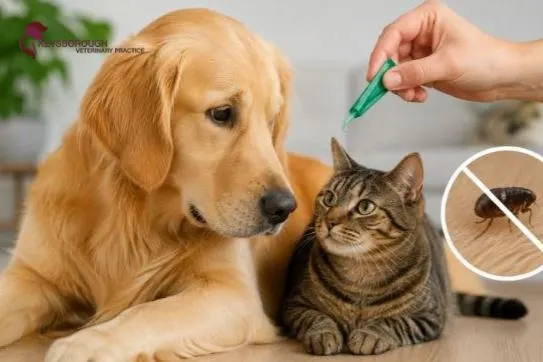
Yes. Some flea treatments made for dogs can be highly toxic to cats. Dog spot-on products containing permethrin are a particular concern. A cat can be exposed when the wrong product is applied directly, when it licks a recently treated dog or through close contact with the application area.
If a dog flea product has been applied to your cat, or your cat is trembling, twitching, drooling, unsteady or having seizures after possible contact, call a veterinarian immediately. Keysborough Veterinary Practice can be reached on (03) 9798 7274 during clinic hours. Outside those hours, contact an emergency veterinary hospital. Do not wait for symptoms to develop before seeking advice.
This article explains the risk, but it cannot identify a product or assess an exposed cat. Keep the packaging and active-ingredient information available when you call.
Why can a product be safe for dogs but dangerous for cats?
Dogs and cats process some chemicals differently. Cats are particularly vulnerable to certain pyrethroid insecticides, including concentrated permethrin used in some dog-only flea and tick products.
The Australian Pesticides and Veterinary Medicines Authority requires warnings on dog spot-on products containing permethrin. Its labelling guidance says cats should be kept away from recently treated dogs and notes reports of toxic effects after grooming or contact even 48 hours later.
The important point is that “flea treatment” is not one interchangeable medicine. Products differ in active ingredient, concentration, species, weight range and dosing interval. A label for dogs is not a dosing guide for cats.
What is permethrin?
Permethrin is a synthetic pyrethroid insecticide used in some parasite products. It affects the nervous system of insects. Dogs can use certain labelled formulations at the correct dose, but cats cannot process concentrated exposure safely in the same way.
Veterinary references describe signs such as muscle fasciculations, tremors and seizures in cats exposed to toxic pyrethroids. The severity depends on product, concentration, amount, route and how quickly treatment begins.
Do not rely on the front of the package alone. Read the active ingredients, species warning and weight range every time, even if the brand name looks familiar.
How are cats exposed?
The dog product is applied directly to the cat
This is the clearest emergency. It can happen when products are stored together, packaging is similar or an owner assumes a smaller dog dose will suit a cat.
Do not attempt to calculate a “cat amount” from a dog tube. Contact a veterinarian immediately.
The cat grooms a recently treated dog
Cats may lick dogs they live with or groom product from the dog’s coat. Exposure can occur before the application site has dried and, with relevant products, contact precautions may extend longer. Follow the exact label.
Close physical contact
Cats and dogs may sleep together, rub against one another or share bedding. Product can transfer from the treated area.
Separate pets according to label and veterinary advice. Use different rooms where necessary, not just supervision from across the room.
The wrong package is opened
Multi-pet households may have several boxes, weight ranges and dosing dates. Poor lighting, rushed routines and removed packaging make mistakes more likely.
Store dog and cat products separately and keep each dose in its original labelled packaging until use.
Warning signs of flea-treatment poisoning in cats
Signs can include:
- Muscle twitching or rippling;
- Tremors;
- Unsteadiness or difficulty walking;
- Agitation or unusual sensitivity;
- Drooling;
- Vomiting;
- Weakness;
- Difficulty breathing;
- Seizures; and
- Collapse.
Not every exposed cat shows every sign, and early signs can be subtle. Do not wait for a seizure before calling.
If your cat is actively convulsing, keep the area quiet and remove nearby objects that could cause injury. Do not put your fingers or anything else in the cat’s mouth. Arrange emergency transport while following veterinary instructions.
What should you do if dog flea treatment was applied to a cat?
- Call a veterinarian immediately. Give the product name, active ingredients, strength, amount, time and cat’s approximate weight.
- Keep the packaging. A photograph of the front, back and ingredient panel can help if you are already travelling.
- Prevent further licking. Do this safely and without delaying the call.
- Follow veterinary decontamination instructions. Topical products may require washing, but the correct timing and method depend on the cat’s condition. A trembling or seizuring cat needs professional stabilisation; bathing it at home can be unsafe.
- Do not give home remedies. Do not induce vomiting, apply another chemical or give human medicine unless a veterinarian specifically directs it.
- Keep the cat warm and quiet during transport, without overheating. Use a secure carrier.
The response should be guided by the product and clinical signs. Internet instructions cannot replace that assessment.
Should you wash the product off?
Removing a topical chemical can reduce further absorption in some cases. Veterinary toxicology references describe washing with a degreasing liquid detergent and water as one decontamination approach for topical agents.
However, call first. If a cat is twitching, very distressed, weak or seizing, bathing can worsen stress, lower body temperature or put both the cat and handler at risk. The veterinary team may need to control neurological signs before decontamination.
Do not use solvents, insecticides, essential oils or another flea shampoo to remove the product.
What if the cat only touched a treated dog?
Contact can still matter, particularly if the cat groomed the application site. Separate the animals and read the dog product’s warning. Call a veterinarian or the product’s veterinary advice line with the exact details.
Do not assume the cat is safe because the dog was treated yesterday. APVMA labelling guidance for permethrin dog spot-ons refers to reported toxic effects in cats that groomed or contacted treated dogs 48 hours earlier.
The veterinarian may recommend monitoring or assessment based on the product and exposure. Follow that advice rather than waiting for visible symptoms.
How is toxicity treated at the veterinary clinic?
Treatment depends on the cat’s signs and exposure. It may include decontamination, medicine to control tremors or seizures, temperature management, fluids and close monitoring. Some cats require hospital care.
There is no useful home antidote. Early treatment aims to limit further absorption and support the cat while the body clears the chemical.
Bring the packaging. “A flea spot-on” does not tell the veterinarian enough because active ingredients and concentrations vary.
Keysborough Veterinary Practice has in-house veterinary pathology and diagnostic facilities that may support assessment where clinically required. The veterinarian decides which tests or monitoring are useful.
Are all dog flea treatments toxic to cats?
No, but that does not make dog products interchangeable with cat products. Some active ingredients appear in separately labelled dog and cat formulations, often at different concentrations or doses. Other dog-only ingredients can be dangerous.
The safe rule is straightforward: use only a product labelled for cats and suitable for that cat’s age and weight, unless a veterinarian has supplied different directions for that individual animal.
Do not split dog doses between cats, estimate by size or reuse an old recommendation for a new pet.
Choosing a cat flea treatment safely
A suitable cat flea treatment depends on age, weight, health, lifestyle, other pets and parasites requiring coverage.
Ask:
- Is this exact product labelled for cats?
- Is my cat old and heavy enough for it?
- Does another medicine contain the same active ingredient?
- Does the product cover fleas only, or other parasites?
- How often is it given?
- What should I do if a dose is late?
- How long should cats and dogs be separated?
- What side effects require a call?
Follow the current label and measure weight accurately. A kitten, underweight cat, pregnant animal or cat with a health condition may need particular advice.
Flea safety in a mixed dog-and-cat household
Mixed households need a plan for every animal and the environment.
Treat every pet with a species-appropriate product
Leaving one animal untreated gives fleas another host. This does not mean using the same product on everybody.
Dose on a planned day
Set reminders, record the product and keep packages until the dose is documented. Avoid dosing when distracted.
Separate after application
Follow the longest applicable product direction and prevent grooming. Separate bedding may also be needed.
Treat the environment
Most of the flea life cycle occurs away from the adult flea on the pet. Vacuum, wash bedding and follow veterinary or pest-control advice where an infestation is established.
Consider worm prevention
Pets can acquire tapeworm by swallowing infected fleas. Keysivet’s worm-treatment guide explains why flea and worm control need to be considered together.
Avoid common product mistakes
- Do not decant treatments into unlabelled containers.
- Do not store dog and cat doses in the same loose bag.
- Do not assume “natural” means safe.
- Do not use a product after losing the label.
- Do not combine treatments without checking active ingredients.
- Do not apply more because fleas are still visible soon after treatment.
- Do not use human insect repellent on pets.
- Do not let a cat groom a recently treated dog.
If fleas remain, the cause may be environmental emergence, missed pets, incorrect dosing, application error or product mismatch. More chemical is not automatically the answer.
When flea treatment seems not to work
An established infestation can continue producing new adult fleas from eggs, larvae and pupae in the home. This can create the impression that the product failed immediately.
Continue only according to veterinary and label directions. Treat all pets appropriately, clean the environment and confirm that doses were correct. The guide on how to identify fleas on a cat explains flea dirt and household stages.
Do not shorten the interval or add another product without advice. Combining active ingredients can create toxicity.
Get veterinary advice immediately after exposure
For suspected poisoning or sudden neurological signs, call (03) 9798 7274 during Keysborough Veterinary Practice’s opening hours. The clinic provides urgent pet care during the day. Outside clinic hours, contact an emergency veterinary hospital without delay.
Frequently asked questions
What ingredient in dog flea treatment is dangerous to cats?
Concentrated permethrin in some dog-only spot-on products is a major concern. Other ingredients and formulations also require species-specific use. Check the full label and call a veterinarian with the product details.
Can a cat be poisoned by licking a treated dog?
Yes. Grooming or close contact with a dog treated using a relevant product can expose a cat. Separate pets according to the label and seek advice immediately if contact occurs.
How quickly do symptoms start?
Timing varies with the product, amount and exposure. Signs may develop within hours and can worsen. Do not wait for symptoms before calling after a known application error.
Can I use a small-dog flea treatment on a large cat?
No. Weight similarity does not make a dog product suitable for cats. Use a cat-labelled product for the correct age and weight unless a veterinarian directs otherwise.
Is supermarket flea treatment safe for cats?
Safety depends on the exact registered product, correct species, age, weight and use. The place of purchase does not replace reading the label. Ask the clinic if you are uncertain.
Should I make my cat vomit?
No. Do not induce vomiting or give a home remedy unless a veterinarian specifically instructs you. Topical exposure and neurological signs require professional guidance.
