



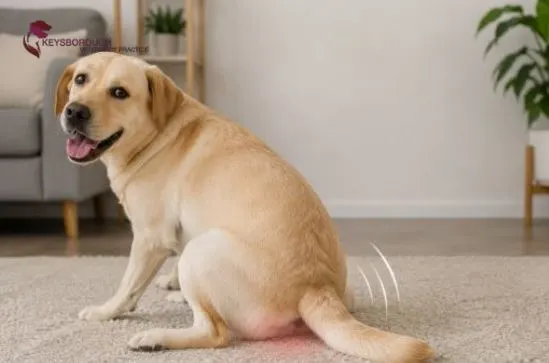
A dog usually scoots because the area around its bottom is itchy, painful or irritated. Anal sac problems are a common cause, but scooting can also be related to parasites, allergies, skin inflammation, diarrhoea, material caught in the coat or, less commonly, a growth. One quick scoot does not always mean disease. Repeated scooting, licking, a strong smell, swelling, blood or pain needs veterinary assessment.
Do not repeatedly squeeze your dog’s anal glands at home. The wrong technique can cause pain, injury or delay treatment for infection. If your dog is distressed, cannot pass stool, has a red swelling beside the anus or is bleeding, call Keysborough Veterinary Practice on (03) 9798 7274 during clinic hours for advice.
What is dog scooting?
Scooting is when a dog sits and drags its rear along the floor or ground using the front legs. It is a response to discomfort rather than a diagnosis.
Watch what happens before and after. Note whether the dog has passed stool, received grooming, had diarrhoea or started licking the area. A short video can help if the behaviour does not happen at the appointment.
Avoid punishing the dog. Scooting is not misbehaviour, even when it marks the carpet.
Cause 1: Full or impacted anal sacs
Dogs have two small anal sacs beside the anus. They hold strong-smelling fluid that normally empties during a bowel movement.
If the ducts become inflamed or the material thickens, a sac may not empty properly. Pressure and irritation can cause scooting, licking, discomfort when sitting and a fishy smell.
Some dogs have one episode. Others experience recurrence associated with stool consistency, body condition, skin disease or individual anatomy. A veterinarian can check whether the sacs are full, impacted, infected or normal.
Cause 2: Anal sac infection or abscess
An impacted sac can become infected. An abscess may create a painful red or hot swelling beside the anus and can rupture through the skin, releasing blood or pus.
This is not a routine grooming issue. The dog may be reluctant to sit, cry, guard the tail, lose appetite or seem unwell. Even a normally gentle dog may react when a painful area is touched.
Call promptly. Treatment may involve careful emptying or flushing, pain relief and other medicine based on the examination. A severe abscess may need a procedure.
Cause 3: Intestinal parasites
Tapeworm segments around the anus can irritate. Owners may see small rice-like pieces in the coat, bedding or stool. Dogs commonly acquire one tapeworm type by swallowing an infected flea.
Other worms can affect the digestive tract and stool, although scooting alone does not identify a parasite. A stool test or parasite history may be needed.
Keysivet’s guide to worm treatments for dogs and cats explains common parasites and prevention. Do not choose a product based only on scooting because different treatments cover different worms.
Cause 4: Allergies and skin inflammation
Environmental, food or flea-related allergies can inflame skin around the rear and may contribute to anal sac trouble. Look for itchy paws, ears, belly or other skin areas as well as scooting.
Flea allergy can cause intense itching even when few fleas are seen. Check the coat and review prevention for every pet in the household. The clinic’s flea-treatment guidance explains why species, weight and lifestyle matter.
Allergy diagnosis is rarely settled by one symptom. The veterinarian may review diet, season, parasite control and recurring ear or skin disease.
Cause 5: Diarrhoea, constipation or stool changes
Loose stool may not press on the sacs effectively and can irritate skin. Constipation or hard stool can also make defecation painful. Repeated straining needs assessment.
Tell the vet about stool consistency, frequency, blood, mucus, appetite, vomiting and diet changes. A photograph or sample may be useful if requested.
Do not give human diarrhoea or constipation medicine without veterinary advice.
Cause 6: Grooming irritation or material in the coat
Faeces, grass seeds, matted hair or grooming products can irritate the skin. Long-coated dogs may need the area gently checked.
Do not cut close to the skin with scissors. Mats can pull skin upward, making injury easy. A groomer or veterinary professional can remove them safely.
If irritation began after a grooming product, rinse only according to professional advice and keep the product information.
Cause 7: A mass or other less common condition
Growths around or within the anal sacs are less common but need consideration, particularly in older dogs or where signs affect one side repeatedly. A lump, persistent swelling, change in stool shape, straining or unexplained weight loss should be examined.
Other skin, nerve or orthopaedic pain can sometimes change the way a dog sits or moves. The examination determines whether the discomfort is truly localised to the rear.
When is scooting urgent?
Seek prompt veterinary advice if you notice:
- a red, hot or painful swelling beside the anus;
- blood, pus or an open wound;
- severe pain or snapping when the tail area is approached;
- repeated straining or inability to pass stool;
- vomiting, lethargy or loss of appetite;
- sudden weakness or collapse;
- a foreign object protruding from the anus; or
- rapid worsening.
Do not pull string, fabric or another object protruding from the anus. It may extend further into the digestive tract. Prevent chewing and call a veterinarian.
Keysborough Veterinary Practice offers urgent pet care during clinic hours. Life-threatening or after-hours problems require an emergency veterinary hospital.
What can you check safely at home?
You can observe without squeezing or probing:
- how often the dog scoots;
- whether it follows a bowel movement;
- stool appearance;
- licking or tail-base chewing;
- a fishy smell;
- visible redness or discharge;
- fleas or flea dirt;
- rice-like tapeworm segments;
- recent diet or grooming changes; and
- other skin or ear symptoms.
Take a photo of visible findings if safe. Keep children and other pets away if the dog is painful.
Why home anal-gland expression can be a problem
Not every scooting dog has full sacs. Squeezing normal or inflamed tissue can hurt and may cause trauma. An abscess or mass requires different care.
Routine expression also needs an individual reason. Some dogs empty normally and do not benefit from unnecessary manipulation. Dogs with recurring disease need evaluation of underlying factors, not just frequent emptying.
If a veterinarian recommends scheduled expression for your dog, ask who should do it and how recurrence will be monitored.
What happens at the veterinary appointment?
The veterinarian will take a history and examine the dog. The skin, anus and anal sacs may be assessed, and a rectal examination may be recommended.
Depending on findings, the plan may involve:
- expressing impacted material;
- checking for infection or abscess;
- examining a sample;
- parasite assessment or faecal testing;
- treating pain and inflammation;
- investigating allergy or skin disease;
- reviewing diet and stool quality; or
- imaging or further tests for a lump or recurrent problem.
Painful dogs may require sedation for a safe and thorough procedure. The clinic’s pet anaesthesia guide explains how individual risk is assessed when sedation or anaesthesia is needed.
How anal sac problems are treated
Simple impaction may be managed by carefully emptying the sacs. Thick material can require flushing. Infection, inflammation or an abscess may need additional treatment and follow-up.
The plan depends on what is found. Antibiotics are not automatically required for every full gland, and scooting does not automatically mean glands should be expressed.
If an abscess has ruptured, the area needs pain management and wound care. Follow discharge instructions and prevent licking as directed.
Recurrent scooting
Repeated episodes deserve a wider review. Factors can include:
- chronic loose stool;
- constipation;
- skin allergy;
- flea exposure;
- body condition;
- individual anatomy;
- recurring infection; or
- less common structural disease.
Keep a record of dates, stool, diet, skin signs and treatment response. Patterns can help the vet decide what to investigate.
Do not change several foods and products at once. That makes it difficult to identify what helped or caused a reaction.
Can diet help?
Stool quality influences natural emptying of the sacs. Some dogs benefit from a carefully selected diet or fibre adjustment, but there is no universal “anal gland diet”. Too much or inappropriate fibre can also cause problems.
Discuss the dog’s complete diet, treats, weight and digestive signs. A sudden food change can worsen stool quality.
If food allergy is being considered, a proper elimination trial uses a specific diet for a defined period and avoids unapproved extras. It should be guided by the vet.
Preventing future problems
You cannot prevent every anal sac episode, but useful steps include:
- maintain a suitable body condition;
- address persistent diarrhoea or constipation;
- use consistent vet-approved parasite prevention;
- treat skin and ear disease properly;
- keep long hair clean and unmatted;
- attend follow-up after infection or abscess; and
- have recurrent cases investigated.
Do not add regular gland expression to every grooming visit unless it is appropriate for that dog.
Scooting in puppies
Puppies can scoot because of irritation, parasites, stool changes or anal sac trouble. Their parasite schedule and growth stage are important.
Bring vaccination, worming and flea-treatment records. Use only products suitable for the puppy’s age and weight.
Repeated scooting, poor growth, diarrhoea, vomiting or a pot belly needs veterinary advice rather than another over-the-counter dose chosen at random.
Arrange an examination in Keysborough
If your dog keeps scooting or has pain, swelling, discharge or a strong smell, call Keysborough Veterinary Practice on (03) 9798 7274. The clinic at 4–8 Chapel Road, Keysborough can assess the anal sacs, skin, parasites and digestive history rather than treating the symptom alone.
Routine visits can be arranged through the Keysborough vet clinic, while urgent daytime concerns should be discussed by phone.
Frequently asked questions
Does scooting always mean anal glands?
No. Anal sac problems are common, but parasites, allergies, skin irritation, stool changes, grooming issues and masses can also cause it. Examination identifies the cause.
Can worms make a dog scoot?
Tapeworm segments can irritate the area, and other parasites may affect stool. Scooting alone cannot diagnose worms. The vet may recommend parasite treatment or testing based on history.
Why does my dog smell fishy?
Anal sac fluid has a strong fishy odour and can release when sacs empty or a dog is frightened. Persistent odour with scooting, licking, pain or discharge needs assessment.
Can I express my dog’s anal glands myself?
Do not do so unless a veterinarian has assessed your dog and specifically shown you an appropriate method. Incorrect expression can cause pain or miss infection and other disease.
Is dog scooting an emergency?
Occasional scooting without other signs may not be an emergency. Swelling, blood, pus, severe pain, inability to pass stool, illness or rapid worsening needs prompt care.
Why does scooting keep coming back?
Recurring episodes may be associated with stool quality, allergies, body condition, anatomy, parasites or chronic infection. A record and full assessment can guide prevention.
