



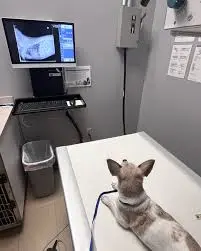
Pet diagnostics begin with a veterinary examination and a clear account of what has changed. Blood or urine tests, X-rays and ultrasound may then help the vet narrow the possible causes, assess severity or plan treatment. Not every sick pet needs every test, and a machine does not replace the vet’s clinical judgement.
At Keysborough Veterinary Practice, pathology, X-ray and ultrasound are available on site. This can allow a dog or cat to be examined and have appropriate tests performed at the same clinic, without every investigation needing an outside appointment. The actual sequence depends on the animal and the question the vet is trying to answer.
Why the consultation still comes first
A symptom rarely points to one diagnosis. Vomiting, for example, can occur for many reasons. A limp can involve a paw, muscle, joint, bone or nerve. Drinking more water can reflect behaviour, medication or several different health conditions.
The vet begins by asking when the change started, how often it occurs and what else has happened. They then examine the animal. Age, breed, medicines, diet, previous illness and findings on the day guide what comes next.
Testing works best when it answers a defined question. Ordering every available test can add stress and cost without necessarily adding useful information. The vet should explain what a recommended test may show, what it cannot show and how the result could change the plan.
If your pet is unwell, bring a list of medicines and recent changes. A short video of an intermittent cough, gait change or episode can help, provided it was recorded safely.
What can in-house pathology assess?
Pathology means examining samples such as blood, urine or material collected from a lump, wound or other site. The exact test depends on the clinical concern.
Blood testing may give information about red and white blood cells, platelets, organ-related markers, electrolytes and other measures. Urine testing can add information about concentration, inflammation, blood, glucose and crystals. Interpret results alongside the animal’s examination and history.
Keysborough Veterinary Practice provides general pathology and bloodwork on site. Some specialised tests may still need an external laboratory. Ask which tests can be completed at the clinic, when results are expected and how you will receive them.
An abnormal value is not always a diagnosis on its own. Dehydration, stress, medicines and sample quality can affect results. The vet may recommend repeating a test, adding another investigation or monitoring over time.
When might a vet recommend blood tests?
A vet may discuss blood tests when a pet is unwell, before an anaesthetic, during management of a known condition, or as part of an age-appropriate health assessment. The reason should be specific to the patient.
For an unwell pet, testing can help assess whether several body systems are affected and whether immediate treatment is needed. Before surgery, it may provide information relevant to anaesthetic planning. During ongoing treatment, it can help the vet monitor the condition or effects of medicine.
A normal blood panel does not rule out every problem. Some conditions need imaging, a specialised test or observation over time. Likewise, one mildly unusual result may not mean serious disease. Ask the vet how strongly the finding fits the symptoms.
Do not stop prescription medicine before testing unless the treating vet tells you to. Instead, provide the name, dose and time of the last dose.
What does an X-ray show?
X-rays are particularly useful for examining bones and for obtaining certain views of the chest and abdomen. They may help assess a fracture, arthritis, joint alignment, heart and lung outlines, bladder stones, swallowed material or changes in organ size.
Different tissues appear differently on an X-ray, but some structures overlap. The vet may need several views to understand the location and shape of a finding. Positioning matters, and a painful or frightened animal may need sedation so the images can be obtained safely and accurately.
Sedation is not automatically required for every X-ray. The decision depends on the body area, number of views, the animal’s comfort and ability to remain still. The vet should explain the reason and relevant risks for your pet.
The clinic’s pet X-ray and ultrasound service allows imaging to be performed at the Keysborough practice when appropriate.
What does ultrasound add?
Ultrasound uses sound waves to create images of soft tissues. In veterinary practice, it can help assess organs and structures that may not be distinguished clearly on ordinary X-rays.
An abdominal ultrasound may be recommended to look at organs such as the liver, kidneys, bladder, spleen or gastrointestinal tract. The exact information depends on the patient, equipment, operator and reason for the examination.
Hair may need to be clipped so the probe can make suitable contact with the skin. This is practical rather than cosmetic, and the team should tell you what area is likely to be clipped. A pet may need to fast or arrive with a particular bladder condition, but instructions vary. Follow the clinic’s advice rather than a general checklist.
Ultrasound and X-ray do not simply replace one another. They show tissues in different ways and may be used together.
Why might more than one test be needed?
Each diagnostic tool answers a different part of the question. Bloodwork may indicate that an organ system is under strain without showing its physical appearance. Imaging may show a structural change without explaining how it affects function.
For example, the vet may combine an examination, blood results and abdominal imaging to understand a dog that has stopped eating. The purpose is not to collect tests. It is to build enough evidence for a sensible decision.
Ask the vet to explain the order. Sometimes one result determines whether the next test is necessary. In other cases, several tests are needed promptly because the pet is significantly unwell.
If cost limits what can be done at once, say so. The vet can explain which information is most urgent, what could reasonably wait and what uncertainty remains. No price is included here because the clinic has no approved public fee list.
What are the benefits of tests being on site?
On-site testing can reduce the need to arrange routine imaging or common pathology at another location. It can also make communication simpler because the treating vet can connect the examination, test and next discussion.
Timing still varies. A test being available in the building does not guarantee an immediate result in every case. Staff, patient preparation, urgency, sample requirements and whether a specialist interpretation is needed all affect the process.
Some samples or images may need to be sent to an external laboratory or referred for specialist review. That is not a failure of in-house diagnostics. It is part of choosing the right level of investigation.
The useful question is: which parts can happen today, what goes outside the clinic, and when will we discuss the findings?
How should you prepare your pet?
Ask the clinic for instructions when booking. Preparation depends on the test and the animal’s condition. Do not withhold food, water or medicine unless the veterinary team tells you to.
Bring:
- A list or photographs of all medicines and supplements
- Previous records if another clinic holds relevant results
- Notes on appetite, drinking, toileting and energy
- A sample only if the clinic has asked for one and explained how to collect it
- Videos of intermittent symptoms where safe
- Details of possible access to toxins, foreign objects or unusual food
Cats should travel in a secure carrier. Dogs should arrive on a lead. Tell reception if your pet becomes very frightened, has pain when handled or may react defensively.
The clinic has Low Stress Handling certification within the team, which means staff use a structured approach intended to reduce fear and distress during visits. This cannot remove all anxiety, but early information helps the team plan.
Will my pet need sedation or an anaesthetic?
Some imaging and sample procedures can be completed while a pet is awake. Others require sedation or a general anaesthetic to obtain accurate results, prevent pain or keep the animal and staff safe.
The decision depends on the procedure, body area, expected discomfort, length of time and the individual pet. Ask what level is proposed, why it is needed, how your pet will be monitored and what recovery may involve.
No sedative or anaesthetic is completely risk-free. The team assesses the patient and tailors the plan. Two of the clinic’s five vets hold postgraduate memberships in emergency and critical care, a factual qualification relevant to managing acutely unwell animals, but not a guarantee of an outcome.
How are results explained?
Ask when the vet expects to have enough information for a discussion and whether you need to remain nearby. Some in-house results may be available during the visit. Other tests take longer.
A useful explanation covers what was found, how certain the interpretation is, what it means for the pet and which choices follow. Request plain language if a report contains unfamiliar terms.
There may not be one final answer after the first test. The result can narrow the possibilities and lead to monitoring, treatment, another test or referral. Medicine often works through probabilities rather than instant certainty.
Keep copies of important reports and discharge instructions. If your pet sees another vet or an after-hours facility later, those records may help continuity.
When is the situation urgent?
Call a vet promptly if your pet has trouble breathing, collapses, cannot stand, has repeated seizures, severe bleeding, a swollen abdomen with distress, cannot pass urine, may have eaten a toxin or is rapidly worsening. This is not a complete list.
Keysborough Veterinary Practice provides daytime urgent care during opening hours. It is not a 24-hour or overnight clinic. Call (03) 9798 7274 first so the team can advise whether to attend and prepare for arrival.
The RSPCA provides general guidance on recognising a pet emergency, but telephone triage from a veterinary service is more appropriate for an animal in front of you.
Questions to ask before agreeing to a test
You can ask:
- What question are we trying to answer?
- How could the result change treatment?
- Does my pet need preparation, sedation or an anaesthetic?
- What can this test not rule out?
- When will results be available?
- Could an external laboratory or specialist review be needed?
- Which test is most urgent if we need to stage the investigation?
- What should I watch for while waiting?
Questions do not challenge the vet’s judgement. They help you give informed consent and follow the plan at home.
The Australian Veterinary Association explains the role of veterinarians and responsible animal care through its pet owner resources. Use reputable Australian information as background, while treating advice from your pet’s vet as specific to the case.
Book pet diagnostics in Keysborough
If your dog or cat has changed, begin with an appointment rather than trying to select a test yourself. Bring the history and let the vet decide whether examination alone, pathology, X-ray, ultrasound or another step is appropriate.
Keysborough Veterinary Practice is an independent, owner-operated clinic at 4-8 Chapel Rd and has served the area since 1988. For pet diagnostics in Keysborough, call (03) 9798 7274 or use the clinic’s online booking service. We are open until 8:00 pm on Monday, Wednesday and Friday, with other hours listed on our website.
Frequently asked questions
-
Can my pet have blood tests and imaging in one visit?
Potentially. It depends on what the vet recommends, patient preparation, urgency and availability. Call ahead for instructions.
-
Are in-house test results immediate?
Some may be available during the visit, while others take longer or need an external laboratory. Ask for the expected timing.
-
Does a normal blood test mean my pet is healthy?
Not necessarily. A blood panel cannot rule out every condition. The vet interprets it alongside the examination, history and any other tests.
-
Is ultrasound better than X-ray?
They show different tissues and answer different questions. The vet may recommend one or both according to the suspected problem.
-
Can I bring a sample from home?
Only after asking the clinic how and when to collect it. The wrong container, contamination or delay can affect usefulness.
