



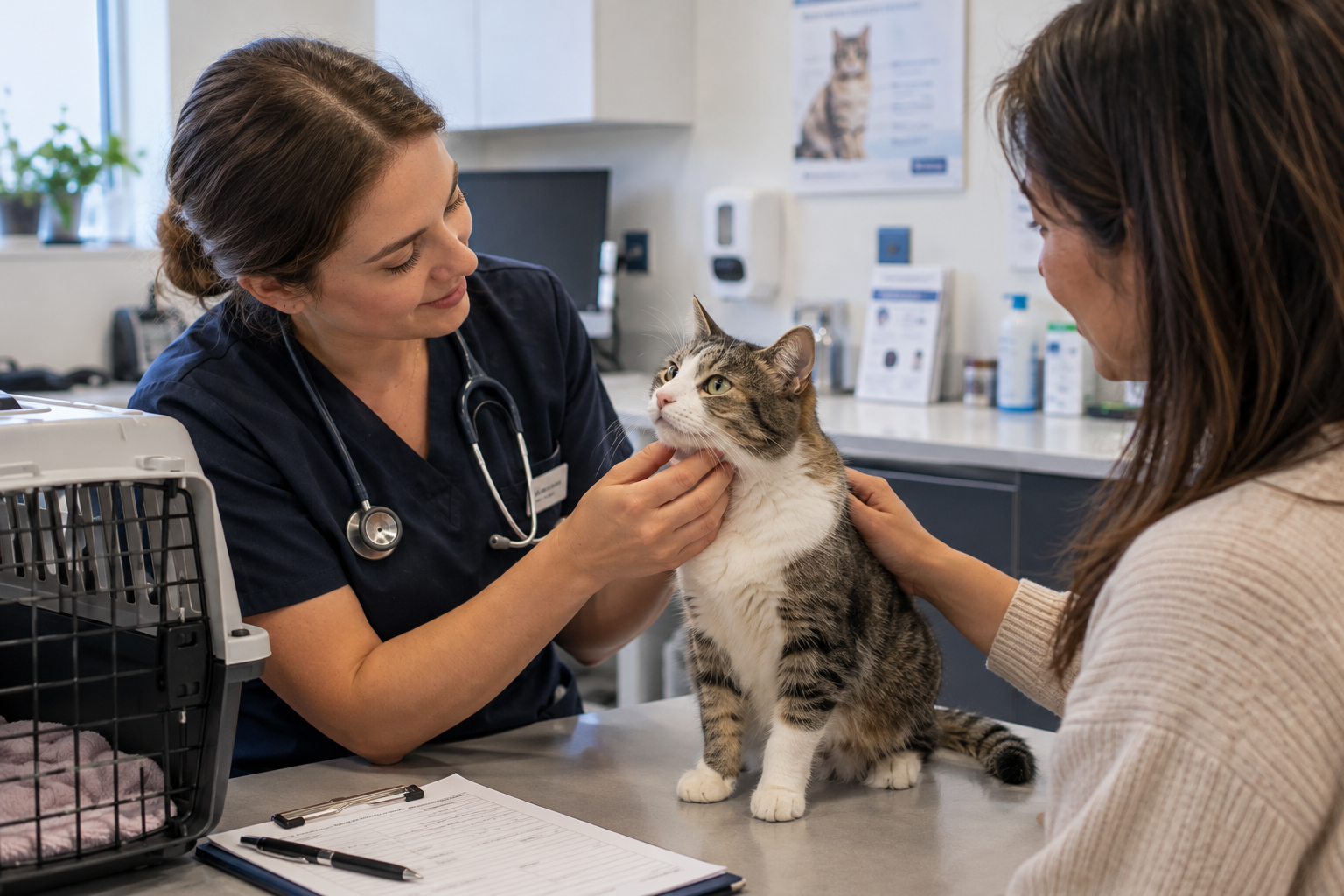
A rescue cat’s first vet visit should establish what is known, identify what is missing and create a plan without assuming that every unknown requires every test immediately. Bring the adoption, vaccination, desexing, microchip and treatment records supplied by the shelter, foster carer or previous owner. Keep the cat securely indoors and transport them in a closed carrier. The vet will usually review history, examine the cat, scan the microchip and discuss vaccination, parasite prevention, diet, dental health, behaviour and any tests that suit the cat’s age, lifestyle and findings. Call sooner if the cat is not eating, has breathing difficulty, repeatedly vomits, strains to urinate, has severe diarrhoea or deteriorates. At our Keysborough clinic, tell us before arrival if the cat is extremely fearful so we can help you plan a lower-stress visit.
A rescue cat first vet visit often begins with a folder of records, a few known habits and several unanswered questions. The appointment is not about judging the previous care or ordering every possible test. It is about building an accurate baseline.
This checklist takes you from the first days at home through preparation, examination and the plan afterwards. It also explains when a new cat should be seen sooner than a routine booking.
When should a newly adopted cat see a vet?
Arrange a routine appointment soon after adoption, using the timing advised by the shelter or rescue and the cat’s health. Calling early gives the clinic time to obtain records and helps you avoid gaps in vaccination or medicine.
Do not wait for a routine appointment if the cat:
- Struggles to breathe or breathes with an open mouth
- Repeatedly strains in the litter tray or produces little or no urine
- Has collapsed, cannot stand or has a seizure
- Has repeated vomiting or severe diarrhoea with weakness
- Has significant bleeding or trauma
- May have eaten a toxin or foreign object
- Is rapidly becoming less responsive.
Keysborough Veterinary Practice provides daytime urgent care during published opening hours and is not staffed overnight. Call (03) 9798 7274 during opening hours. If the clinic is closed and your cat is critically unwell, use an open 24-hour veterinary hospital rather than waiting.
Give your cat a quiet start at home
Moving home is a major change. Begin with one secure room containing food, water, a litter tray, hiding places, a bed and a scratching surface. Keep food and water away from the litter tray.
Allow the cat to approach at their own pace. Do not pull them from a hiding place to introduce family members. Keep windows, doors and screens secure, and do not allow outdoor access while the cat is settling and identification details are being confirmed.
The RSPCA provides settling-in guidance for newly adopted cats that emphasises a quiet space, gradual adjustment and secure containment. The individual rescue organisation may also provide advice based on what it observed in foster care.
Reduced appetite can occur with stress, but cats should not be left without eating while everyone assumes they are simply shy. Call the clinic if intake is poor, especially if the cat is overweight, young, elderly or unwell.
Which records should you collect?
Ask for copies rather than relying on a verbal summary.
| Record | Why it helps |
| Vaccination certificate | Shows product, date and course history |
| Desexing record | Confirms whether and when surgery occurred |
| Microchip number and transfer paperwork | Helps update legal ownership and contact details |
| Parasite treatments | Prevents accidental gaps or duplicate dosing |
| Test results | Provides context for previous FIV, FeLV, blood or urine testing |
| Medicine list | Shows current dose, reason and last administration |
| Dental or surgical records | Identifies previous procedures and follow-up needs |
| Behaviour notes | Preserves information from the foster home or shelter |
If something is missing, say so. “Unknown” is more useful than a confident guess.
Contact the previous clinic, shelter or rescue with the authorised owner’s details and request records. Privacy requirements may affect what can be released, so completing transfer paperwork early helps.
How do you update the microchip?
A microchip number identifies a record in a registry. It does not automatically update when a cat changes home.
Ask the rescue which transfer process applies and complete it promptly. Check that your name, phone number and address are correct. A veterinary clinic can scan the cat and identify the chip number, but ownership changes may require documents from the previous keeper or registry.
Our pet microchipping guide for Victoria walks through scanning, records and changes of address in more detail.
How should you prepare the carrier?
Use a sturdy, secure carrier with enough room for the cat to turn and rest. A removable top can make examination easier because the cat may remain in the lower half rather than being pulled through a small door.
Before the visit:
- Leave the carrier open in the quiet room.
- Add familiar bedding or a towel carrying the cat’s scent.
- Place treats nearby and then inside if the cat will eat them.
- Check every latch and fastening.
- Cover part of the carrier during travel if this helps the cat settle.
- Secure the carrier in the car so it cannot slide.
Do not travel with the cat loose. Chapel Road is a busy road, and a frightened cat can escape in a car park or interfere with driving.
Our existing guide to making a vet visit less stressful for a cat offers more preparation. Tell us if previous handling caused panic or if you cannot safely place the cat in the carrier.
What happens during a rescue cat’s first vet visit?
The vet starts with the history. We ask about the adoption date, appetite, water intake, urination, stools, sneezing, coughing, vomiting, activity, sleep and interaction.
The examination may assess:
- Weight and body condition
- Eyes, ears and nose
- Teeth, gums and mouth where tolerated
- Heart and lung sounds
- Skin and coat
- Abdomen
- Joints and movement
- Hydration
- Any scars, wounds or lumps
The order can change to suit the cat. Keysborough Veterinary Practice has Low Stress Handling certification within the team. This is a structured approach to reducing fear and distress, not a promise that every cat will accept every procedure without a different plan.
If the cat becomes too distressed, the vet may prioritise the most important parts, pause or discuss another visit with a preparation plan.
What vaccinations does a rescue cat need?
The answer depends on documented history, age, health, lifestyle and exposure risk. A cat with reliable records may have a different plan from one whose history is unknown.
The World Small Animal Veterinary Association vaccination guidelines distinguish core vaccination from vaccines selected for an individual risk. We use records and examination rather than assuming every adopted cat starts at the same point.
Bring the certificate, not only an adoption listing that says “vaccinated”. The product and date help determine what comes next.
Our vaccination and wellness services explain the clinic’s published cat vaccination approach. Outdoor access, contact with other cats and boarding plans can affect the discussion.
If the cat is unwell, the vet may recommend delaying vaccination while the problem is assessed. That is a clinical decision, not a reason to abandon the plan.
Should a newly adopted cat be tested for FIV or FeLV?
Testing may be discussed based on history, age, previous results, outdoor exposure, bite wounds and household plans. FIV is mainly spread through significant bite wounds, while feline leukaemia virus has different transmission patterns.
If you already have cats, tell the vet before introductions. Keep the newcomer separate until you have discussed health, parasite and introduction plans.
Fleas, worms and other parasites
Do not stack several products because the treatment history is uncertain. Products differ in active ingredient, species, dose and parasite coverage. A dog flea product containing an ingredient unsafe for cats can cause serious poisoning.
Bring photographs of packaging or written treatment dates. The vet can recommend the next dose after considering what was given and the cat’s weight and health.
Our flea and worm treatment service explains the prevention options offered by the clinic. Indoor cats can still have parasite risks, but the plan should match the individual cat.
Food and stomach changes after adoption
Continue the previous food at first where possible, then change gradually if a different diet is recommended. Sudden diet changes can contribute to vomiting or diarrhoea and make it harder to separate stress from illness.
Measure intake rather than topping up the bowl without knowing what was eaten. Note whether the cat drinks, urinates and passes stools.
Avoid adding multiple supplements. More products do not create a clearer baseline. Bring the food label or a photograph to the appointment so the vet knows exactly what the cat receives.
Introductions to resident pets
Slow introductions are usually easier to reverse and adjust than a rushed meeting. Begin with separate resources and scent exchange. Move to controlled visual access only when both animals are coping.
Provide one litter tray per cat plus an additional tray where space allows, placed in different useful locations rather than lined up as one resource. Separate feeding and hiding options reduce competition.
Hissing communicates discomfort and does not automatically mean the cats can never live together. Chasing, blocking access, and persistent conflict need a slower plan. Ask for advice before repeated confrontations become rehearsed behaviour.
Questions to bring to the appointment
Write down the points that will affect the plan:
- Is the vaccination record complete, and what is due next?
- Has the microchip transferred correctly?
- Which parasite prevention is appropriate, and when is the next dose?
- Does the cat need any tests based on history or examination?
- Is the current food and amount suitable?
- When is dental care needed?
- What should introductions to other pets look like?
- Which signs should prompt an earlier call?
A clear list is useful because a quiet cat in a carrier can make an owner forget half the questions they planned to ask.
Book a rescue cat first vet visit in Keysborough
Keysborough Veterinary Practice is independent and owner-operated and has worked from 4-8 Chapel Rd, Keysborough since 1988. In-house pathology is available when testing is appropriate, and our team can connect vaccination, parasite care, identification and behaviour into one practical plan.
For a stable new cat, book online or call (03) 9798 7274. Mention that this is a rescue cat first vet visit and tell us if records are incomplete or the cat finds handling extremely difficult. If the cat is unwell or deteriorating, call rather than waiting for an online booking.
Frequently asked questions
1. How long should I let a rescue cat settle before the vet?
It depends on health and the rescue’s instructions. A well cat may benefit from a short settling period, but an unwell cat or one needing medicine should not wait. Call and describe the situation.
2. Should I bathe a rescue cat before the appointment?
Usually not. Bathing can add stress and may be unsafe if the cat has skin, wound or product-exposure concerns. Ask before applying anything.
3. Can my rescue cat meet my other cat immediately?
We recommend a gradual introduction and a health discussion first. Separate resources and controlled stages reduce stress and disease uncertainty.
4. What if there are no vaccination records?
Tell the clinic rather than guessing. The vet will recommend a plan based on age, health, lifestyle and available information.
5. Can the clinic scan the microchip?
Yes. Scanning can identify the number, but registry transfer may still require documents and action by the owner or previous keeper.
