



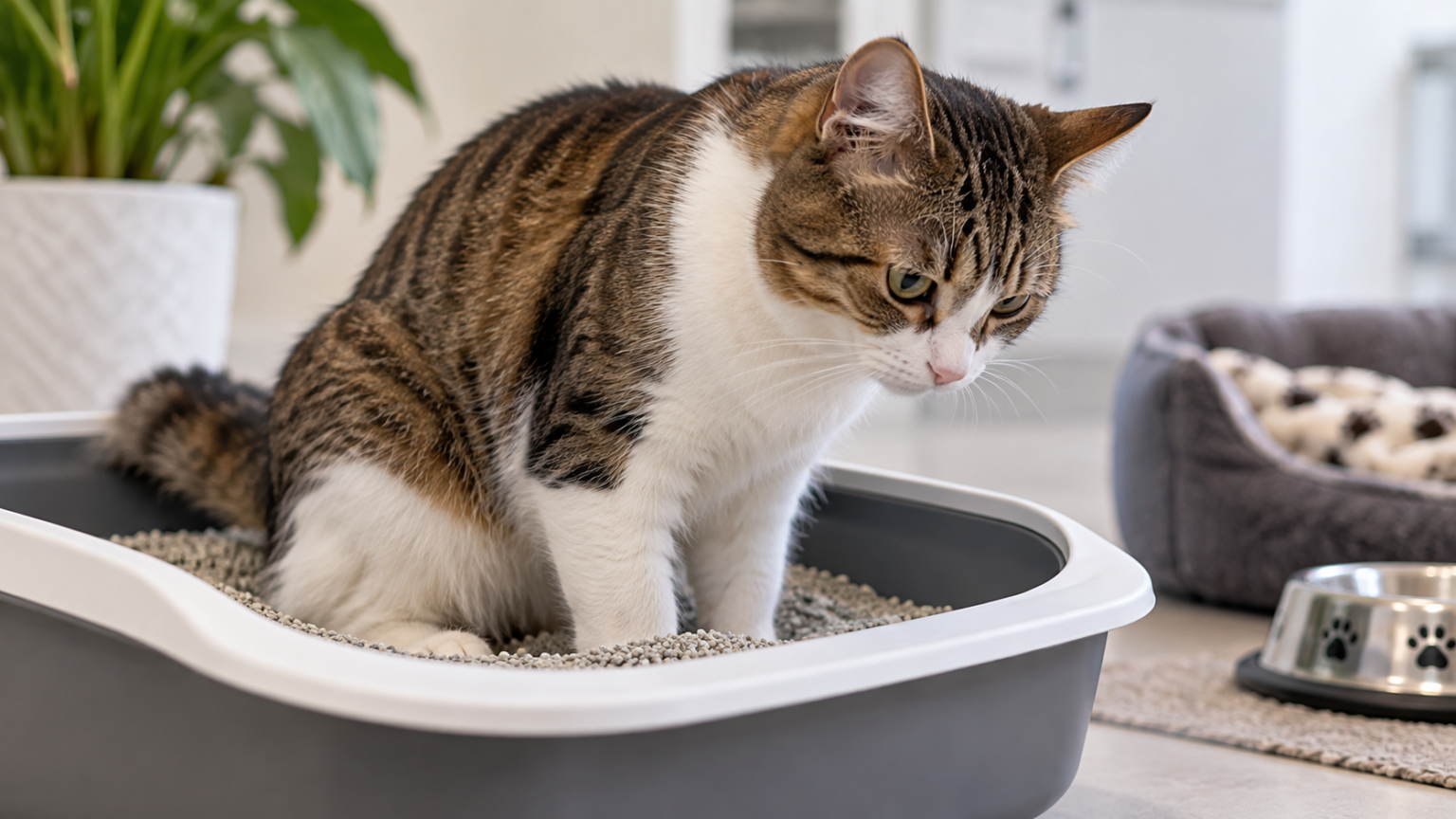
Cat constipation means passing stool infrequently, with difficulty or not at all. A constipated cat may strain in the litter tray, produce small hard pieces, vocalise or stop eating. However, repeated straining can also mean a urinary blockage, particularly in a male cat, and that can become life-threatening quickly.
For cat constipation, Keysborough owners should call us when output is uncertain rather than trying to distinguish bowel and urinary straining by guesswork.
If you cannot tell whether your cat is trying to urinate or defecate, call a veterinarian immediately. In this guide, we explain the signs of cat constipation, how it differs from urinary trouble, which home observations help, what not to give, and how our Keysborough team may investigate and treat the problem.
First check: is your cat passing urine?
Constipation and urinary straining can look similar from across the room. The cat may visit the tray repeatedly, squat, vocalise and produce little or nothing. A blocked urethra prevents urine from leaving the bladder and requires urgent veterinary care.
Treat the situation as urgent when:
- no normal urine clump has appeared
- the cat makes repeated unproductive trips to the tray
- only drops of urine or blood appear
- the cat cries, hides, vomits or becomes weak
- the abdomen seems painful or tense
- a male cat is straining, and output is uncertain
Do not press the abdomen or wait overnight to see what happens. Our urgent care page explains the service available during opening hours. We are not a 24-hour hospital, so call ahead and seek an appropriate emergency facility when we are closed.
What does constipation look like?
Constipated stool is often dry, hard and smaller than usual. The cat may spend longer squatting, return frequently or pass stool outside the tray because it associates the box with discomfort.
Common signs include:
- fewer bowel movements than normal
- dry pellets or very firm stool
- repeated straining to defecate
- vocalising in the tray
- reduced appetite
- vomiting
- lethargy or hiding
- a tense or uncomfortable abdomen
- small amounts of liquid stool around retained faeces
- reduced grooming or an unkempt coat
The Merck Veterinary Manual describes constipation as infrequent or difficult passage of stool and notes that some affected cats also become lethargic, lose appetite, vomit or have abdominal discomfort.
Constipation, obstipation and megacolon
These terms describe related but different levels of disease.
| Term | General meaning |
| Constipation | Difficult or infrequent passage of stool |
| Obstipation | Severe constipation where impacted stool does not pass |
| Megacolon | A persistently enlarged, poorly functioning colon |
A cat with repeated constipation does not automatically have megacolon. Diagnosis depends on history, examination and often imaging. The longer stool remains, the more water the colon removes, making it harder and more difficult to pass.
Why do cats become constipated?
Constipation is a sign with several possible causes. We organise them into hydration, pain, obstruction, colon function and environment.
-
Dehydration
Cats with reduced water intake or increased water loss can produce harder stool. Kidney disease, vomiting and other illnesses may contribute to dehydration, especially in older cats.
-
Pain when entering or using the tray
Arthritis, spinal pain, pelvic injury or sore paws can make climbing into a high-sided box and maintaining a squat difficult. Dental pain or general illness may also reduce eating and normal gut activity.
-
Litter tray avoidance
A dirty tray, disliked litter, noisy location, or conflict with another cat can lead a cat to delay defecation. Multi-cat households need enough resources in separate locations so one cat cannot quietly block access.
-
Swallowed material and hair
Hair, bone fragments and other poorly digested material can combine with stool. Repeated hairballs, overgrooming or access to foreign material deserve mention.
-
Narrowing or obstruction
Previous pelvic trauma, a mass or another narrowing can make passage difficult. This needs veterinary diagnosis rather than dietary trial-and-error.
-
Medicines and medical conditions
Some medicines, neurological conditions and metabolic changes can affect colon movement or hydration. Tell us every medicine and supplement your cat receives.
-
Megacolon
In some cats, the colon becomes enlarged and loses effective motility. The cause may remain unclear. These cats often need long-term medical management, and severe unresponsive cases may require surgery.
What should I record before calling?
You do not need to diagnose the problem, but accurate observations help us decide urgency.
Here’s what to record:
- The last clearly normal stool.
- The last normal urine clump.
- How often the cat enters the tray.
- Whether anything is produced.
- Stool size, hardness, blood or mucus.
- Appetite, vomiting and water intake.
- Energy, hiding and signs of pain.
- Diet changes, hairballs and medicines.
- Previous constipation or pelvic injury.
- Which cat produced which output in a multi-cat home.
A short video of tray posture can help if it is safe and does not delay care. Clean the box, then monitor output, but never confine a distressed cat without access to urgent help.
What can I safely do at home?
Call first when your cat is straining, unwell, vomiting, not eating or possibly unable to urinate. Mild changes in an otherwise comfortable cat may still deserve timely advice, particularly if they recur.
Safe supportive steps may include:
- provide several bowls of fresh water
- offer the normal wet food if your cat already eats it and the vet has not advised otherwise
- keep litter boxes clean, quiet and easy to enter
- add an extra box in a multi-cat household
- encourage gentle normal movement if comfortable
- brush loose coat according to coat type
- administer only medicine already prescribed for this cat and situation
Do not force-feed water, oil or food. Do not start supplements simply because an online article says “more fibre”; some cats need a different dietary approach, and extra bulk may be unsuitable in obstruction or severe impaction.
Never give a human enema or laxative without veterinary direction
Human products can be dangerous to cats. In particular, phosphate-containing enemas can cause severe, potentially life-threatening electrolyte abnormalities. Merck’s professional guidance on constipation and megacolon specifically warns against phosphate enemas in cats.
Also avoid:
- mineral or cooking oil given by mouth without direction
- human stimulant laxatives
- another cat’s prescription
- inserting anything into the rectum
- repeatedly changing food during an acute episode
- squeezing or massaging a painful abdomen
The right treatment depends on hydration, severity and cause.
When should a constipated cat see a vet?
Call promptly when straining is repeated, no stool has passed beyond your cat’s normal pattern, or appetite and behaviour change. A kitten, elderly cat or cat with kidney, neurological or pelvic disease may need earlier assessment.
| What you notice | Response |
| One slightly firm stool, cat otherwise normal | Monitor closely and review hydration and tray access |
| Repeated straining or no clear output | Call for veterinary advice |
| Vomiting, poor appetite, lethargy or pain | Seek prompt assessment |
| Possible inability to urinate | Treat as an emergency |
| Collapse, severe weakness or breathing change | Emergency veterinary care immediately |
Do not use a fixed internet rule such as “three days is always safe.” A sick cat with one day of straining may need more urgent care than a comfortable cat with a naturally less frequent routine.
What happens at the appointment?
We take a history and examine hydration, abdomen, mouth, body condition, mobility and any underlying illness. Palpation may reveal retained stool, but examination also helps assess the bladder and other abdominal structures.
Depending on findings, the veterinarian may recommend:
- abdominal X-rays to assess stool load, colon size and pelvis
- blood tests for dehydration, kidney function or other illness
- urine testing where urinary disease is possible
- ultrasound when another abdominal problem needs assessment
- rectal examination in selected cases
- review of medicines and diet
Keysi Vet provides X-ray and ultrasound services and general pathology on site. Not every cat needs every test; the veterinarian chooses what will answer the current question.
How is cat constipation treated?
Treatment depends on severity. A mildly affected, hydrated cat may be managed with a veterinary diet plan, prescribed stool-softening medicine and environmental changes. A dehydrated or impacted cat may need fluids, an enema administered safely by veterinary staff, sedation or anaesthesia for manual removal.
Treatment can include:
- rehydration
- veterinary-prescribed laxative or motility medicine
- diet chosen for the individual case
- removal of impacted stool
- pain management
- treatment of kidney disease or another trigger
- litter-box and mobility changes
- surgery for severe, medically unresponsive megacolon
Do not assume a bowel movement means the underlying cause is resolved. Recurrent constipation needs a prevention and monitoring plan.
Preventing recurrence
After treating cat constipation, Keysborough families usually need a plan covering water, litter trays, diet, medicine and the underlying cause rather than one isolated remedy.
Once the episode is controlled, we look at why it happened. Here are some of the reasons why:
-
Improve water access
Offer multiple water stations away from litter and food where your cat prefers them. Some cats drink more from wide bowls or fountains. Clean them regularly.
-
Make trays accessible
Use a low entry for cats with arthritis, provide enough boxes and place them where another pet cannot guard the route. A common starting point is one box per cat plus one extra, distributed rather than lined together.
-
Follow the prescribed diet
Some cats benefit from added fibre; others need highly digestible or different veterinary diets. Follow the individual recommendation and change food gradually when directed.
-
Give medicine consistently
Measure the prescribed amount and discuss missed doses or diarrhoea. Do not adjust long-term medicine without advice.
-
Monitor stool, weight and mobility
A simple calendar can reveal gradual change. Note stool quality, missed bowel movements, appetite and vomiting, then bring it to reviews.
Call Keysi Vet about cat constipation
For cat constipation, Keysborough owners can call us before trying a home remedy. Tell us whether urine is definitely passing, when the last stool appeared and whether your cat is eating or vomiting.
We assess cat constipation Keysborough families are concerned about in the context of the whole cat, because age, hydration, medicines and other health conditions all matter.
Keysborough Veterinary Practice is at 4–8 Chapel Road. Call us on (03) 9798 7274. We provide care during clinic opening hours and can advise whether your cat needs a routine appointment, prompt daytime assessment or emergency referral.
Frequently asked questions
1. Is pumpkin safe for a constipated cat?
Do not assume extra fibre is suitable. Diet choice depends on hydration, obstruction risk and the cause. Ask your veterinarian before adding it.
2. Can hairballs cause constipation?
Swallowed hair can contribute to firm material, but repeated hairballs and constipation may also reflect grooming, hydration or gastrointestinal problems that need assessment.
3. Why is liquid stool coming out if my cat is constipated?
Liquid material can sometimes pass around retained hard stool. Diarrhoea does not rule out constipation or another illness.
4. Can stress cause constipation?
Stress and litter-box avoidance can contribute to delayed defecation, but medical causes must still be considered, especially with repeated or severe signs.
