



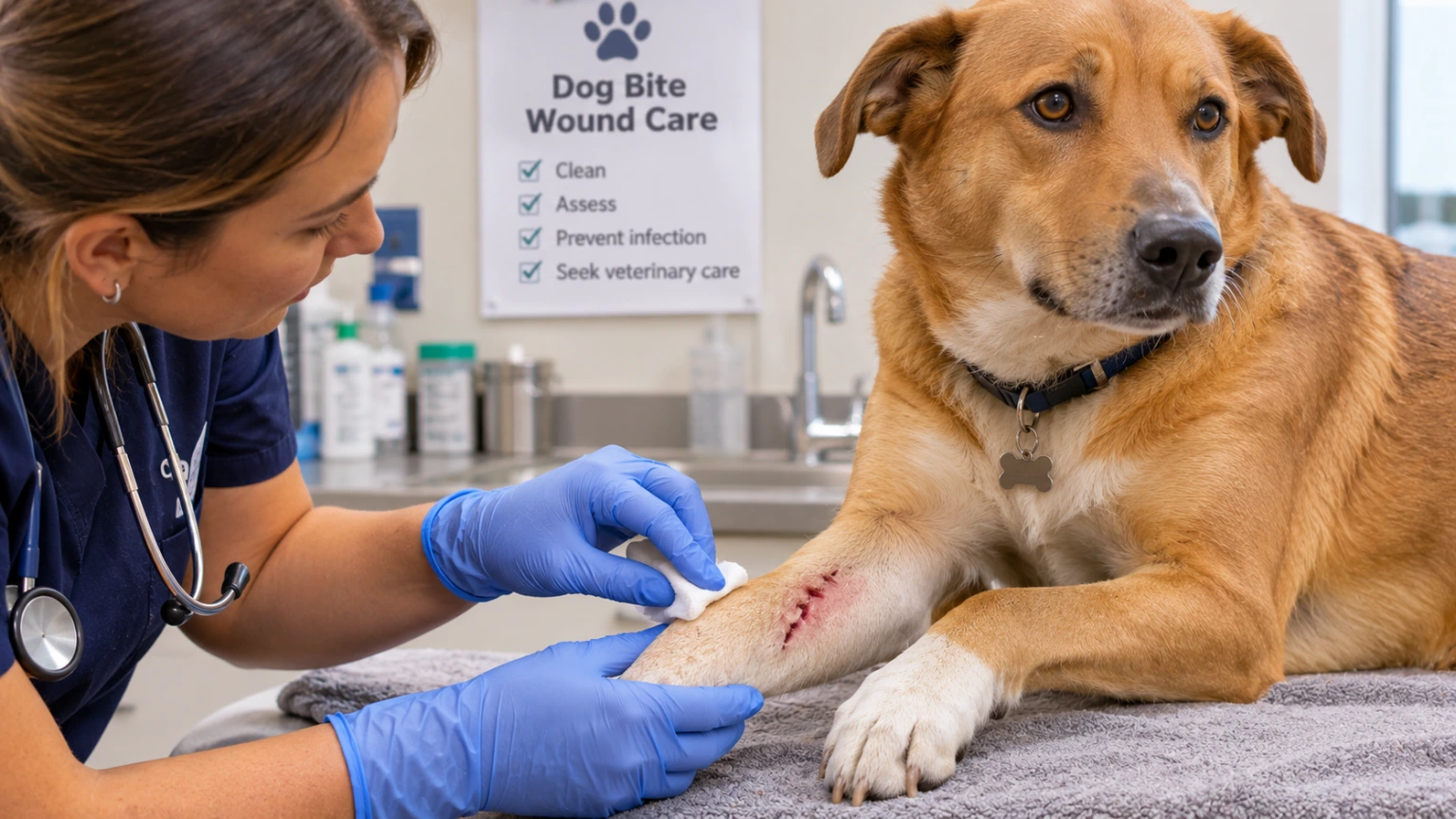
A dog bite wound should be discussed with a vet promptly, even when the skin opening looks small. Teeth can push bacteria and debris under the skin, while crushing and pulling forces may damage tissue beyond the visible puncture. Bites to the chest, abdomen, neck, eye or a joint are particularly concerning, as are heavy bleeding, breathing difficulty, weakness, pale gums, severe pain or collapse. Keep yourself safe, separate the dogs without putting your hands between them, apply gentle pressure to active bleeding with clean material and prevent licking where possible. Do not pour peroxide, alcohol or essential oils into the wound, and do not give human pain medicine.
During opening hours, call Keysborough Veterinary Practice on (03) 9798 7274 before travelling. Outside those hours, a critically injured dog needs an open 24-hour veterinary hospital.
A dog bite wound can leave one or two tiny holes and still cause a much larger injury underneath. The visible mark records where a tooth entered; it does not show the full path, contamination or crushing force.
This guide starts with what to do immediately, then explains why veterinary examination matters, what the clinic may need to check and how to watch the wound after treatment. It is written for dog owners in Keysborough and surrounding suburbs who need a calm next step, not a frightening list of possibilities.
What should you do immediately after a dog fight?
Your safety comes first. A frightened or painful dog may bite a person, including an owner they know well.
- Do not put your hands between fighting dogs.
- Once separated, secure each dog in a different space.
- Keep the injured dog quiet and approach carefully.
- Check breathing, alertness and major bleeding before focusing on small wounds.
- Apply steady, gentle pressure to active bleeding with a clean cloth or gauze.
- Call a vet and describe what happened.
Do not spend a long time cleaning while a dog is weak, struggling to breathe or bleeding heavily. Those signs need immediate transport and veterinary care.
Which signs make a bite an emergency?
Call immediately if you notice:
- Difficulty breathing, noisy breathing or blue or pale gums;
- Collapse, severe weakness or reduced responsiveness;
- Uncontrolled or pulsing bleeding;
- Wounds over the chest, abdomen, neck, eye or throat;
- An open wound over a joint;
- Inability to stand or use a limb;
- A swollen or painful abdomen;
- Repeated vomiting after the incident;
- Severe pain or agitation; or
- A large dog shaking a much smaller dog.
A dog can deteriorate after initially appearing alert. Adrenaline can mask pain, and internal injury may not be obvious at the scene.
Keysborough Veterinary Practice offers daytime urgent pet care during opening hours and is not staffed overnight. Call (03) 9798 7274 before arriving when possible. If the clinic is closed and your dog has emergency signs, go to an open 24-hour veterinary hospital.
Why can a tiny puncture be a serious injury?
Dog teeth can create a narrow opening that closes quickly at the surface. Bacteria, hair and debris may remain in the deeper tissue. Movement between skin and the structures underneath can create a pocket where fluid and infection accumulate.
Bites can also crush tissue. The skin may survive while fat, muscle or deeper structures are bruised and lose blood supply. Damaged tissue can look better on day one than it does after the boundary of the injury becomes clear.
Where was your dog bitten?
Location changes what the vet needs to consider.
| Bite location | Hidden concerns the vet may assess |
| Chest | Rib, muscle or chest-cavity injury and breathing changes |
| Abdomen | Damage to the abdominal wall or internal structures |
| Neck | Airway, blood vessel and oesophageal injury |
| Face or eye | Eye damage, jaw injury and punctures inside the mouth |
| Leg | Muscle, tendon, joint, nerve or bone injury |
| Over a joint | Infection entering a joint and reduced movement |
| Back or flank | Deep pockets under mobile skin |
A bite on a heavily coated dog can be hard to find. Blood on the fur may come from a different spot from the deepest puncture. Let the clinic know if one dog grabbed and shook the other or if a vehicle or fall was also involved.
Can you clean a dog bite at home?
For a small superficial mark in a stable dog, you may gently rinse obvious surface contamination with clean lukewarm water or sterile saline while arranging advice. Stop if the dog is painful or frightened.
Do not:
- Push cotton buds or tools into a puncture;
- Squeeze the wound to make it drain;
- Use hydrogen peroxide, alcohol, essential oils or household disinfectant;
- Close the wound with glue or strips;
- Apply a tight bandage; or
- Use leftover antibiotics or pain medicine.
Cleaning the surface cannot show whether deeper tissue is damaged. Some wounds need clipping, exploration, flushing, drainage or surgical management under sedation or anaesthesia.
What will the vet examine?
The first assessment looks beyond the puncture. We may check:
- Breathing, circulation and gum colour;
- Temperature and hydration;
- Pain and neurological response;
- The full coat for additional wounds;
- Chest and abdominal comfort;
- Limb use and joint movement;
- Wound depth, contamination and tissue condition; and
- The other dog’s size and the mechanism of the incident.
Tell us when the bite happened and whether the dog has eaten, urinated, vomited or behaved differently since. Bring a current medicine list and relevant health history.
Two vets at Keysborough Veterinary Practice hold postgraduate memberships in emergency and critical care. This is an examined postgraduate qualification relevant to assessing acutely unwell animals. It does not mean every bite can be managed without referral or overnight care.
Will a bite wound need tests?
Not every wound needs every test. The location, force and clinical findings determine what may help.
Possible investigations include:
- X-rays where a fracture, chest injury or joint involvement is suspected;
- Ultrasound for selected chest or abdominal questions;
- Blood tests to assess the dog’s general condition before treatment or anaesthesia;
- Sampling or culture where infection is established or unusual; and
- Repeat examination as tissue changes become clearer.
Our clinic has X-ray and ultrasound for pets and in-house pathology. Some injuries or imaging questions still require referral, and we will explain that when it applies.
A normal-looking surface does not remove the need for imaging when examination suggests deeper injury. Conversely, an uncomplicated superficial wound may not need an extensive work-up.
How are dog bite wounds treated?
Treatment is individual. It may involve pain relief, clipping, cleaning, flushing, removal of damaged tissue, drainage, suturing, antibiotics when indicated and management of injuries beneath the skin.
Some contaminated wounds are not closed immediately. Closing bacteria and damaged tissue inside can prevent drainage and increase infection risk. Other wounds benefit from surgical closure after thorough preparation.
The vet balances:
- time since the bite;
- location and depth;
- contamination;
- tissue viability;
- infection;
- tension on the skin;
- the dog’s general condition; and
- the ability to protect and monitor the area.
Keysborough Veterinary Practice provides general and orthopaedic surgery within its published service scope. A severe wound, complex internal injury or need for overnight monitoring may require referral.
Does every bite need antibiotics?
No single answer fits every wound. Antibiotics may be prescribed when the type, contamination, location or infection risk makes them appropriate. Cleaning, drainage and removal of damaged tissue can be just as important as medicine.
Do not start leftover tablets. The product, dose, duration and reason may be wrong, and partial treatment can complicate later assessment.
If medicine is prescribed, give it exactly as labelled and complete the instructed course unless the vet changes the plan. Call if your dog vomits doses, refuses medicine or develops an unexpected reaction.
What should you watch for at home?
Follow the discharge instructions because they are written for the actual wound. General warning signs include:
| Change | Why to call |
| Increasing swelling, heat or redness | Infection or fluid may be developing |
| Discharge, smell or wound opening | Healing may be disrupted or infection present |
| Worsening pain or lameness | Deeper injury or complication may need reassessment |
| Reduced appetite, lethargy or feverish behaviour | The dog may be becoming systemically unwell |
| Breathing change, collapse or pale gums | Emergency reassessment is needed |
| Drain or bandage movement | The wound protection may no longer work correctly |
Prevent licking with the device or method recommended. Do not remove a drain, bandage or suture yourself.
Keep exercise restricted for the period instructed. A dog may feel energetic before deeper tissue has healed.
Why can swelling appear days later?
Punctures may seal over while bacteria and fluid remain underneath. Damaged tissue can also become non-viable over time. An abscess or pocket may therefore become obvious after the initial incident.
This does not mean every bite will become infected. It is why a dog needs monitoring and why increasing swelling, pain, smell or discharge should not be treated as normal healing.
If the original wound was never examined, call when a lump or draining hole appears. Do not repeatedly squeeze it.
What if your dog is limping after the fight?
Lameness may come from a puncture in the paw, muscle bruising, joint injury, fracture or another problem that occurred during the incident. Restrict movement and do not manipulate the leg.
Our guide to dog limping and when to see a vet explains the urgency signs. Inability to bear weight, deformity, severe pain or an open wound near a suspected fracture requires prompt care.
Preventing another fight
Prevention depends on context. After the medical issue is addressed, record where and how the incident began.
- Use secure leads and barriers appropriate to the dogs.
- Separate food, chews and valued items if guarding was involved.
- Do not force dogs back together to “sort it out”.
- Supervise interactions and provide separate resting spaces.
- Check fencing and gates after an escape.
- Ask for qualified behavioural help when tension, fear or aggression is ongoing.
Pain or illness can change behaviour. A dog involved in an unexpected conflict may need a health assessment as well as a behaviour plan.
Call our Keysborough clinic after a dog bite
We would rather assess the timing from an accurate phone description than have you wait for a tiny puncture to become a painful swelling. Keysborough Veterinary Practice is independent and owner-operated and has worked from 4-8 Chapel Rd, Keysborough since 1988.
During opening hours, call (03) 9798 7274 before travelling. Tell us where the bite is, when it happened, whether bleeding has stopped and how your dog is breathing and behaving. For critical injuries after hours, use an open 24-hour veterinary hospital.
Frequently asked questions
1. Does every dog bite need a vet?
Every bite deserves prompt veterinary advice. The vet can decide from the history and examination whether the wound needs treatment, monitoring or urgent investigation.
2. What if I cannot find a puncture?
Blood, pain, swelling or an observed bite still justify a call. Thick fur and small skin openings can hide wounds.
3. Can I give my dog ibuprofen or paracetamol?
No. Do not give human pain medicine unless a veterinarian specifically directs a product and dose for that dog. Common medicines can cause severe toxicity.
4. Why was the wound left partly open?
Some contaminated wounds need drainage rather than immediate tight closure. Your vet will explain the plan for the particular wound.
5. How soon can my dog exercise again?
Follow the discharge plan. Timing depends on wound depth, location, closure, pain and any underlying injury. Feeling energetic does not mean deep tissue has healed.
