



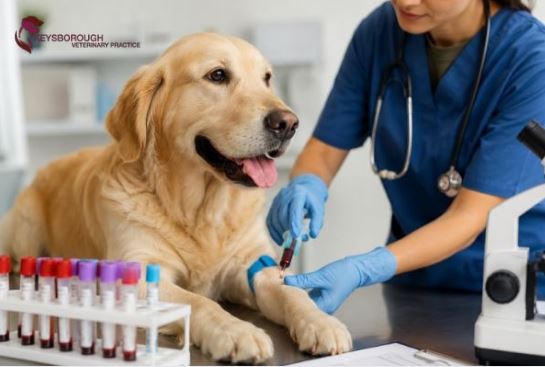
Dog blood test price varies because there is no single test that answers every question. A basic blood count, an organ-function panel, a clotting test and a targeted test for a particular disease involve different equipment, laboratory work and interpretation.
Keysborough Veterinary Practice does not publish a standard blood-test fee online. Call (03) 9798 7274 for an estimate after explaining why the test has been recommended. The team can tell you whether a consultation, sample collection and other diagnostic work are separate items.
What affects the price of a dog’s blood test?
-
The type and number of tests
A complete blood count looks at red cells, white cells and platelets. A biochemistry panel measures markers associated with organs and body systems. Other tests may examine clotting, hormones, infection or a specific suspected condition.
One test may be enough for a focused question. An unwell dog with non-specific signs may need a combination of results. The vet should explain what each proposed test is intended to clarify.
-
Whether results are produced in-house
Keysi Vet performs urgent bloodwork and general pathology at its purpose-built Keysborough clinic. In-house testing can help the treating vet assess an unwell animal during the same visit. Some specialised samples may still require different processing or referral, which can change the turnaround time and fee.
-
The consultation and sample collection
The price shown for a laboratory panel may not include the veterinary examination or sample-collection fee. Ask whether the estimate covers the full appointment rather than comparing isolated test prices.
-
Other diagnostics
Blood results are interpreted alongside the dog’s history and physical examination. Depending on the concern, the vet may discuss urine testing, X-rays, ultrasound or another test. These should be explained and approved separately.
What can a dog blood test show?
Common laboratory tests offered through the clinic’s veterinary pathology service include:
- blood biochemistry
- complete blood counts
- blood-clotting tests
- urinalysis
- faecal examinations
- bacterial cultures
- surgical biopsy testing
A blood test does not automatically give a final diagnosis. Results may point towards a problem, rule out some causes, establish a baseline or show that further investigation is needed.
When might a vet recommend blood testing?
A vet may discuss a dog blood test when a dog is unwell, before some procedures, while monitoring medicine or a long-term condition, or as part of assessing an older dog. Signs such as weight loss, unusual thirst, reduced appetite, repeated vomiting, weakness or a change in behaviour can have many causes.
Do not choose a panel from symptoms alone. The examination helps determine which test, if any, is likely to answer the relevant question.
What should an itemised estimate include?
Before proceeding, ask whether the estimate includes:
- the veterinary consultation
- blood collection
- each laboratory panel or targeted test
- urgent or external-laboratory processing
- interpretation and communication of results
- a follow-up consultation
- Any recommended imaging or urine testing
Two quotes may not describe the same work. A lower figure may cover one small panel, while another includes several tests and the consultation.
How quickly will results be available?
Turnaround depends on the test and where it is processed. Keysi Vet has in-house pathology for urgent bloodwork, which can support decisions during an appointment. Ask when the expected results will be ready and how the clinic will contact you.
If your dog is critically unwell, timing matters more than shopping for an isolated test price. Call the clinic first so the team can begin triage and advise whether you should attend Keysi Vet during opening hours or go directly to a 24-hour facility.
What happens during a dog blood-test appointment?
The vet first asks about the symptoms, their timing, medicines, diet and relevant health history. A physical examination helps narrow the questions the laboratory work needs to answer. This is why ordering a test without an assessment can produce numbers without enough context to interpret them properly.
A nurse or vet usually collects a small sample from a vein. The collection itself is generally brief, although an anxious, painful or unwell dog may need extra time and careful handling. Keysi Vet uses low-stress handling principles to reduce fear during veterinary visits.
Some tests have preparation requirements. The clinic may ask you to withhold food for a set period, while water or essential medicine may still be allowed. Do not fast your dog or stop prescribed medicine unless the clinic specifically instructs you to do so. The right preparation depends on the test and the dog’s health.
After collection, the sample is labelled and processed in-house or prepared for other laboratory work. Ask when results are expected, who will contact you and whether a follow-up appointment is already included.
How should blood-test results be explained?
A laboratory report often compares each result with a reference interval. A number outside that interval does not automatically establish a disease, and a number inside it does not rule out every problem. Hydration, age, medicines, stress, sample quality and the wider clinical picture can all influence interpretation.
Ask the vet to explain:
- Which findings are normal
- Which results are outside the expected range
- whether a change is mild or clinically important
- How the results relate to your dog’s symptoms
- whether treatment, monitoring or another test is recommended
- When the test should be repeated, if at all
If previous results are available, trends can sometimes be more informative than one isolated value. Bring records from another clinic or authorise their transfer before the appointment, where possible.
Will one blood test provide a diagnosis?
Sometimes a targeted result gives a clear answer, but often bloodwork is one part of the investigation. For example, a blood panel may show that an organ marker has changed without identifying the underlying cause. The vet may then recommend urine testing, diagnostic imaging or monitoring the value over time.
This does not mean the first test was wasted. It may rule out urgent problems, guide treatment or show which investigation is most useful next. The vet should be able to explain how each proposed step changes the decision.
You can ask to stage non-urgent investigations rather than approve everything at once. The appropriate order depends on the dog’s condition. A critically unwell dog may need several tests quickly, while a stable dog may have more options for staged assessment.
Can you reduce the cost without compromising the assessment?
Begin with a clear consultation rather than requesting a large panel by name. A focused history and examination can help the vet choose tests that answer the relevant question.
Other practical steps include:
- bringing previous results to avoid unnecessary duplication
- asking which test is essential now and which could wait
- Requesting an itemised estimate before sample collection
- checking whether follow-up interpretation is included
- asking whether an in-house or external option changes timing and cost
- checking an eligible pet insurance policy before treatment
Choosing the smallest test panel is not always the cheapest path if it fails to answer the clinical question and must be repeated. Value comes from selecting the appropriate test and knowing what decision will follow from its result.
When is a blood test urgent?
Call a vet promptly if your dog collapses, has difficulty breathing, is bleeding heavily, has a seizure, may have eaten poison, cannot keep water down or is rapidly becoming weaker. Keysi Vet provides same-day urgent care during opening hours but is not staffed overnight.
For help during clinic hours, call (03) 9798 7274 before travelling. If the clinic is closed and your dog is critically unwell, contact the nearest open 24-hour emergency veterinary hospital.
Ask about dog blood testing in Keysborough
Keysborough Veterinary Practice provides in-house pathology, X-ray and ultrasound at 4-8 Chapel Rd, Keysborough. This allows many dogs to be examined and tested in one location.
Read about the clinic’s general pathology and dog blood tests. To request an estimate or arrange an assessment, call (03) 9798 7274 or book online for a non-urgent concern.
FAQ
How much does a dog blood test cost?
The price depends on the tests required, whether they are processed in-house or externally, and whether consultation and sample-collection fees are included. Keysi Vet does not publish a standard fee online, so call (03) 9798 7274 for an estimate relevant to your dog.
What is included in a veterinary blood-test estimate?
An estimate may include the veterinary consultation, blood collection, laboratory panels, processing and interpretation of the results. Ask whether follow-up appointments, urine testing, imaging or external laboratory charges are separate.
What can a dog blood test detect?
Blood tests can identify changes involving red and white blood cells, platelets, blood clotting and markers associated with organs and body systems. They may help investigate infection, anaemia, inflammation, organ dysfunction and some hormonal conditions, but results must be interpreted alongside the examination and medical history.
How long do dog blood-test results take?
Turnaround depends on the test and where it is processed. Keysi Vet can perform urgent bloodwork and general pathology in-house, while specialised tests sent elsewhere may take longer. The clinic can provide an expected timeframe during the appointment.
