



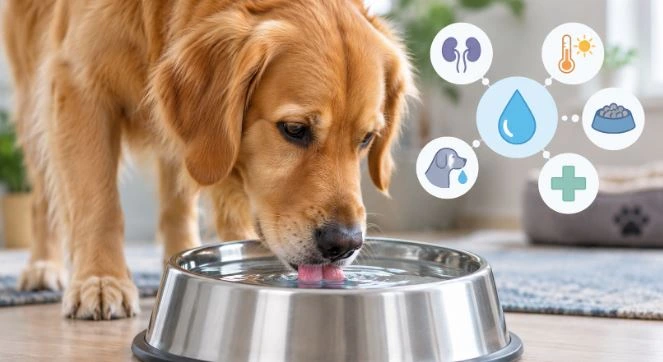
When an owner tells us, “My dog is drinking more water,” our first question is usually whether this is a true change. A warm afternoon, a longer walk or a meal of dry food can make a dog temporarily thirstier. A water bowl that suddenly needs constant refilling, especially when paired with more urination, is a different matter.
Increased thirst is a sign, not a diagnosis. It can occur with medication, fever, hormonal disease, diabetes, kidney problems and several other conditions. Some causes are very manageable, but the only sensible way to tell them apart is to consider the whole dog and test where necessary.
We never recommend restricting water to see what happens. A dog who is losing more fluid through urine may rely on that extra drinking to stay hydrated. Instead, keep water freely available, make a few useful observations and arrange veterinary advice.
In this guide, we will help you work out whether your dog’s drinking has genuinely changed, explain the more common reasons it happens and show you which warning signs should prompt an urgent call. We will then take you through the examination and tests we may recommend, so you know what to expect rather than being left with a list of possible conditions.
Is my dog actually drinking more water?
It is easy to miss a gradual change. In a multi-pet home, it can also be difficult to know which animal emptied the bowl. Owners often first notice secondary clues: the dog wakes them to go outside, has an accident indoors, produces larger patches of urine or begins drinking from unusual places.
Try to compare your dog with their own normal pattern, not another dog. Size, diet, weather, exercise, age and health all influence water intake. Wet food contains considerably more water than dry food, so a diet change may alter what you see at the bowl.
If it is practical, measure the amount placed in the bowl over 24 hours and subtract what remains. Record spills and other water sources. In a home with several pets, separating bowls for a short supervised period may help. Do not become so focused on obtaining a perfect measurement that you delay care for an unwell dog.
We find a simple two or three-day note useful when the dog otherwise seems comfortable. Record drinking, urination, appetite, food, medication and any vomiting or diarrhoea. A short pattern is more informative than “a lot lately” and gives us a better starting point.
When can extra thirst be normal?
Once you have established that the bowl really is emptying faster, the next question is whether there is a simple explanation. We look first at recent changes in weather, activity, food and medication before considering illness.
A healthy dog may drink more after exercise, on a hot day or after eating salty food. Lactating dogs also need more fluid. A switch from wet to dry food can make bowl drinking more obvious even if total water intake has not changed dramatically.
Some medicines predictably increase thirst or urine output. Corticosteroids and diuretics are common examples. If the change began after a prescription was started or adjusted, tell us, but do not stop the medicine without speaking to the prescribing vet.
A brief, explainable increase that settles as the dog cools down may not indicate disease. Persistent change, a large increase without an obvious reason, or thirst combined with other symptoms deserves assessment. Owners know their routines well. If you keep thinking, “This is not normal for my dog,” that observation matters.
Why might a dog be drinking more water?
If the change cannot be explained by a hot day, exercise or diet, we start thinking more broadly. The body regulates thirst through a connected system involving the brain, kidneys, hormones and circulation, so a problem in any part of that system can change drinking and urination.
The main groups we consider are kidney problems, diabetes, hormonal conditions, infection or inflammation, and liver or electrolyte disorders. We will look at each in turn, not because every thirsty dog has one of these diseases, but because they show why thirst alone cannot provide a diagnosis.
-
Kidney disease or kidney injury
Healthy kidneys conserve water when the body needs it. Damaged kidneys may lose some ability to concentrate urine, so a dog urinates more and drinks to replace the loss. Early changes can be subtle. Later signs may include reduced appetite, vomiting, weight loss, lethargy or dehydration.
The Merck Veterinary Manual overview of canine urinary disease explains that increased urine volume may appear during chronic kidney disease. Blood and urine results need to be interpreted together because thirst by itself cannot confirm kidney disease.
-
Diabetes mellitus
When blood glucose remains too high, glucose can pass into urine and draw water with it. The dog may urinate and drink more while also losing weight, sometimes despite a good appetite. Weakness, reduced appetite, vomiting or marked lethargy can indicate a more serious stage.
Veterinary guidance from the Merck Veterinary Manual on diabetes mellitus lists increased urination, thirst and weight loss among common signs. Diagnosis requires testing; it cannot be made from symptoms at home.
-
Hormonal conditions
Hormonal disorders, including hyperadrenocorticism, often called Cushing’s disease, can increase thirst and urination. Owners may also notice increased appetite, panting, skin or coat changes, muscle loss or a change in body shape. These signs usually develop over time and overlap with other illnesses.
-
Infection and inflammation
Fever can increase fluid needs. Urinary infection may cause frequent attempts to urinate, discomfort, accidents or blood in the urine, although the total amount passed is not always increased. Infection of the uterus, known as pyometra, is a serious possibility in an undesexed female dog, particularly in the weeks after a season. Increased thirst may occur alongside discharge, vomiting, lethargy or abdominal enlargement, but a closed infection may cause no discharge.
-
Liver disease, electrolyte changes and other causes
Liver disorders, abnormal calcium levels and less common hormone-control problems can all alter thirst. Certain diets and medications matter too. This broad list is not intended to alarm you. It explains why a tailored examination is more useful than matching one symptom to a search result.
Which signs make the situation urgent?
Knowing the possible causes is useful, but your dog’s condition right now is more important than naming one at home. The following changes tell us that increased thirst should not wait for a routine appointment.
Call us promptly if your dog is drinking more water and also has vomiting, diarrhoea, reduced appetite, weakness, weight loss, fever, obvious pain or blood in the urine. A dog who strains repeatedly but passes little or no urine needs urgent care. So does a dog who collapses, is difficult to wake, struggles to breathe, has very pale gums or cannot keep water down.
An undesexed female who becomes unwell, thirsty or lethargic after a season should be assessed urgently because pyometra can progress quickly. Tell us her last season date and whether you have seen discharge.
During our opening hours, call (03) 9798 7274 before travelling when the problem is urgent. Our urgent veterinary care service operates during published clinic hours and is not an overnight service. If we are closed and your dog is critically unwell, go to the nearest open 24-hour veterinary hospital.
What should I do before the appointment?
If no emergency sign is present, a little preparation can make the consultation much more productive. The aim is not to diagnose your dog yourself, but to give us a clear picture of what has changed.
Keep water available. Never conduct a home “water deprivation test”. Removing water can be dangerous and may obscure the clinical picture. Bring a current medication list, including supplements, and note any recent diet changes.
If you can collect a urine sample without stress or delay, ask our team whether it would be useful and how to store it. We may prefer to collect a fresh or sterile sample at the clinic depending on the tests required. Do not assume a sample from the floor or garden will answer the same questions.
Think about when the change began. Has your dog started urinating overnight? Are the urine volumes larger, or are there many small attempts? Has appetite increased or decreased? Is weight changing? Has there been vomiting, panting, a seizure, an accident or possible toxin exposure? These details help us decide where to begin.
What will we check at the clinic?
Your observations lead naturally into the clinical assessment. We begin with the dog in front of us, then use urine tests, blood tests or imaging only when they can answer a specific question.
We start with history and examination. We may assess hydration, body weight, temperature, gums, abdomen, heart, skin and other findings relevant to your dog. We then recommend tests based on what we find rather than applying the same package to every patient.
Urinalysis is often important. Urine concentration can show whether the kidneys are conserving water appropriately in context. The sample can also be assessed for glucose, blood, protein, cells and other changes. Sometimes a culture is appropriate when infection is suspected.
Blood tests may assess glucose, kidney-related markers, liver-related markers, electrolytes, blood cells and other measures. Our general pathology service includes in-house testing for many common clinical questions, while some specialised samples may be sent to an external laboratory.
Imaging can be useful if the history, examination or initial results point towards a structural concern. Our clinic has X-ray and ultrasound facilities, but not every thirsty dog needs imaging. We will explain what a proposed test could add and how it may affect the plan.
Why blood and urine often belong together
A blood value only tells part of the story. Urine concentration, glucose, protein and sediment can place blood results in context. Conversely, an unusual urine result may prompt blood testing to assess its significance.
We may recommend repeat testing rather than concluding one borderline result. Hydration, meals, medication, stress and the stage of disease can affect findings. Trends can be especially valuable in older dogs or those already being monitored for a condition.
Testing is not about attaching the longest possible list of diseases to one symptom. It is about narrowing the possibilities enough to make a sound decision. Sometimes results are reassuring. Sometimes they reveal a condition before the dog looks seriously ill. Both outcomes are useful.
How is increased thirst treated?
Once the examination and results point us towards a cause, the focus shifts from investigating the thirst to managing the condition behind it. That distinction matters because there is no single treatment for increased drinking.
We treat the underlying cause, not thirst in isolation. A dog with diabetes has a different plan from a dog with a urinary infection, kidney disease or a medication effect. Treatment may involve medicine, dietary changes, fluid support, monitoring or further investigation.
Do not switch to a “kidney”, “diabetic” or other therapeutic diet solely because your dog is drinking more water. These diets are designed for particular clinical situations and may be unsuitable without a diagnosis. The same applies to supplements and human remedies.
Once treatment begins, your observations remain valuable. We may ask you to monitor drinking, urination, appetite, weight or medication response. Contact us if the pattern worsens or new symptoms develop rather than waiting for the next scheduled review.
A practical approach at home
If your dog is drinking more water but remains bright, comfortable and otherwise normal, start a brief record and call to arrange an appointment. If the change is pronounced, persists, or comes with another symptom, call sooner. If emergency signs are present, seek immediate care.
Please do not ration the water bowl. Give us the clearest history you can and let the examination and appropriate tests do the detective work. Early assessment often gives us more options and may prevent a manageable problem from becoming harder on your dog.
We have cared for pets in Keysborough and surrounding suburbs since 1988. To talk through a change in thirst or arrange an examination, call our Keysborough veterinary team on (03) 9798 7274. For a routine concern, you can also use the clinic’s online booking option.
Frequently asked questions
1. Should I take water away if my dog is drinking too much?
No. Keep fresh water available unless your dog’s veterinarian gives specific instructions to restrict it under supervision. Restricting water can cause dehydration when the dog is losing excess fluid through urine.
2. Is a dog drinking more water always diabetic?
No. Diabetes is one possible cause, but kidney disease, hormonal conditions, infection, medication and other problems can produce a similar pattern. Blood and urine testing may be needed to distinguish them.
3. Can hot weather explain the change?
Heat and exercise can cause a temporary increase. A persistent or marked change, especially with increased urination or illness, should not be dismissed as weather alone.
4. What information should I bring?
Bring a medication and supplement list, recent diet changes and notes about drinking, urination, appetite, weight and other symptoms. Tell us when the change began and whether it is worsening.
