



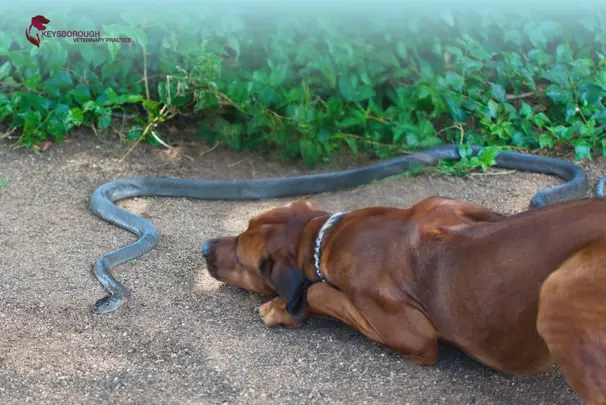
If your pet has been bitten by a snake, time is critical. Get to a vet immediately; around 88% of pets survive when treated promptly. Keep your pet calm, apply a firm bandage if possible, and avoid washing the bite site. Signs of snake envenomation appear within 1-24 hours and include weakness, collapse, dilated pupils, and difficulty breathing.
In Australia, an estimated 6,200 dog snake bite cases occur annually, with brown snakes responsible for 76% of incidents.
Signs of Snake Bite in Dogs & Cats
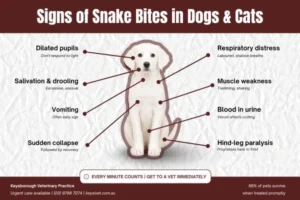
Recognising signs of snake bite early can save your pet’s life. Snake venom works quickly, so knowing what to look for is crucial.
Early Symptoms (First 30–60 Minutes)
When a dog or cat is bitten by a snake, initial signs of snake envenomation may be subtle. Watch for sudden collapse, even if your dog may have been bitten and appears to recover; this is called pre-paralytic collapse, followed by apparent recovery. Your pet may show trembling, excessive drooling, or vomiting.
Dilated pupils that don’t respond to light are a critical early warning. Many pets will seem disoriented or depressed. You might notice your pet staggering or showing weakness in the hind legs. The bite site itself may show minimal swelling, and bite marks are often difficult to spot, especially in long grass where most bites occur.
Progressive Symptoms
As venom spreads through the body, symptoms worsen rapidly. Dogs and cats develop progressive paralysis, starting with the back legs and moving forward. Your pet is bitten if they can’t stand or walk properly. Breathing becomes laboured or shallow as the neurotoxin affects the respiratory muscles.
Watch for blood in urine or vomit, a sign that snake venom has consumed clotting factors. Some pets, particularly those bitten by a brown snake, may cough or show respiratory distress. Tiger snake and brown snake venom can cause different patterns of envenomation, but both are life-threatening.
Cats may retain tail movement and the ability to vocalise even when paralysed. Research shows cats survive 66% of the time without antivenom, compared to only 31% for dogs, making cats more resistant to snake venom.
What To Do Immediately If Your Pet Is Bitten
Every minute counts when your dog is bitten, or your pet may have been bitten by a snake. First, call your local vet or emergency veterinary clinic to confirm they have snake anti-venom available and can treat snake bites.
Keep your pet as still as possible. Movement spreads venom through the body faster. Carry your dog or cat rather than letting them walk. If you can safely do so, apply a firm bandage over the site of the bite, not too tight, just firm like a sprain bandage. This pressure bandage technique can slow venom spread.
Don’t waste time trying to identify the snake or catch or kill the snake. Never attempt to try to catch or kill it, snakes are protected under Australian law, and snakes can be difficult to handle safely. If you see the type of snake, remember its colour and markings to tell your vet, but your safety comes first.
Avoid washing the bite location, as venom residue helps vets use a venom detection kit to determine if your pet has been bitten and by which species of snake. Head straight to the nearest veterinary clinic or animal emergency centre. Data shows 85% of dog bites happen in the owner’s yard, so be particularly vigilant at home, especially during spring and summer when snake activity peaks.
What NOT To Do After a Snake Bite
Several common first aid mistakes can harm your pet’s chances of survival. Never apply a tourniquet; cutting off blood flow completely can cause tissue damage and doesn’t effectively stop venom spread.
Don’t attempt to suck out venom, cut the wound, or use ice. These old methods don’t work and waste precious time. Never try to catch or kill the snake for identification; most bites occur when people attempt this. Remember, snakes are protected under Australian law and trying to kill the snake puts you at risk.
Avoid giving your dog or cat water, food, or medication before seeing a vet. Don’t let your pet walk or move around, as this speeds up venom circulation. Time spent at home attempting home remedies reduces survival chances. Even if you suspect your pet was bitten but seems fine, get veterinary attention immediately. The apparent recovery period can be deceiving, with severe symptoms developing hours later.
How Vets Diagnose Snake Bites
When you arrive at the veterinary clinic, the vet will examine your pet thoroughly. Snakes can be difficult to spot, and bite marks are often hidden in fur. Vets look for neurological signs like pupil dilation, weakness, and paralysis to determine if your pet has been envenomated.
Blood tests reveal how the venom has affected your pet. Snake venom causes consumption of clotting factors, so vets check clotting times. Elevated muscle enzymes indicate tissue damage. A snake venom detection kit is crucial; this test can identify whether the snake was a brown snake, tiger snake, or black snake species by analysing venom antigens in urine or blood.
The detection kit is most reliable when used on urine samples, which contain venom concentrations up to four times higher than blood. Your vet may take chest X-rays if they suspect pulmonary haemorrhage, a common cause of death in dogs bitten by eastern brown snakes. Not all bites deliver venom, called “dry bites, so testing confirms whether snake envenomation in dogs or cats has actually occurred.
Treatment for Snake Bites in Dogs & Cats
Antivenom is the only specific treatment for snake bites.Studies show 91% of cats and 75% of dogs survive with antivenom treatment, compared to much lower survival rates without it. The amount of venom injected and how quickly treatment starts determine outcomes.
Vets administer antivenom intravenously through a drip, monitoring for allergic reactions. Multiple vials may be needed depending on envenomation severity. Alongside antivenom, supportive care is crucial. This includes intravenous fluids, oxygen therapy, and sometimes mechanical ventilation for pets with respiratory paralysis.
Blood products may be given if bleeding is severe. Pain relief and careful monitoring continue throughout hospitalisation. The closer the bite is to the heart, the faster venom spreads, making immediate veterinary treatment even more critical. Pets typically need hospitalisation for 1-3 days, though severe cases require longer veterinary care.
Treatment immediately after a bite gives the best chances of survival. Your local veterinary clinic or animal emergency centre will provide comprehensive care tailored to your pet’s condition. Some pets need ongoing monitoring for kidney damage or muscle breakdown caused by certain venomous snakes.
Survival Rates & Recovery
The survival rate for pets depends heavily on treatment speed and the type of snake involved. Overall, 88% of pets survive snake bites when they receive veterinary attention, though this doesn’t include animals that die before reaching a vet.
Cats have better natural resistance than dogs. Even without treatment, cats have a 66% chance of survival versus 31% for dogs. With proper veterinary treatment, outcomes improve dramatically, 91% of cats and 75% of dogs survive when given antivenom promptly.
The type of snake matters significantly. Brown snake envenomations cause rapid onset symptoms, with some dogs dying within an hour from pulmonary haemorrhage. Tiger snake bites include muscle-damaging toxins that can cause kidney problems. Most pets who survive improve within 24-48 hours, though full recovery, especially from muscle damage, may take weeks.
Approximately 84% of snake bite cases occur during the six warmer months, October through March. Being aware during this period and keeping your pet away from long grass and undergrowth helps minimise risk. If treated properly, a snake bite, if treated promptly, is survivable, but left untreated, the outcomes are poor.
Protect Your Pet From Snake Bites
Prevention is your best strategy for keeping your pet safe from Australian snakes. Make your yard less attractive to snakes by clearing undergrowth, mowing lawns regularly, and removing hiding spots like wood piles and junk. Snakes in Australia are drawn to properties with mice and rats, so control rodent populations.
Consider snake-proof fencing if you live in high-risk areas. Keep dogs on leads during walks, especially in bushland or near water, where venomous snakes like tiger snakes are common. Avoid walking in long grass during warmer months, particularly between 3 pm and 6 pm when 42% of bites occur.
Teach your dog to avoid snakes through aversion training. Supervise cats outdoors, as they hunt away from home and encounter snakes. Know which Australian snakes live in your area. Brown snake species dominate eastern states, while other species are more common elsewhere. Call your local vet or research which venomous snakes pose the greatest threat in your region.
Remember that snakes are protected under Australian law. If you see a snake, back away slowly and call a licensed snake catcher. Never attempt to interact with or identify the snake up close, as it may bite if provoked.
Contact Keysborough Veterinary Practice
If you suspect your dog or cat has been bitten by a snake, don’t wait. Contact Keysborough Veterinary Practice immediately or visit your nearest animal emergency centre. We stock appropriate antivenom and have experience treating snake envenomation in dogs and cats.
Early intervention is the difference between life and death. We’re here to provide expert veterinary attention when your pet needs it most. Don’t hesitate, even if you only suspect your pet may have encountered a snake, call us right away.
Frequently Asked Questions
Are snake bites always fatal in dogs and cats?
No. With prompt treatment, survival rates are high, around 88% of pets survive. The key is getting to a vet quickly.
How long do snakebite symptoms take to appear?
Symptoms typically appear within 1-24 hours, but severe cases can show signs within 15 minutes. Don’t wait, seek help immediately.
Should I try to identify the snake?
Only if you can do so safely from a distance. Never attempt to catch or kill it. Venom detection kits at the vet identify the species.
Can cats survive snake bites?
Yes. Cats are actually more resistant than dogs, with 66% surviving without treatment and 91% surviving with antivenom.
What time of year are snake bites most common in Australia?
Snake bites peak during spring and summer months (October-March) when snakes are most active in warmer weather.
