



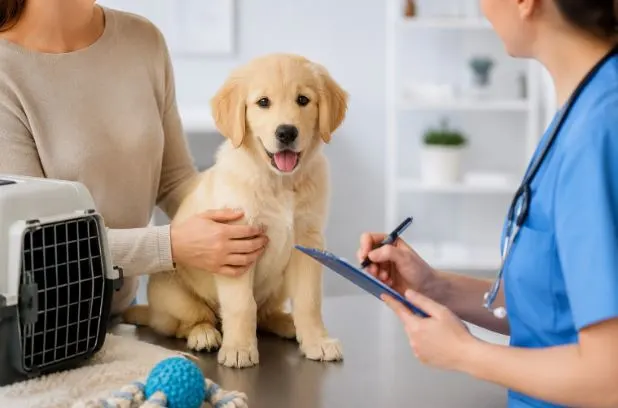
Bringing home a new puppy is an exciting experience. There’s the cuddles, the chaos, and that unmistakable puppy smell.
However, before the excitement takes over completely, there’s one task every new owner needs to address early. Your puppy’s first vet visit sets the foundation for their whole life.
This guide walks you through what to expect, what to bring, when to book, and why choosing the right vet clinic in Melbourne matters from day one.
Think of this as your new puppy checklist. Keep it handy in the first few weeks.
When Should You Book Your Puppy’s First Vet Visit?
The ideal timing is within the first few days to a week of bringing your puppy home.
Don’t wait for a problem to show up. Book the trip to the vet even if your pup seems perfectly healthy.
Here’s why early visits matter, even when nothing looks wrong:
- Hidden congenital issues aren’t always visible to the naked eye
- Intestinal worms and parasites often show no obvious symptoms
- Weight and growth patterns need a proper baseline
- Early bonding with a vet builds trust for years to come
A first vet visit early on means small issues stay small. It also gives your vet a clear starting point for tracking your puppy’s health as they grow.
Many new owners feel nervous about this first trip to the vet. That’s completely normal. A good clinic will walk you through everything step by step, so neither you nor your puppy feels rushed.
What to Bring to Your Puppy’s First Vet Visit
A little preparation goes a long way. Here’s your checklist for the day.
Breeder or Shelter Records
Bring any vaccination or health paperwork from the breeder or shelter. This tells your vet exactly where your puppy’s vaccination schedule is up to, so nothing gets missed or repeated.
If your puppy came from a breeder or shelter with no paperwork at all, mention this straight away. Your vet will simply start the vaccination schedule fresh.
A Stool Sample
This helps your vet check for intestinal worms and other parasites. It’s a simple, non-invasive test that gives useful information early.
A small sample from that morning is enough. Your vet’s team can advise on the best way to collect and store it before your appointment.
Your List of Questions
New puppy ownership brings a flood of questions. Write them down before the appointment so nothing gets forgotten in the moment.
Common questions new owners bring along include:
- What food should I be feeding my puppy?
- When is it safe to take them outside?
- How do I start crate training?
- What’s normal puppy behaviour versus something to watch?
Your Puppy’s Usual Food
If you’re planning to change your puppy’s diet, bring along what they’re currently eating. Your vet can then guide a proper, gradual transition that won’t upset their stomach.
What Happens During Your Puppy’s First Vet Visit?
Here’s what a typical first vet visit looks like at a good veterinary practice.
- Full physical examination – covering the heart, lungs, eyes, ears, teeth, and joints
- Weight check and body condition scoring – creating a baseline for future growth
- Microchipping – completed if it hasn’t already been done
- Vaccination planning – working out exactly where your puppy sits in their schedule
- Deworming and flea and tick prevention – covering the basics from the very start
- Nutrition and growth guidance – tailored advice based on breed and expected adult size
Every dog registered with a Victorian council for the first time must be microchipped before that registration happens. All dogs three months of age and over must also be registered with their local council. Sorting this out during the first vet visit means one less thing on your to-do list later.
Your vet will also talk you through what to expect in the coming weeks. This includes signs to watch for, and when to call if something seems off.
Understanding the Puppy Vaccination Schedule
Vaccination is one of the biggest jobs of the early weeks, and it’s worth understanding properly.
Puppies typically follow this vaccination schedule:
- 6 to 8 weeks old – first vaccination
- 10 to 12 weeks – second vaccination
- 14 to 16 weeks – third vaccination
This staggered approach exists for a good reason. Puppies are born with some temporary immunity passed on through their mother’s milk. That protection fades gradually over the first few months, which is why a single vaccination isn’t enough on its own.
Until your puppy is fully vaccinated, it’s best to avoid dog parks, puppy school, and other high-traffic pet areas. The risk of picking up something serious is simply too high before their immunity is properly established.
According to Animal Medicines Australia’s 2025 report, while 96% of dog owners have vaccinated their pets at least once, only 77% of dogs received a vaccination in the past year. That gap says a lot. Staying on schedule, not just getting started, is what actually protects your puppy over the long term.
Once your puppy’s vaccination series is complete, socialisation can begin properly. Puppy school and supervised dog parks become safe options, and this early socialisation plays a big role in shaping a confident, well-adjusted adult dog.
For a deeper breakdown of core vaccines and booster timing, our vaccination guide for Keysborough pets covers everything in detail. You can also read more about ongoing annual pet vaccinations once your puppy grows into adulthood.
Common First Vet Visit Questions New Puppy Owners Ask
When should I desex my puppy
Timing depends on breed, size, and overall health. Your vet will recommend the right age for your specific puppy at the first visit.
What food should I feed my puppy?
Puppy-specific food supports proper growth. Your vet can suggest a brand and feeding schedule suited to your puppy’s breed and size.
How do I prevent fleas, ticks and worms
Regular, vet-recommended prevention works best. Fleas and intestinal worms are present year-round across Melbourne, so consistency matters more than any single treatment.
When can my puppy go outside safely
Generally, once their vaccination series is complete. Your vet will confirm the exact timing based on your puppy’s individual schedule.
How do I puppy-proof my home before the first visit?
Remove small chewable items, secure loose cords, and keep household chemicals well out of reach. Your vet can flag other risks specific to your home during the visit.
Why Your Puppy’s First Vet Visit Sets the Tone?
A consistent vet clinic in Melbourne means having someone who knows your puppy’s full history from day one.
That relationship pays off in a few important ways:
- Growth and development get tracked accurately over time
- Breed-specific issues, like hip, heart, or eye conditions, get caught early
- Your puppy learns that visiting the vet is calm, not something to fear
That last point matters more than most new owners expect. A positive first experience shapes how your puppy handles every future visit to the vet, long into adulthood.
Building this relationship early also means your vet notices small changes faster. A vet who has seen your puppy from the beginning is better placed to spot when something isn’t quite right.
Give your puppy the best start in life. Book your first appointment with our friendly Keysborough vet clinic today.
FAQs
Do I need an appointment, or can I walk in?
Booking ahead is best. It means your vet has proper time set aside for a thorough first visit.
What if my puppy hasn’t had any vaccinations yet
That’s completely fine. Your vet will simply start the vaccination schedule from wherever your puppy is currently.
How often will my puppy need to see the vet in the first year
Expect several visits, spaced around the vaccination schedule, plus a full check-up around 12 months of age.
Can I bring my puppy before they’re fully vaccinated
Yes. Carry your puppy rather than letting them walk through public areas, and avoid the waiting room floor where possible.
What should I do if my puppy seems nervous at the vet
Bring a favourite toy or treat, and stay calm yourself. Puppies pick up on their owner’s energy quickly.
