



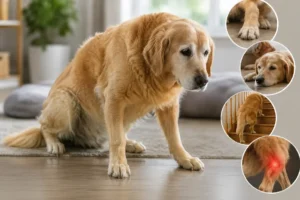
Rainwater does not usually infect a dog’s skin by itself. The more common problem is what happens after a dog stays wet: the skin becomes warm and damp, rubbing increases, and bacteria or yeast already present on the skin can multiply. Mud, allergies, parasites, small scratches and dense coats can add to the irritation.
At our Keysborough clinic, we often need to separate a brief wet coat from a genuine skin problem. This guide explains how rain can contribute to skin infections in dogs, which signs deserve attention, what you can safely do at home and when we would rather examine your dog. We will also explain why repeated infections need more than another round of shampoo.
How rain creates the conditions for trouble
Healthy skin is a physical barrier. A shower does not normally defeat it. Trouble is more likely when moisture sits against the skin, particularly between toes, beneath a collar, inside folds or under a thick, matted coat.
The sequence often looks like this:
- The coat becomes soaked during a walk or time outdoors.
- A poorly ventilated area remains damp.
- The dog licks, scratches or rubs the uncomfortable spot.
- The skin barrier becomes inflamed or damaged.
- Bacteria or yeast overgrow, and the irritation becomes self-perpetuating.
The Merck Veterinary Manual notes that warm, moist areas can carry higher bacterial counts and that conditions which make normally dry skin moist can encourage overgrowth. It also explains that infection is commonly secondary to another trigger, including allergies, parasites or trauma. That distinction matters: drying the dog may help prevent a problem, but it may not address the reason the skin was vulnerable.
Which dogs need closer attention after wet weather?
Any dog can develop irritated skin, but we pay closer attention when moisture is easily trapped or a previous condition is already weakening the barrier.
| Risk factor | Why it matters | Area to check |
| Thick or long coat | The skin can remain damp after the surface feels dry | Neck, belly and base of tail |
| Skin folds | Warmth, friction and limited airflow encourage overgrowth | Face, lips, tail and vulval folds |
| Floppy ears | Moisture and reduced ventilation can affect the ear canal | Ear opening and pinna |
| Allergies | Itchy skin leads to licking and barrier damage | Paws, belly, face and ears |
| Matted hair | Mats hold moisture and pull on the skin | Behind ears, armpits and groin |
| Very young, older or unwell dogs | Other health factors may change skin resilience | Whole coat and general behaviour |
Breed alone does not diagnose a problem. What matters is your dog’s coat, anatomy, history and the signs you can see today.
What do skin infections in dogs look like?
Skin infections in dogs do not all look alike. Some begin as one intensely itchy patch; others appear as scattered bumps, hair loss or recurring sore paws. Part the coat in good light rather than judging only from the top.
Watch for:
- redness, warmth or swelling
- repeated licking, chewing or scratching
- small bumps, pustules or crusts
- circular areas of scale or hair loss
- a greasy coat or unusual odour
- wet, raw or oozing patches
- pain when the area is touched
- discharge from the skin or ear
- low energy, reduced appetite or feverish behaviour
A rapidly enlarging, wet and painful area may be acute moist dermatitis, often called a hot spot. Deep infection can cause pain, swelling, ulceration and draining material. Those are not conditions we would try to identify from a photograph alone.
What can I do when my dog comes home wet?
Prevention is mostly ordinary coat care. It should be gentle; vigorous rubbing can irritate already sensitive skin.
-
Dry the coat to the skin
Use clean towels and pay attention to paws, between the toes, under the collar, the belly and any folds. A dryer may be suitable on a cool, low setting if your dog tolerates it, but avoid heat and keep it moving.
-
Rinse off mud or questionable water
Lukewarm water can remove grit and contaminants. Dry the coat afterwards. Repeated shampooing is not automatically better, because the wrong product or frequency can dry and irritate skin.
-
Check paws and ears
Look for grass seeds, cuts, swelling and persistent moisture. Wipe the visible outer ear only. Do not place cotton buds or unprescribed drops into the ear canal.
-
Remove or loosen wet equipment
A wet collar, harness or coat keeps rubbing the same area. Take it off once your dog is secure, dry the skin beneath it and wash the equipment before the next use.
-
Stop persistent self-trauma
If your dog will not leave an area alone, call us. Licking can turn mild irritation into an open wound surprisingly quickly. A temporary protective collar may help while you arrange care, but it does not replace a diagnosis.
What should I avoid putting on the skin?
Human creams, essential oils, leftover antibiotics and another pet’s medication can be unsuitable or toxic when swallowed during grooming. They can also alter the appearance of the lesion and make diagnosis harder.
Avoid:
- tea tree or other concentrated essential oils
- human antiseptic creams unless a veterinarian directs their use
- steroid cream left from an unrelated condition
- peroxide, alcohol or harsh disinfectants
- tightly bandaging a moist area
- giving human pain medicine
If the skin is dirty, a gentle rinse and careful drying are reasonable first steps. For anything painful, spreading or persistent, we would rather assess it before home treatment complicates the picture.
When should you call us?
Call promptly when the area spreads over hours, smells strongly, oozes, appears deeply sore or makes your dog distressed. We also want to hear from you when the eyes or face are involved, the paws are swollen, an ear is painful, or your dog seems unwell.
The following guide helps with timing:
| What you notice | Sensible next step |
| Damp coat, normal skin and comfortable dog | Dry carefully and monitor |
| Mild redness that persists after drying | Call for advice and arrange a routine assessment |
| Repeated licking, bumps, crusts or hair loss | Book an examination |
| Rapid spread, pain, discharge or strong odour | Seek prompt veterinary care |
| Facial swelling, breathing trouble, collapse or severe illness | Seek emergency veterinary help immediately |
Our urgent care information explains what we can manage during opening hours. We are not a 24-hour emergency hospital, so our team can direct you to appropriate after-hours care when the clinic is closed.
How we work out what is causing it
We start with the pattern and history. We ask when the signs began, whether they followed wet weather, which parasite prevention is used, what your dog eats and whether similar episodes have happened before. Then we examine the whole skin and coat, not only the most obvious patch.
Depending on the findings, we may discuss:
- cytology to look at cells, bacteria or yeast
- skin scrapings or hair examination for parasites
- fungal testing where ringworm is a possibility
- culture for selected deep, unusual or poorly responsive infections
- ear examination when ear disease is present
- investigation of allergy or underlying illness in recurrent cases
Our general pathology services support investigations when a test will change the treatment plan. We avoid guessing because itchy skin can look similar across several different causes.
Why does the problem keep coming back?
Recurring skin infections in dogs are often a clue rather than a standalone diagnosis. Flea allergy, environmental allergy, food reaction, mites, skin folds, endocrine disease or repeated moisture may be keeping the cycle going. Treating the secondary infection can settle the current flare, but lasting control depends on the trigger.
This is also why antibiotics are not an automatic answer. The veterinarian chooses treatment according to the depth, extent and likely organism, while considering antimicrobial stewardship. Some cases are managed mainly with veterinary topical treatment; others need additional medicine and investigation.
Do vaccinations prevent rainy-weather skin infections?
Routine vaccines protect against specific infectious diseases; they do not prevent the common bacterial or yeast overgrowth behind most wet-weather skin complaints. Vaccination remains an important part of preventive care, but it has a different job.
If your dog’s annual care is due, our page about dog vaccination in Keysborough explains the service. We can review parasite prevention, skin history and general health during the same broader preventive-care conversation where appropriate.
Call our Keysborough team
If you are unsure whether you are looking at damp skin, allergy or infection, call our vet clinic in Keysborough on (03) 9798 7274. Tell us how quickly it appeared, whether your dog is licking or it is painful, and whether there is discharge or an odour. That helps us judge how soon your dog should be seen.
Early assessment is particularly useful when the problem has happened before. We want to settle the sore skin, but we also want to understand why it returned.
Frequently asked questions
1. Can one rainy walk cause an infection?
It can contribute, especially if the coat stays wet or the dog already has an allergy, broken skin or dense folds. A single walk is rarely the whole explanation.
2. Can I use my dog’s usual shampoo after every wet walk?
Not necessarily. Frequent washing can irritate some skin, and medicated products should be used as directed. Rinsing mud away and drying thoroughly may be enough when the skin is healthy.
3. Is a wet smell proof of infection?
No. A wet coat has its own odour. A persistent strong, yeasty or unpleasant smell alongside redness, grease, discharge or itching deserves assessment.
4. Can skin infections spread to people?
Some causes of skin disease, including ringworm and certain parasites, can affect people or other animals. Avoid sharing grooming tools, wash your hands and call us if circular hair loss or a contagious cause is suspected.
