



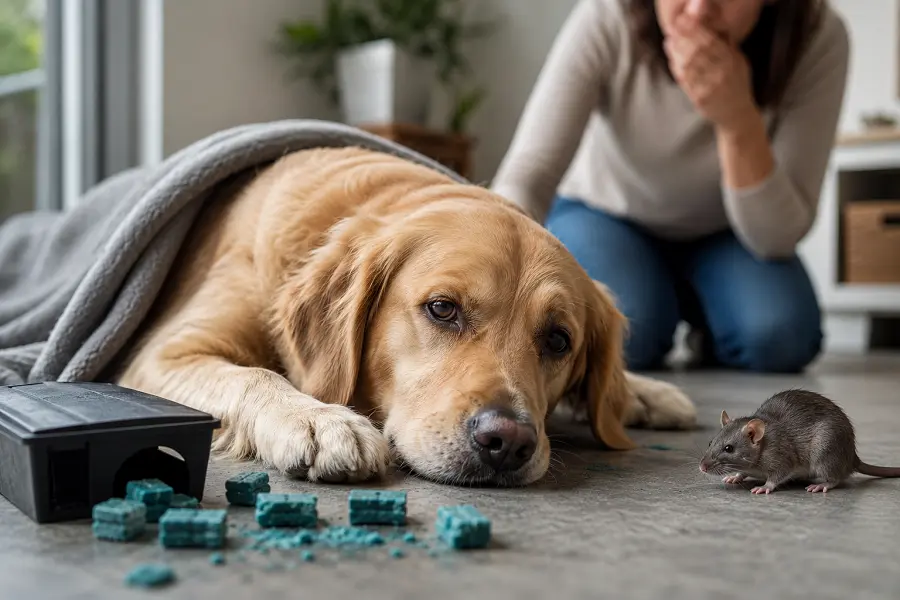
Rat bait poisoning in dogs is one of the most common toxicity emergencies vets see across Melbourne and the surrounding suburbs. Rodenticides are one of the most common causes of poisoning in dogs and cats in Australia, and the reality is that many pet owners have no idea their dog has even eaten anything until symptoms appear, sometimes days later.
If you use rat bait around your home or live near properties that do, this is information worth knowing well before you ever need it.
Why Rat Bait Is So Dangerous for Dogs and Cats?
Rodenticides are poisons designed to kill rats and mice, but they are just as deadly for dogs and cats. These baits are often flavoured to attract rodents, which means they can also attract your pet.
The bittering agents added to many baits do not seem to prevent dogs from eating them, and it is certainly possible for dogs to become poisoned after ingesting a standard quantity of bait laid out for rodent control.
Dogs are particularly at risk because of their curious, scavenging nature. Even a small amount of the wrong type of bait can cause serious harm.
Rodenticides were, in fact, the most common poison that pet owners phoned the Animal Poisons Helpline about in 2020, and during peak periods, record numbers of calls have been received about these baits. Melbourne pet owners are not immune. Whether you are in Keysborough, Cheltenham, Patterson Lakes or further afield, rat bait is widely available and widely used in homes and gardens.
Different Types of Rat Bait and How They Work
Not all rat poison works the same way. Understanding the different types of rat bait is important because they require different treatments and have varying timelines for showing symptoms.
| Type of Rodenticide | How It Works | When Symptoms Begin |
| Anticoagulant (1st generation) | Prevents blood from clotting over multiple feeds | 3 to 5 days after ingestion |
| Anticoagulant (2nd generation, e.g. brodifacoum) | Stops blood from clotting after a single feed | 3 to 7 days after ingestion |
| Cholecalciferol (Vitamin D3) | Causes dangerously high calcium levels | 1 to 3 days after ingestion |
| Bromethalin | Attacks the nervous system | 1 to 2 days after ingestion |
The most common rat baits found in Australia are anticoagulants such as brodifacoum or bromadiolone. These work by causing uncontrollable internal bleeding.
Popular Australian brands such as Ratsak, Talon, and Big Cheese are widely used in homes and farms, available in pellets, wax blocks, soft baits, grains, and liquids.
How Anticoagulant Rat Bait Affects Your Dog’s Blood?
This is where things get really dangerous. Anticoagulant rodenticides are the most commonly used and work by preventing blood from clotting. When a dog or cat ingests rat bait of this type, the active ingredient interferes with the production of clotting factors in the body, specifically those that depend on vitamin K.
Pets may develop primary poisoning after directly eating bait, or secondary poisoning if they consume a rodent that has already ingested the toxin.
The real problem? After eating these baits, animals often remain without symptoms for many days before developing potentially life-threatening bleeding. This delay gives a false sense of security. Many Melbourne pet owners assume their dog is fine because nothing happened straight away, but by the time clinical signs appear, the dog may already be in serious trouble. The earlier treatment begins, the better the chance of recovery. This is not something to wait out.
Signs of Rat Bait Poisoning in Dogs: What to Watch For
The signs of rat bait poisoning will vary depending on the active ingredient in the bait and how much the dog has ingested. For anticoagulant rodenticides specifically, signs of bleeding are the main concern.
Early signs of rat bait toxicity may include:
- Lethargy and unusual tiredness
- Loss of appetite
- Pale or white gums
- Vomiting (sometimes with blood)
- Coughing or coughing up blood
As the poisoning progresses, more serious signs of rat bait poisoning include:
- Difficulty breathing (blood pooling around the lungs)
- Swollen abdomen (internal bleeding)
- Bleeding from the nose, mouth or gums
- Blood in urine or stools
- Weakness or inability to walk
- Neurological symptoms such as seizures or tremors (more common with bromethalin)
- Collapse
A key sign your pet is in difficulty is very pale gums, almost a white-grey colour. Within 2 to 3 days, the active ingredients can cause internal bleeding, which leads to significant damage if left undetected or untreated.
Signs of toxicity may not be seen for several days after the poisoning has occurred, so if you have not seen your pet eat the poison, you still need to watch for these signs.
If you notice any of these symptoms, treat them as an emergency. Do not wait until your next scheduled appointment.
What to Do If Your Dog Ate Rat Bait
If you suspect your pet has ingested rat bait, act immediately. Here is what to do:
Stay calm and call your vet straight away. If it is outside business hours, contact your nearest animal emergency centre or call the Animal Poisons Helpline on 1300 869 738. This line is available 24 hours a day for all pet owners in Australia.
Bring the bait packaging with you to the vet. The packaging tells the veterinarian exactly what active ingredient is involved, which determines the treatment approach.
Do not try to induce vomiting at home unless specifically instructed by a veterinarian. In some cases, inducing vomiting can cause further harm depending on the type of poison ingested.
Note the time and amount. If you know when the dog ate the bait and roughly how much, share this with your vet or animal emergency team. Even an estimate helps.
Do not wait for symptoms. If your dog eats rat poison and you are not sure how much, contact your vet immediately. Waiting for clinical signs means waiting until the damage has already begun.
If you are in Australia, you can call the Animal Poisons Centre on 1300 869 738 for a tailored risk assessment and further advice. You should contact them even if your dog looks completely well. Animal Poisons Helpline
At Keysborough Veterinary Practice, our urgent care team is experienced in managing rat bait toxicity in dogs and will work quickly to assess the risk and begin appropriate treatment.
How Vets Treat Rat Bait Poisoning
Treatment depends on the type of bait ingested and how quickly the dog is seen. The options your veterinarian may use include:
- Inducing vomiting if the ingestion of rat bait was recent (usually within a few hours) and the dog is not yet showing symptoms
- Activated charcoal to slow absorption of the poison
- Vitamin K1 treatment over several weeks for anticoagulant rodenticides (this is the specific antidote for this class of poison)
- Blood tests to check clotting factors and assess the severity of poisoning
- A blood transfusion, which may be required in severe cases where significant internal bleeding has already occurred
- Hospitalisation for monitoring and supportive care
The severity of poisoning depends on the active ingredient, the amount consumed, and the size of the animal.
A dog that comes in before symptoms begin has a much better chance of recovery than one that is already bleeding internally. Often pets will not show any signs until several days after eating the poison, which is why acting on suspicion alone is always the right call.
Our general pathology services at Keysborough Vet allow us to run blood tests quickly, so we can assess clotting function and start treatment without delay.
Keeping Your Pet Safe: Preventing Rat Bait Ingestion
Reducing the risk to your dog or cat does not have to mean giving up rodent control. A few practical steps can make a real difference:
- Use tamper-proof bait stations that are inaccessible to dogs and cats
- Consider snap traps as an alternative to rodenticide, particularly in homes with pets
- Store remaining bait in sealed, secure containers out of reach
- Let neighbours know if you are using bait, since dogs and cats can access adjacent properties easily
- Keep your pet supervised in gardens, especially at night
If you live in the Melbourne area and use rat bait, it is worth checking with your vet about the safest options for households with pets. Melbourne’s bayside and suburban areas, including Keysborough, are popular with families who also manage rodent issues seasonally.
Read Also: Tick Paralysis in Dogs and Cats: What Keysborough Pet Owners Must Know
Frequently Asked Questions
How long does it take for symptoms to show after a dog ingests rat bait?
It can take 1 to 5 days to show signs, depending on the active ingredient. Anticoagulant types typically take 3 to 5 days.
What are the first signs of rat bait poisoning in dogs?
Early signs of poisoning include lethargy, pale gums, vomiting, and reduced appetite. These can be subtle, so act quickly if you suspect exposure.
Can a dog survive if it has been poisoned by rat bait?
Yes, with prompt veterinary treatment, most dogs recover fully. The earlier treatment begins, the better the chance of recovery.
My dog ate rat bait, but seems fine. Should I still see a vet?
Yes, contact your vet immediately. Symptoms may be delayed by several days, and waiting means waiting until internal damage has already started.
Is rat bait toxic to cats as well? Yes, rat bait is toxic to dogs and cats alike. While cats are less likely to eat bait directly, secondary poisoning from eating an affected rodent is possible.
