



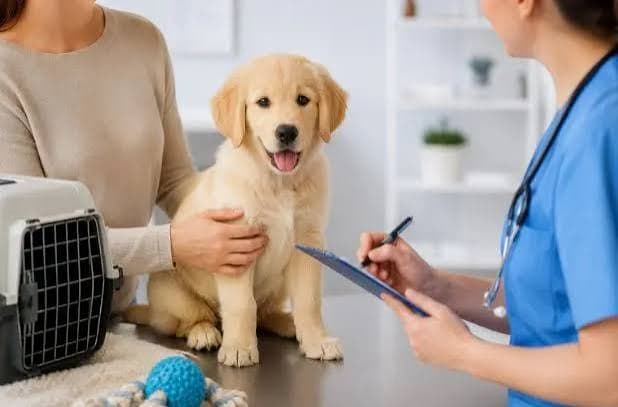
A dog orthopaedic consultation assesses bones, joints, muscles and movement. The vet will ask how the problem began, watch the dog move, examine the affected area and decide whether imaging or other tests are needed. Treatment may involve rest, medicine, rehabilitation, surgery or referral, depending on the diagnosis and the individual dog.
Keysborough Veterinary Practice has an orthopaedic surgery consultant on its roster and provides X-ray and ultrasound on site. That does not mean every limp needs surgery. The purpose of an orthopaedic consultation in Keysborough is to identify the problem and compare suitable options before a treatment plan is agreed.
When should a limp be assessed?
A mild, brief change after unusually hard exercise may settle, but persistent or recurring lameness deserves assessment. Call sooner if the dog cannot bear weight, cries out, has marked swelling, was hit or fell, drags a limb, seems weak or becomes generally unwell.
Do not repeatedly manipulate a painful joint at home. Movement that seems gentle can worsen discomfort or make a frightened dog react defensively.
If the dog cannot walk safely, ask the clinic how to transport them. A large painful dog may need more than one person and a plan to avoid slips or jumping from the car.
Record what the movement looks like at home
Dogs can move differently at a clinic because excitement, fear or adrenaline changes behaviour. A short video from home may show the original problem.
Record the dog walking towards the camera, away from it and across the frame on a flat, non-slip surface. Include a few steps after rising if that is when stiffness appears. Do not make a painful dog run, climb stairs or repeat a movement simply for the video.
Note which leg you think is affected, but do not worry if you are unsure. Compensating movement can make the opposite limb appear unusual. Let the vet examine the whole dog.
Write down whether the limp is worse after rest, during exercise or later the same day. Mention slips, collisions, new activities and previous episodes.
Bring the medical and treatment history
If another clinic has examined the dog, arrange for records and images to be sent before the appointment. A discharge summary is helpful, but original X-ray files and radiology reports may provide more detail.
Bring a complete medicine list. Include prescription drugs, supplements, injections and human medicine given at home. Record the dose and time of the last administration.
Do not stop pain relief merely so the vet can “see the real limp” unless instructed. Withholding medicine can cause unnecessary discomfort and may not improve diagnosis.
Also mention other health conditions. Anaesthetic, imaging and treatment decisions depend on the whole patient, not only the sore joint.
What happens during the examination?
The vet may begin by watching the dog stand, walk and turn. They look for weight shifting, stride changes, muscle loss, limb alignment and how the dog sits or rises.
The hands-on examination can include the spine and several limbs, even when one joint seems to be the problem. The vet may feel for swelling, heat, pain, instability, reduced movement or changes in muscle.
Some tests require the dog to relax. A tense or frightened dog can make subtle findings difficult to interpret. If the examination would cause distress or pain, the vet may change the approach or discuss sedation.
No single movement test confirms every diagnosis. Findings are combined with the history and, where needed, imaging or sampling.
Why might X-rays be recommended?
X-rays help assess bones, joint shape, some signs of arthritis, fractures and other structural changes. Several views may be required because a three-dimensional joint is being represented in flat images.
Accurate positioning matters. Sedation or anaesthesia may be recommended so the dog can remain still, muscles can relax and painful manipulation is limited. Ask what is proposed and why.
Keysborough Veterinary Practice provides X-rays and ultrasound on site. Some images may still need specialist review or advanced imaging elsewhere.
An X-ray result should be interpreted with the examination. Dogs can have visible age-related changes that are not the main source of the current limp, and some soft-tissue injuries are not shown clearly on an ordinary X-ray.
Are blood tests part of an orthopaedic assessment?
They may be. Bloodwork can be relevant before sedation or anaesthesia, when inflammation or infection is considered, or when the dog has other health conditions.
The clinic offers in-house pathology for appropriate tests. Specialised testing may go to an external laboratory.
Ask what the test is intended to show and how it could alter the plan. A blood panel does not diagnose every joint problem, and not every orthopaedic consultation requires one.
No test is completely risk-free or universally necessary. Recommendations should be based on the dog in front of the vet.
Common treatment pathways
Treatment depends on the diagnosis, severity, age, body condition, activity, other disease and the owner’s practical circumstances.
Conservative management can involve controlled activity, prescribed pain relief, weight management and rehabilitation. Surgery may be considered for certain fractures, unstable joints, cruciate ligament injuries, patellar problems or other conditions. Referral may be appropriate where advanced imaging, specialist facilities or a particular procedure is required.
Do not begin supplements, braces or exercise programmes based only on an online diagnosis. Products vary, and an unsuitable exercise can aggravate some injuries.
The vet should explain the aim of each option, material risks, likely recovery demands and what uncertainty remains. Individual outcomes cannot be guaranteed.
If surgery is discussed
Ask what procedure is proposed, why it is favoured and what alternatives exist. You should understand whether the goal is stabilisation, pain reduction, repair, removal of damaged tissue or another defined outcome.
Discuss anaesthesia, monitoring, hospital stay, pain management, wound care, activity restriction and follow-up. Recovery often requires more owner work than the operation day itself.
Keysborough Veterinary Practice provides general and orthopaedic surgery, including services listed on its live page. The consultant’s involvement and availability for a particular case must be confirmed with the clinic.
No fee is stated because pricing depends on the dog, investigation and procedure and the clinic has no approved public price list. Request a written estimate and ask what findings could change it.
Plan for recovery before choosing a date
Think about where the dog will rest, how they will reach the toilet area and how stairs, polished floors or other pets will be managed. A large active dog may need physical barriers and more than one person for some tasks.
Ask how long activity is likely to be restricted, while recognising that the plan changes with healing. Clarify lead walking, toileting, jumping, furniture, wound protection and the schedule for rechecks.
If you work away from home, say so. The team may help you plan realistic supervision, but do not assume boarding is available. Keysborough Veterinary Practice does not offer boarding or kennelling.
Follow the written discharge instructions rather than a generic recovery timeline. Call if the wound changes, pain appears poorly controlled, medicine causes a concern or the dog damages a dressing.
Weight and joint load
Body weight can affect joint load and recovery, but this discussion should be practical rather than judgemental. Ask the vet to assess body condition and, if needed, set a safe nutrition target.
Rapid or unbalanced weight loss is not the goal. A plan may involve measuring food, accounting for treats and choosing activity that fits the orthopaedic condition.
The World Small Animal Veterinary Association provides nutrition assessment resources used internationally. Your dog’s vet can apply appropriate principles to the individual patient and local products.
Do not sharply reduce food for a growing puppy or a dog recovering from surgery without veterinary advice.
What about arthritis?
Arthritis is a long-term joint condition and can contribute to stiffness, reduced activity or lameness. Management may involve several approaches rather than one treatment.
The vet may discuss weight, controlled exercise, pain medicine, home changes and monitoring. Supplements or injections may be considered where appropriate, but benefits and risks vary.
An older dog can also develop a new injury. Do not assume every limp is “just arthritis” because of age. A change in pattern, sudden inability to bear weight or worsening pain deserves assessment.
The RSPCA Knowledgebase offers general information about recognising pain in pets, but a physical examination is needed to diagnose the cause.
Questions to ask at the consultation
Write these down:
- Which area seems to be causing the lameness?
- What are the main possibilities?
- What can examination tell us without imaging?
- Why is each recommended test useful?
- Does my dog need sedation or anaesthesia?
- Which treatment options are reasonable?
- What are the important risks and recovery requirements?
- What would make referral appropriate?
- Which signs mean calling sooner?
- When should progress be reviewed?
If the answer is uncertain, ask what information would reduce that uncertainty. Orthopaedic diagnosis can be a process rather than a single appointment.
Prepare for a dog orthopaedic consultation in Keysborough
Collect records, medicine details and safe videos before the appointment. Prevent strenuous activity until the clinic advises what is appropriate, and do not repeatedly test the sore limb.
Keysborough Veterinary Practice is an independent, owner-operated clinic at 4-8 Chapel Rd and has operated there since 1988. To arrange a dog orthopaedic consultation in Keysborough, call (03) 9798 7274 or use the clinic’s booking page. Mention if your dog cannot walk or is in marked pain so the team can triage the booking.
Frequently asked questions
-
Does every limping dog need an X-ray?
No. The vet decides after the history and examination. Some problems need imaging promptly, while others may begin with a different plan.
-
Will my dog need sedation for X-rays?
Possibly. Positioning, pain, anxiety and the views required affect the decision. The vet should explain the proposed approach.
-
Does an orthopaedic consultation always lead to surgery?
No. Medicine, activity changes, rehabilitation or monitoring may be suitable. Surgery is discussed when it fits the diagnosis and patient.
-
Can I give human pain medicine before the appointment?
Do not give human medicine unless a vet specifically instructs you for that dog. Some products are dangerous to pets.
-
Should I restrict exercise while waiting?
Call the clinic for advice based on the symptom. Avoid strenuous activity or repeatedly provoking the limp before assessment.
