Annual Health Check

Your pet deserves a special day every year.

WHAT HAPPENS AT AN ANNUAL HEALTH CHECK?

We all know how important staying healthy is to a long and satisfying life – for both the two-legged and four-legged members of the family.

But our furry family members age differently to humans, so it’s even more important for them to have a check-up every year. Once a year for a dog or cat is the same as once every five years or so for us!

A quick visit to the vet on one special day each year will help make sure your pet will still be around for many more days to come.

So when you get your next reminder, don’t put it off. Make an appointment to give your pet the special day he or she deserves each year.
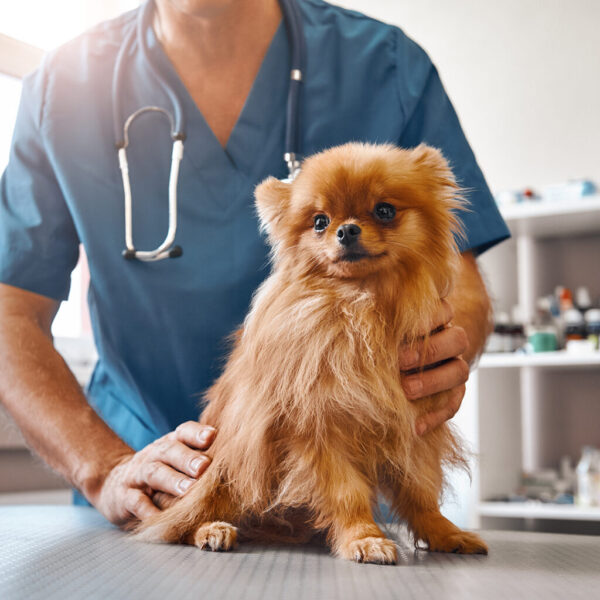
Your vet will:

• Check for early signs of disease
• Make sure teeth, skin, eyes and ears are healthy
• Update life-saving vaccinations
• Keep an eye out for problems as your pet gets older

DOESN’T MY PET NEED TO HAVE VACCINATIONS EACH YEAR AS WELL?

Some pets will need to have a vaccination each year. However, we’re learning more all the time about treating our furry friends, and the latest research shows that some older pets may only need to be vaccinated against certain diseases every three years to be protected. Your vet will talk to you about what’s best for your individual pet.

WHAT WILL IT COST?

Annual health checks are usually quite quick and inexpensive. You should ask for a cost estimate when you call to make the appointment. If you have pet insurance, your policy will probably cover some of the cost. If your vet finds a problem with your pet’s health, the visit might become more expensive. But finding problems early will save time and money in the long run, and it might even save your pet’s life.

WHAT ELSE DO I NEED TO DO TO KEEP MY PET HAPPY AND HEALTHY?

As well as an annual check up, there are just a few basic things you need to do to make sure your cat or dog stays well.

• Feed them a balanced diet
• Make sure they get plenty of exercises
• If you’re not around to keep them company, make sure there are lots of things to play with to stop them from getting bored
• Give them lots of love and affection

Rat Bait Poisoning

“My dog ate Rat Poison a few hours ago but he seems fine…”

We commonly receive phone calls from well-meaning pet owners with dogs or cats that had eaten rat poison a few hours earlier, or even the night before. Sometimes we’re not told for days or weeks after the pet has eaten rat bait, and unfortunately sometimes by then it’s too late.

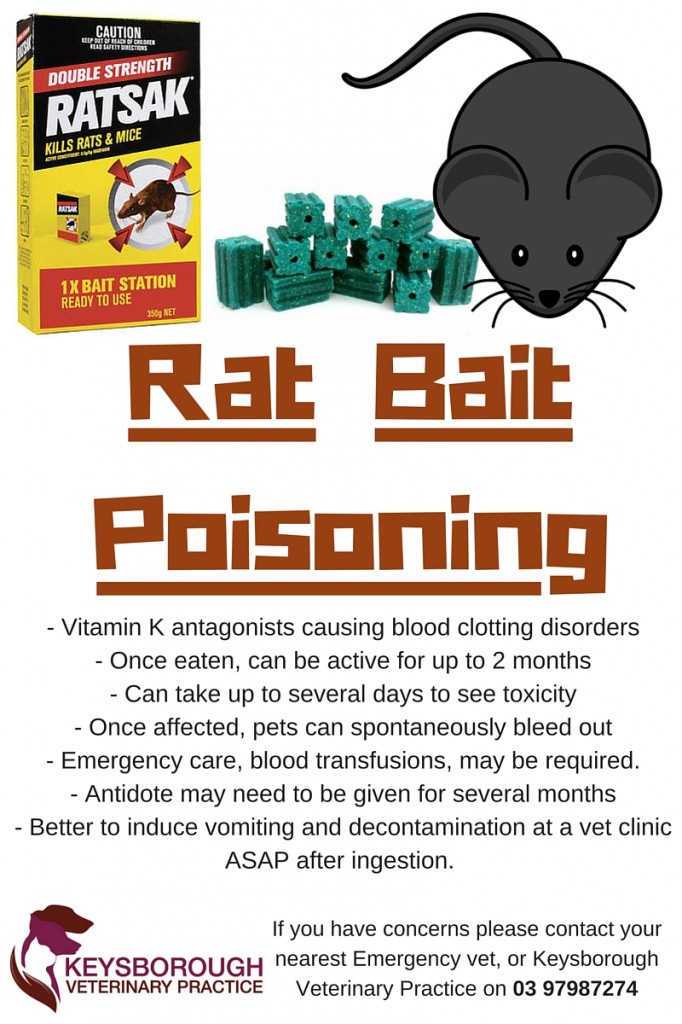
Rat Bait ingestion is always serious, but often doesn’t cause clinical signs straight away. This is because it stops clotting factors from being produced, and symptoms do not appear until those clotting factors are depleted. This results in pets eating rat bait, that initially appear fine. Unfortunately by the time symptoms are present, such as spontaneous severe bleeding, treatment is more difficult and costly.

Pets that are actively bleeding may require blood or plasma transfusions, and several weeks of antidote administration until the rat bait is excreted from their system. Some pets will also require a stay in intensive care.

The best course of action if your pet has eaten rat bait is to present them to a vet clinic as soon as possible. A vet can induce vomiting and commence decontamination if indicated. If presented immediately after ingestion, some pets will not need ongoing medication.

If you suspect your pet has eaten something poisonous, it is ALWAYS best to present them to a vet clinic for treatment, even if you are unsure.

There is no such thing as a completely ‘pet safe’ rat bait. If pets wont eat it, neither will the rats.

Grass Seed Season

It’s grass seed season!
Some of you may already know the dangers of grass seeds with your pets, but for those who don’t please stay tuned.

Grass seeds commonly get caught in dog’s feet or on the sides of their abdomen if they’ve been lying in the grass. More often that not, we don’t notice the grass seeds in the animal’s fur until they’ve migrated into the skin and create an abscess or the animal starts limping.

If the seed is in the paw, they may be visibly red and swollen;the pet may also be licking the foot as it is quite painful. If your dog is limping, read our guide on common causes of limping in dogs.
In most cases, the grass seeds have to be surgically removed, and they’re quite hard to find; sometimes they will even take multiple attempts to find.
You can see the migration in the video below, posted by Walkerville Vet.

We also have some photos below of grass seeds that have been removed from inside the paws of dogs in the past at our practice.

grass seed season grass seed season