



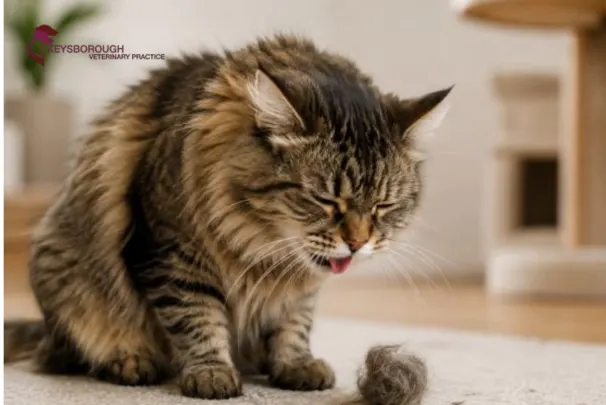
If your cat keeps appearing to cough up hairballs, first work out whether they are retching, vomiting, or truly coughing. Hairballs come from the digestive tract and are usually brought up with retching. Repeated coughing may point to an airway problem, including feline asthma, and should not automatically be treated as a hairball issue.
Regular brushing can reduce the loose hair your cat swallows. However, frequent hairballs, repeated unproductive retching, poor appetite, lethargy, weight loss or breathing changes need veterinary assessment. Open-mouth breathing or obvious breathing difficulty is an emergency.
This guide explains what a hairball is, how to reduce risk safely and when the familiar hacking sound may mean something else.
What is a cat hairball?
Cats swallow hair during normal grooming. Their tongue moves loose hair backwards, and much of it travels through the digestive tract and leaves in the stool. Some can remain in the stomach and collect into a damp mass called a trichobezoar.
Despite the name, a hairball brought up by a cat is often long and cylindrical rather than round. It may be darkened by food and digestive fluid. Owners sometimes mistake it for stool because of the shape.
An occasional hairball in an otherwise well-cared-for cat may not cause lasting trouble. Frequency and accompanying signs matter. A cat that repeatedly tries to bring something up without producing a hairball may have a gastrointestinal obstruction, respiratory disease or another problem needing examination.
Is my cat coughing or retching?
Video is useful because the movements can look similar after the event has passed.
Retching or vomiting
Retching commonly involves visible abdominal contractions, gagging and an effort to bring material from the stomach. The cat may produce a hairball, food, fluid or foam. Nausea can also cause lip licking, drooling or repeated swallowing.
Coughing
Coughing comes from the respiratory tract. A cat may crouch low, extend the neck and make repeated dry hacking sounds. Nothing may be produced, although swallowing at the end can make owners think the cat has swallowed a hairball.
Cornell University’s Feline Health Center lists coughing, wheezing, rapid breathing, increased breathing effort and open-mouth breathing among signs associated with feline asthma. There are other respiratory causes, so coughing needs a diagnosis rather than an assumption.
Regurgitation
Regurgitation is generally more passive than vomiting. Food or fluid may come up with little warning and without strong abdominal effort. The material is often undigested.
Film an episode if you can do so safely. Do not delay urgent care to record it, especially if breathing is affected.
How often is too often for hairballs?
There is no single safe number for every cat. Cornell notes that some cats may bring up a hairball every week or two without an enduring problem, but a change from your cat’s normal pattern is important.
Book a veterinary assessment if hairballs are becoming more frequent, if episodes occur repeatedly without producing hair or if there are other changes such as:
- reduced appetite
- lethargy or hiding
- weight loss
- repeated vomiting
- constipation or reduced stool
- diarrhoea
- excessive grooming or bald areas
- coughing, wheezing or faster breathing
- pain when handled
Frequency can reflect more loose hair, more grooming or reduced movement of material through the digestive tract. It can also indicate that the episodes are not hairballs at all.
Why might a cat get more hairballs?
Seasonal shedding
Cats can swallow more loose coat when shedding. Indoor cats may shed across much of the year because temperature and light exposure are relatively consistent.
A long or dense coat
Long-haired cats and cats with dense coats may ingest more hair during grooming. They often benefit from more frequent coat care, but every cat’s tolerance for brushing differs.
Excessive grooming
Fleas, skin irritation, allergy, pain, stress and behavioural factors can increase licking. The resulting hairballs are then a consequence of the grooming problem, not the primary disease.
Look for a thinning coat, broken hairs, bald patches, scabs or repeated attention to one body area. A vet may need to assess the skin and rule out medical causes.
Digestive disease or altered movement
Vomiting and hair in the vomit do not prove that hair caused the episode. Gastrointestinal disease may cause vomiting, while swallowed hair happens to be present. Problems that slow normal movement can also make hair accumulation more likely.
Reduced grooming assistance
Older, overweight or painful cats may struggle to groom some areas and develop mats. Mats can pull on skin and should be handled carefully. Severe matting may need professional clipping rather than forceful brushing.
How can you reduce cat hairballs?
Brush regularly
Brushing removes loose hair before your cat swallows it. Cornell recommends regular, even daily, combing for cats prone to hairballs. The practical schedule depends on coat type, shedding and how comfortably the cat accepts grooming.
Use a tool suited to the coat and begin with short sessions. Stop if the skin is irritated or the cat becomes distressed. Do not cut tight mats with scissors because cat skin is thin and can be pulled into the mat.
Keep flea and skin care current
If itching drives grooming, removing loose hair alone will not solve the cause. Use parasite prevention recommended for your cat and household. Never apply a dog flea product to a cat unless a veterinarian has confirmed it is safe for cats.
Arrange an examination for persistent itching, skin lesions, baldness or excessive licking. Diagnosis may involve parasites, infection, allergy, pain or behaviour.
Support appropriate hydration and nutrition
Feed a complete and balanced diet appropriate for your cat’s life stage and medical needs. Make fresh water available. Some cats drink more readily from several bowls or a fountain, but sudden increased thirst can itself be a sign to discuss with a vet.
Do not make abrupt diet changes solely because hair appears in vomit. If a hairball-control food or fibre change is being considered, ask your vet whether it suits your cat, particularly if there is a digestive, kidney, urinary or weight condition.
Encourage normal activity
Play and environmental enrichment support general well-being and can help indoor cats maintain healthy routines. Use toys that do not shed string or small pieces, and store wand toys after supervised play.
Activity is not a treatment for an obstruction or repeated vomiting. It is one part of routine care for a well cat.
Review stress and overgrooming
Changes in household routine, conflict between cats, limited resources or other stressors can contribute to excessive grooming. Provide separate resting areas, litter trays, food and water resources where appropriate.
Because pain and skin disease can look like behavioural overgrooming, arrange a veterinary check before assuming stress is the sole cause.
Are hairball gels or laxatives safe?
Do not give a laxative or human remedy without veterinary advice. Cornell specifically advises that laxatives for a stubborn hairball should be used only with veterinary approval and supervision.
Commercial hairball products differ in ingredients and suitability. A product may also create false reassurance when a cat is repeatedly retching because of asthma, obstruction or gastrointestinal disease.
Ask your veterinarian whether a product is appropriate, how it should be used and what signs mean it should be stopped.
When can a hairball become dangerous?
A hairball can occasionally become lodged in the digestive tract. This is uncommon but potentially serious. Warning signs can include:
- Repeated unproductive retching
- frequent vomiting
- refusal to eat
- lethargy
- abdominal discomfort
- Reduced or absent stool
- deterioration over hours or days
These signs can occur with other foreign objects and illnesses as well. Do not try to force a hairball through with oil, butter, laxatives or large meals. Contact a veterinarian.
Keysi Vet offers veterinary pathology as well as X-ray and ultrasound services that may form part of investigating an unwell cat. The veterinarian will select tests based on the history and examination.
When is coughing an emergency?
Seek emergency care if your cat has:
- open-mouth breathing
- obvious effort to breathe
- blue, grey or very pale gums
- collapse or severe weakness
- rapidly worsening distress
- choking or a suspected airway obstruction
Keep the cat calm and minimise handling. Call ahead while arranging transport. Do not place anything in the mouth of a conscious, distressed cat.
Repeated coughing without emergency signs still deserves a veterinary appointment. Asthma, infection, parasites, heart disease and other conditions may need consideration. Hairball treatment will not address a respiratory cause.
What will the vet ask about?
Bring a video if available, and note:
- How often do episodes occur
- whether hair or fluid is produced
- body posture and abdominal movement
- breathing rate and effort after the episode
- appetite, weight, stool and activity changes
- skin irritation or excessive grooming
- current parasite prevention
- exposure to smoke, aerosols, dust or new litter
- diet changes and medicines
The vet may examine the mouth, chest, abdomen, coat and skin. Depending on findings, testing might include X-rays, bloodwork, faecal testing, ultrasound or other investigations.
A practical weekly hairball-reduction routine
For a well cat with occasional hairballs, a simple routine can help:
- Brush or comb on a schedule suited to the coat.
- Check the skin and coat for fleas, irritation, mats and bald areas.
- Record vomiting, retching or coughing episodes.
- Monitor appetite, water intake, stool and weight.
- Store string, ribbon and small toy parts securely.
- Keep parasite prevention and routine health care current.
- Ask a vet about any diet or hairball product before starting it.
The record helps identify change. One isolated event is harder to interpret than a pattern showing frequency, season and accompanying signs.
Have repeated episodes checked in Keysborough
Hairballs may be common, but repeated hacking should not be dismissed without checking whether it is cough, retching or vomiting. A video and a clear history can help the veterinary team choose the next step.
Keysborough Veterinary Practice is an independent Melbourne vet clinic at 4-8 Chapel Rd, Keysborough. To arrange an assessment, call (03) 9798 7274 or book online for a non-urgent concern. For breathing difficulty or another urgent sign, call immediately and use an open 24-hour hospital if the practice is closed.
Frequently asked questions
Why does my cat keep trying to cough up a hairball, but nothing comes out?
The episode may be unproductive retching, but it could also be a true cough or another problem. Repeated attempts, poor appetite, lethargy, vomiting or breathing changes require veterinary assessment. Record a video if safe.
Can brushing stop cat hairballs completely?
Brushing can reduce swallowed loose hair, but it may not eliminate hairballs. It will not treat excessive grooming, digestive disease or respiratory coughing. A change in frequency should be discussed with a vet.
Is it safe to give my cat oil or a human laxative?
No home product should be given without veterinary direction. Oils and laxatives may be inappropriate, and self-treatment can delay diagnosis of an obstruction or another illness.
How can I tell feline asthma from a hairball?
Asthma often causes repeated coughing, wheezing or increased breathing effort, while hairball retching involves efforts to bring material from the stomach. The movements overlap, so video the episode and seek a veterinary diagnosis. Open-mouth or difficult breathing is an emergency.
